Export Packing Tips for Large Corten Steel Products

Export Packing Tips for Large Corten Steel Products
Large corten steel products often travel a long way before they reach a landscape project, hotel terrace, distributor warehouse or job site. A good finish and accurate dimensions are important, but export packing can decide whether the order arrives clean, complete and easy to install. For corten steel planters, fire pits, screens, edging and custom fabricated parts, packing should be planned before production is finished—not treated as an afterthought.
This page covers practical export packing points for buyers sourcing weathering steel products from a manufacturer or supplier, especially when orders include large dimensions, mixed SKUs, custom drawings or project delivery schedules.
Why export packing matters for corten steel products
Corten steel is selected for its weathering surface, strength and outdoor appearance. During international shipping, however, products can be exposed to vibration, stacking pressure, humidity changes, forklift handling and repeated loading or unloading. Without suitable protection, buyers may receive scratched edges, bent panels, mixed accessories or installation delays.
For project orders, the packing method should protect both the product and the workflow. Contractors need to identify parts quickly. Importers need cartons, crates or pallets that are practical for warehouse handling. Landscape architects and commercial buyers need consistent quality when the products are finally installed.
Start packing design from the product type
Different corten steel products need different packing logic. A single method rarely fits every order.
Planters and raised beds
Large corten steel planter boxes may need corner protection, internal bracing, moisture-resistant wrapping and palletized loading. If planters are nested to save container space, separators should prevent rubbing between surfaces.
Screens, panels and facade parts
Laser-cut screens and architectural panels should be protected against bending and edge damage. For corten steel laser cut screens, flat packing, rigid side protection and clear part labels are especially useful when panels follow a drawing sequence.
Fire pits and gas feature housings
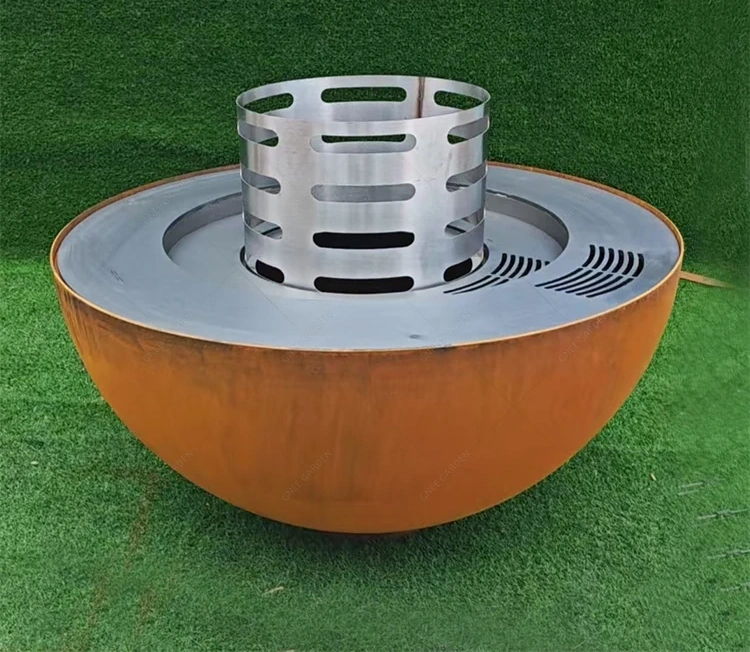
For corten steel fire pits or gas-feature enclosures, packing should protect visible faces, legs, seams and accessories. Burner systems or third-party components, when supplied separately, should be packed and checked according to the approved system supplier’s instructions.
Landscape edging and long strips
Long landscape edging strips need bundling that prevents twisting. Stakes, connectors, screws and installation parts should be bagged, counted and labeled so site crews do not waste time searching for small components.
Use protection that matches the finish stage
Some buyers request raw weathering steel, while others request pre-weathered or partially weathered surfaces. Packing should match that finish stage. Raw corten parts may need basic scratch and moisture control, while pre-weathered surfaces may need more careful separation to reduce rubbing during transport.
Protective film, foam, cardboard, woven bags, wooden frames, steel pallets or crates can all be used depending on size and order value. The key is to avoid direct metal-to-metal contact in areas where visible faces matter. Drainage holes, fixing slots and exposed corners should also be protected from deformation.
Plan pallets, crates and container loading early
For large corten steel products, packing is connected to container loading. A product may be strong enough for outdoor use but still awkward to move if its pallet size is poorly planned. Good export packing considers:
- overall product dimensions and gross weight;
- forklift entry direction and lifting points;
- whether the shipment uses LCL, FCL or mixed cargo;
- stacking limits and whether products can be nested;
- moisture protection during sea freight;
- clear labels for project areas, room numbers, drawing marks or SKU codes.
For custom orders from drawings, ask the supplier to confirm packing size, estimated weight and loading quantity before final production if container utilization is important.
Label every crate, pallet and accessory set
Large orders often include multiple product types: planters, screens, fire bowls, edging and custom brackets. Labeling prevents confusion at the destination. Each pallet or crate should ideally show the buyer name or project code, product name, quantity, gross/net weight, package dimensions and handling notes.
Accessory bags should be linked to the main product or drawing number. For example, screen panels may include posts, base plates, bolts and spacers. Planters may include feet, liners, drainage accessories or connection plates. If these parts are not clearly labeled, installation delays can cost more than the packing itself.
Request QC photos before shipment
For B2B and bulk project supply corten steel products, pre-shipment photos are one of the simplest ways to reduce risk. Buyers can request photos of finished products, key dimensions, surface finish, accessories, labels, packed crates and container loading.
QC photos are especially useful when buying custom corten steel fabrication from drawings. They help confirm that the supplier understood the project requirements before the order leaves the factory.
What to include in your RFQ
When requesting a quote for large corten steel products, include packing expectations early. A good RFQ can mention product dimensions, destination country, preferred incoterm, project schedule, unloading limitations and whether the order needs retail cartons, bulk pallets, wooden crates or project-number labeling.
If you have drawings, send DWG, DXF, PDF or STEP files where available. If you are ordering repeated bulk project supply products, provide SKU lists and packaging requirements. For hotels, resorts, public spaces and commercial landscape projects, ask for a packing plan that supports site installation.
FAQ: Corten steel export packing
Does corten steel need special packing for sea freight?
Yes. Large corten steel products should be protected against scratches, edge damage, moisture accumulation and cargo movement. The exact method depends on size, finish stage, order value and shipping route.
Can corten steel products be nested to save container space?
Many planters, edging parts and some fabricated products can be nested, but separators and surface protection are important to prevent rubbing or deformation during transport.
Should accessories be packed separately?
Small accessories should usually be bagged, counted and labeled, then fixed securely to the related product, pallet or crate. This helps installers match bolts, brackets, stakes and plates with the correct items.
What photos should buyers request before shipment?
Useful photos include finished products, close-ups of visible surfaces, dimensions, accessories, labels, packed crates or pallets, and container loading images.
Can Corten Factory support project-specific packing?
Yes. For custom or bulk project supply orders, packing can be discussed according to product size, destination, container loading needs and project labeling requirements.
Send drawings and packing requirements for a quote
Corten Factory manufactures custom weathering steel products for landscape, architectural, hospitality and bulk project supply projects. Send your drawings, dimensions, order quantity, destination and packing requirements, and our team can help review fabrication and export packing options for your project.
Contact Corten Factory for an RFQ.
Need a factory quote for Export Packing Tips for Large Corten Steel Products?
Send your drawings, size list, quantity and destination country. Corten Factory can support custom weathering steel fabrication, export packing and project quotation.