
How Thick Should Corten Steel Be for Planters?

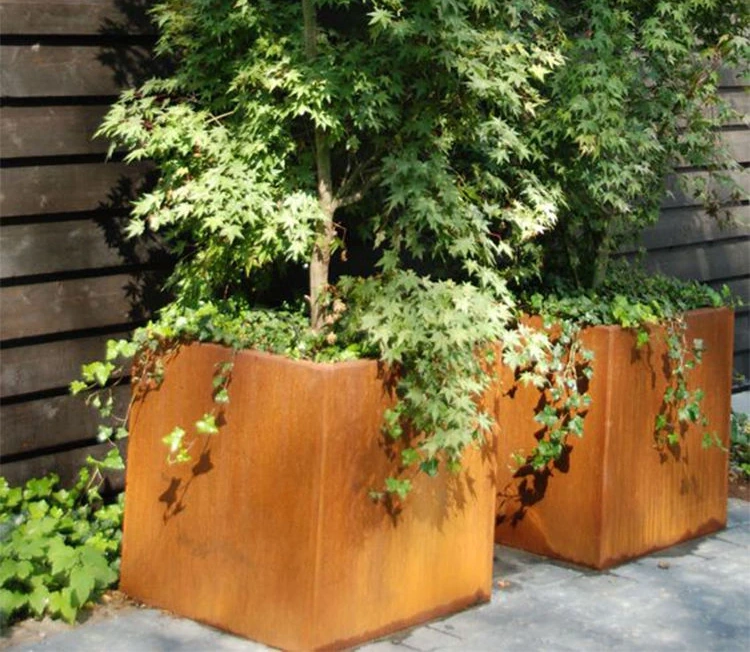
The recommended thickness for corten steel planters depends on the planter size, soil load and whether the planter is freestanding or raised. Choosing the wrong gauge leads to bowing, weld cracking or premature structural failure under wet soil weight.
Thickness guidelines by planter size
| Planter Length | Recommended Thickness | Notes |
|---|---|---|
| Under 600mm | 1.5mm – 2.0mm | Suitable for tabletop or window planters |
| 600mm – 1200mm | 2.0mm – 3.0mm | Standard garden planters, adequate for most soil loads |
| 1200mm – 2000mm | 3.0mm – 4.0mm | Large raised beds, may need internal bracing above 1500mm |
| Over 2000mm | 4.0mm – 5.0mm | Commercial planters, always add internal stiffeners or angle bracing |
Factors that affect thickness choice
- Soil depth: Wet soil weighs approximately 1,600–2,000 kg/m³. A 1m × 1m × 0.6m planter holds nearly 1,000 kg of saturated soil.
- Drainage: Planters without drainage holes retain more water weight. Always specify drain holes at the base.
- Height-to-width ratio: Tall narrow planters (height > width) need thicker walls or internal bracing to resist outward pressure.
- Climate: Freeze-thaw cycles expand wet soil and increase lateral pressure on walls.
Common mistakes
Many buyers specify 1.5mm or 2.0mm for large planters to save cost. This works for the first season, but after 12–18 months of wet-dry cycling, thin walls bow outward at the center. Repair is expensive — replacement is usually cheaper than re-welding a bowed panel on site.
For project quantities, request a sample cross-section from your supplier and check that the stated thickness matches the delivered product. See our corten steel planter range for standard sizes with verified thickness specifications.
Need a factory quote for How Thick Should Corten Steel Be for Planters??
Send your drawings, size list, quantity and destination country. Corten Factory can support custom weathering steel fabrication, export packing and project quotation.