
Corten Steel Grades Explained: A36 vs A588 vs SPA-H for Outdoor Fire Features

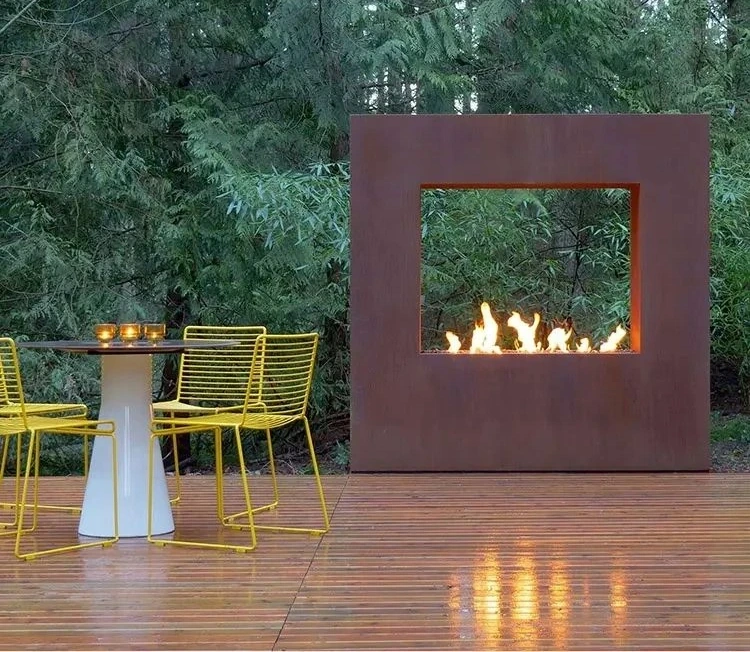
Understanding Corten Steel Grades for Fire Pit Applications
When specifying corten steel fire pits for commercial or residential projects, the steel grade you select directly impacts performance, longevity, and patina development. Not all weathering steels are created equal, and understanding the differences between A36, A588, and SPA-H grades helps buyers make informed procurement decisions.
This guide breaks down the metallurgical composition, mechanical properties, and real-world performance of each grade commonly used in outdoor fire features.
What Makes Steel “Weathering” Grade?
Weathering steel contains alloying elements—primarily copper, chromium, nickel, and phosphorus—that promote the formation of a stable, protective oxide layer (patina) when exposed to atmospheric conditions. This patina acts as a barrier against further corrosion, eliminating the need for paint or galvanizing in most outdoor applications.
The key distinction between grades lies in their specific alloy composition and the resulting mechanical and corrosion-resistance properties.
ASTM A36: The Baseline Structural Steel
A36 is a common carbon structural steel, not technically a weathering grade. However, it appears in budget fire pit manufacturing due to its low cost and wide availability. Key characteristics include:
- Yield strength: 250 MPa (36 ksi)
- Carbon content: 0.25-0.29%
- No significant copper or chromium additions
- Will rust but does NOT form a stable protective patina
- Requires coating or will deteriorate over 3-5 years in exposed conditions
For buyers sourcing fire pits at scale, A36 products marketed as “corten” represent a significant quality risk. The initial appearance may look similar, but long-term performance differs dramatically.
ASTM A588: The North American Weathering Standard
A588 is the primary weathering steel specification used in North American construction and landscape products. It offers genuine atmospheric corrosion resistance through controlled alloying:
- Yield strength: 345 MPa (50 ksi)—significantly stronger than A36
- Copper content: 0.25-0.40%
- Chromium content: 0.40-0.65%
- Nickel content: 0.25-0.40%
- Forms stable patina within 18-36 months depending on climate
- Corrosion rate approximately 4x lower than plain carbon steel after patina stabilization
A588 is the grade most commonly specified for corten steel fire pits destined for the US, Canadian, and Australian markets. Its mechanical properties also allow thinner wall sections without sacrificing structural integrity.
SPA-H (JIS G3125): The Asian-Pacific Standard
SPA-H is the Japanese Industrial Standard equivalent of weathering steel, widely produced by mills in China, Japan, and Korea. For buyers sourcing from Asian manufacturers, this is the grade most commonly available:
- Yield strength: 355 MPa—comparable to A588
- Copper content: 0.25-0.55%
- Chromium content: 0.30-1.25%
- Phosphorus content: 0.07-0.15% (higher than A588, accelerates patina formation)
- Excellent weldability with standard MIG/MAG processes
- Patina development typically faster than A588 due to phosphorus content
When working with a specialized corten manufacturer, SPA-H offers an excellent balance of cost, availability, and performance for fire pit production.
Grade Selection: Which Is Right for Your Project?
The optimal grade depends on your market, budget, and performance requirements:
Choose A588 when:
- Your end market requires ASTM certification
- Projects specify compliance with US building codes
- You need mill test certificates recognized by North American engineers
Choose SPA-H when:
- Sourcing from Chinese or Asian manufacturers
- Cost optimization is important without sacrificing weathering performance
- Faster patina development is desired
- Projects don’t require specific ASTM documentation
Avoid A36 when:
- The product will be permanently exposed to weather
- No protective coating system is planned
- Long-term durability (10+ years) is expected
How to Verify Grade Authenticity
When purchasing corten fire pits wholesale, request the following documentation to confirm genuine weathering steel:
- Mill Test Certificate (MTC): Shows exact chemical composition from the steel mill
- Heat number traceability: Links finished product back to specific steel coil/plate
- Spectroscopy report: Independent verification of alloy content if MTC is unavailable
Reputable manufacturers maintain full material traceability. Our customization process includes grade certification as standard for all bulk project orders.
Thickness Recommendations by Grade
Higher-strength grades allow thinner sections. General guidelines for fire pit walls:
- A588/SPA-H: 3mm minimum for residential, 4-5mm for commercial high-traffic
- A36 (if coated): 4mm minimum due to lower strength and corrosion allowance
- Base plates: Add 1-2mm to wall thickness for structural support
Thicker material adds weight and shipping cost but extends service life. For large-format commercial fire pits, 5mm SPA-H or A588 provides an optimal balance of durability and logistics efficiency.
Get the Right Grade for Your Next Order
Whether you’re specifying fire pits for a landscape architecture project or building inventory for retail, material grade is a critical decision point. Our team can provide mill certificates, sample patina panels, and grade-specific pricing for your volume requirements.
Have questions about which corten grade suits your application? Check our FAQ page for common technical questions, or contact our team directly for project-specific recommendations and quotations.
Need a factory quote for Corten Steel Grades Explained: A36 vs A588 vs SPA-H for Outdoor Fire Features?
Send your drawings, size list, quantity and destination country. Corten Factory can support custom weathering steel fabrication, export packing and project quotation.