

Custom Rectangular Corten Steel Planters: A B2B Buyer’s Specification Guide

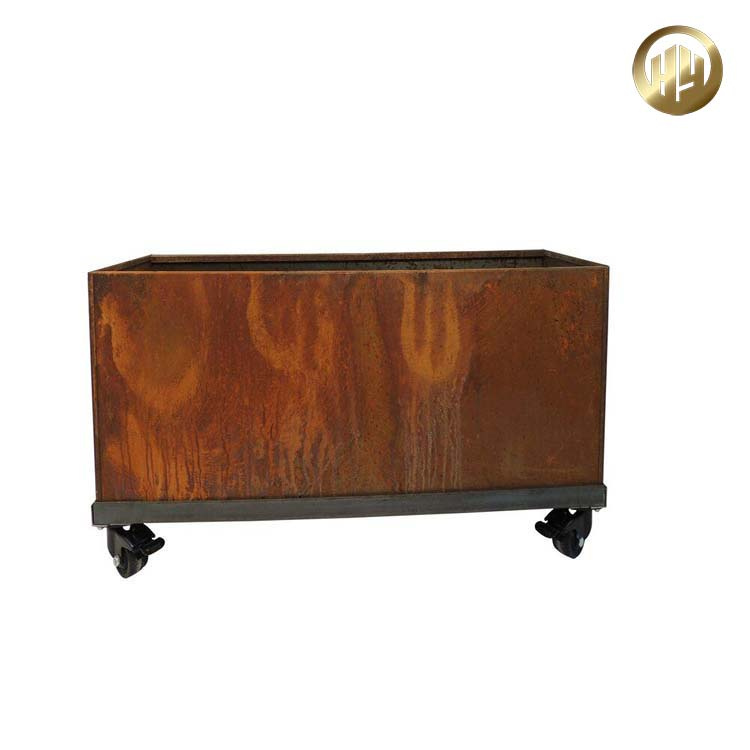
Start with a procurement brief
A request for custom rectangular corten steel planters should begin as a documented commercial brief, not a request to reproduce a photograph. For municipal, commercial, and repeat-order programs, the brief gives purchasing, design, operations, and the supplier one source of truth. Record the intended channel, quantity range, delivery destination, target timing, and the person responsible for each approval. State what is mandatory for the proposed rectangular 花箱 and what remains a preference. This distinction makes a response comparable and prevents an attractive visual reference from becoming an incomplete production instruction.
Weathering steel has an evolving surface character rather than a fixed painted color. Discuss the intended environment and how runoff or contact with adjacent materials will be managed. Ask the supplier to distinguish the base material from liners, inserts, hardware, and other components in the quotation. Avoid broad labels as a replacement for construction detail. A material sample can support a visual discussion, but it does not automatically approve the complete dimensions, fabrication, packing, or assembled product.
At each milestone, define the evidence that will be reviewed. Depending on the order, that may include approved drawings, a defined sample, first-unit images, measurements, packing records, component counts, and shipment documents. Inspection is meaningful when it checks an agreed requirement rather than a vague expectation. If a deviation appears, record whether it will be corrected, accepted with a specific concession, replaced, or held. This supports an orderly decision before dispatch.
Set dimensions before discussing appearance
The review of a rectangular 花箱 should connect every decision to a real operating condition. Give overall dimensions, usable openings or internal space, installation surface, access constraints, handling expectations, and the proposed product configuration. For a planter, drainage, planting volume, liners, and feet need an explicit discussion. For a fire feature, the functional configuration, clearances, fuel selection where relevant, and site responsibilities must be assessed with the applicable project team. Do not assume a category image answers these questions.
Compare offers using the same scope sheet. Include the exact configuration, quantity basis, material description, dimensions, packing, sample treatment, stated lead-time assumptions, trade terms, and exclusions. If a decision is open, show it as an option rather than accepting a total built on unstated assumptions. A lower headline figure may omit an element that another offer includes. The disciplined comparison is therefore against the approved brief and drawing, not a price alone.
For a retail or bulk project program, the customer-facing information is part of the purchase requirement. Product data should align with the approved configuration rather than a generic description. Consider dimensions, item identification, care language, assembly information, package contents, and image use. For a project buyer, scope boundaries and coordination with the site team should be equally clear. The same rectangular 花箱 can serve different channels, but its documentation should reflect the actual receiving and selling workflow.
Assess material expectations in context
Use a written drawing-approval step before production. It should identify visible faces, overall measurements, edge details, connections, optional parts, and any requested branding or packing marks. Mark assumptions clearly. A buyer should review the latest revision, record approval in writing, and treat later adjustments as controlled changes. This is especially important when one custom rectangular 花箱 will become a repeatable SKU or a group of units for a project.
Packaging needs to match the geometry of the rectangular 花箱 and the route after dispatch. Confirm protection for exposed corners, surfaces, openings, and loose components; identify whether the delivery is palletized, containerized, or otherwise handled; and determine how receiving staff will reconcile product, accessories, and purchase order. A compact pack may save volume but require more assembly communication. A fully assembled format may simplify site work while changing handling requirements. Make that trade-off deliberately.
Use the site’s 花箱 category as a reference to real product families when defining a starting format. It is not a substitute for the custom drawing or the final scope. Related outdoor elements such as landscape edging and corten screens can also help a team coordinate material language across a scheme. Each item still requires its own defined configuration and order record.
Convert custom ideas into controlled options
Weathering steel has an evolving surface character rather than a fixed painted color. Discuss the intended environment and how runoff or contact with adjacent materials will be managed. Ask the supplier to distinguish the base material from liners, inserts, hardware, and other components in the quotation. Avoid broad labels as a replacement for construction detail. A material sample can support a visual discussion, but it does not automatically approve the complete dimensions, fabrication, packing, or assembled product.
At each milestone, define the evidence that will be reviewed. Depending on the order, that may include approved drawings, a defined sample, first-unit images, measurements, packing records, component counts, and shipment documents. Inspection is meaningful when it checks an agreed requirement rather than a vague expectation. If a deviation appears, record whether it will be corrected, accepted with a specific concession, replaced, or held. This supports an orderly decision before dispatch.
Lead time should be managed as a chain of decisions: brief, quotation, drawing review, sample or first-unit plan where appropriate, production release, agreed checks, shipment approval, and delivery reconciliation. Assigning an owner to each step makes dependencies visible. A change in size can affect packing; a change in components can affect instructions; a route change can affect handling. Recording those dependencies early keeps unresolved choices from being pushed into the most costly stage.
Request drawings that can be approved
Compare offers using the same scope sheet. Include the exact configuration, quantity basis, material description, dimensions, packing, sample treatment, stated lead-time assumptions, trade terms, and exclusions. If a decision is open, show it as an option rather than accepting a total built on unstated assumptions. A lower headline figure may omit an element that another offer includes. The disciplined comparison is therefore against the approved brief and drawing, not a price alone.
For a retail or bulk project program, the customer-facing information is part of the purchase requirement. Product data should align with the approved configuration rather than a generic description. Consider dimensions, item identification, care language, assembly information, package contents, and image use. For a project buyer, scope boundaries and coordination with the site team should be equally clear. The same rectangular 花箱 can serve different channels, but its documentation should reflect the actual receiving and selling workflow.
After the first delivery, capture what the program established about specification, packaging, documentation, and receiving. Do not simply reuse an old purchase order without checking whether the actual configuration and route remain suitable. A revised controlled specification for the next order gives a buyer a better basis for replenishment and gives the supplier a better basis for consistent response. This approach preserves customization while reducing avoidable variation.
Compare quotations on a like-for-like basis
Packaging needs to match the geometry of the rectangular 花箱 and the route after dispatch. Confirm protection for exposed corners, surfaces, openings, and loose components; identify whether the delivery is palletized, containerized, or otherwise handled; and determine how receiving staff will reconcile product, accessories, and purchase order. A compact pack may save volume but require more assembly communication. A fully assembled format may simplify site work while changing handling requirements. Make that trade-off deliberately.
Use the site’s 花箱 category as a reference to real product families when defining a starting format. It is not a substitute for the custom drawing or the final scope. Related outdoor elements such as landscape edging and corten screens can also help a team coordinate material language across a scheme. Each item still requires its own defined configuration and order record.
A request for custom rectangular corten steel planters should begin as a documented commercial brief, not a request to reproduce a photograph. For municipal, commercial, and repeat-order programs, the brief gives purchasing, design, operations, and the supplier one source of truth. Record the intended channel, quantity range, delivery destination, target timing, and the person responsible for each approval. State what is mandatory for the proposed rectangular 花箱 and what remains a preference. This distinction makes a response comparable and prevents an attractive visual reference from becoming an incomplete production instruction.
Use samples to answer defined questions
At each milestone, define the evidence that will be reviewed. Depending on the order, that may include approved drawings, a defined sample, first-unit images, measurements, packing records, component counts, and shipment documents. Inspection is meaningful when it checks an agreed requirement rather than a vague expectation. If a deviation appears, record whether it will be corrected, accepted with a specific concession, replaced, or held. This supports an orderly decision before dispatch.
Lead time should be managed as a chain of decisions: brief, quotation, drawing review, sample or first-unit plan where appropriate, production release, agreed checks, shipment approval, and delivery reconciliation. Assigning an owner to each step makes dependencies visible. A change in size can affect packing; a change in components can affect instructions; a route change can affect handling. Recording those dependencies early keeps unresolved choices from being pushed into the most costly stage.
The review of a rectangular 花箱 should connect every decision to a real operating condition. Give overall dimensions, usable openings or internal space, installation surface, access constraints, handling expectations, and the proposed product configuration. For a planter, drainage, planting volume, liners, and feet need an explicit discussion. For a fire feature, the functional configuration, clearances, fuel selection where relevant, and site responsibilities must be assessed with the applicable project team. Do not assume a category image answers these questions.
Plan quality checks around the approved scope
For a retail or bulk project program, the customer-facing information is part of the purchase requirement. Product data should align with the approved configuration rather than a generic description. Consider dimensions, item identification, care language, assembly information, package contents, and image use. For a project buyer, scope boundaries and coordination with the site team should be equally clear. The same rectangular 花箱 can serve different channels, but its documentation should reflect the actual receiving and selling workflow.
After the first delivery, capture what the program established about specification, packaging, documentation, and receiving. Do not simply reuse an old purchase order without checking whether the actual configuration and route remain suitable. A revised controlled specification for the next order gives a buyer a better basis for replenishment and gives the supplier a better basis for consistent response. This approach preserves customization while reducing avoidable variation.
Use a written drawing-approval step before production. It should identify visible faces, overall measurements, edge details, connections, optional parts, and any requested branding or packing marks. Mark assumptions clearly. A buyer should review the latest revision, record approval in writing, and treat later adjustments as controlled changes. This is especially important when one custom rectangular 花箱 will become a repeatable SKU or a group of units for a project.
Design packaging for the actual route
Use the site’s 花箱 category as a reference to real product families when defining a starting format. It is not a substitute for the custom drawing or the final scope. Related outdoor elements such as landscape edging and corten screens can also help a team coordinate material language across a scheme. Each item still requires its own defined configuration and order record.
A request for custom rectangular corten steel planters should begin as a documented commercial brief, not a request to reproduce a photograph. For municipal, commercial, and repeat-order programs, the brief gives purchasing, design, operations, and the supplier one source of truth. Record the intended channel, quantity range, delivery destination, target timing, and the person responsible for each approval. State what is mandatory for the proposed rectangular 花箱 and what remains a preference. This distinction makes a response comparable and prevents an attractive visual reference from becoming an incomplete production instruction.
Weathering steel has an evolving surface character rather than a fixed painted color. Discuss the intended environment and how runoff or contact with adjacent materials will be managed. Ask the supplier to distinguish the base material from liners, inserts, hardware, and other components in the quotation. Avoid broad labels as a replacement for construction detail. A material sample can support a visual discussion, but it does not automatically approve the complete dimensions, fabrication, packing, or assembled product.
Coordinate data for the selling channel
Lead time should be managed as a chain of decisions: brief, quotation, drawing review, sample or first-unit plan where appropriate, production release, agreed checks, shipment approval, and delivery reconciliation. Assigning an owner to each step makes dependencies visible. A change in size can affect packing; a change in components can affect instructions; a route change can affect handling. Recording those dependencies early keeps unresolved choices from being pushed into the most costly stage.
The review of a rectangular 花箱 should connect every decision to a real operating condition. Give overall dimensions, usable openings or internal space, installation surface, access constraints, handling expectations, and the proposed product configuration. For a planter, drainage, planting volume, liners, and feet need an explicit discussion. For a fire feature, the functional configuration, clearances, fuel selection where relevant, and site responsibilities must be assessed with the applicable project team. Do not assume a category image answers these questions.
Compare offers using the same scope sheet. Include the exact configuration, quantity basis, material description, dimensions, packing, sample treatment, stated lead-time assumptions, trade terms, and exclusions. If a decision is open, show it as an option rather than accepting a total built on unstated assumptions. A lower headline figure may omit an element that another offer includes. The disciplined comparison is therefore against the approved brief and drawing, not a price alone.
Manage lead time as a sequence of decisions
After the first delivery, capture what the program established about specification, packaging, documentation, and receiving. Do not simply reuse an old purchase order without checking whether the actual configuration and route remain suitable. A revised controlled specification for the next order gives a buyer a better basis for replenishment and gives the supplier a better basis for consistent response. This approach preserves customization while reducing avoidable variation.
Use a written drawing-approval step before production. It should identify visible faces, overall measurements, edge details, connections, optional parts, and any requested branding or packing marks. Mark assumptions clearly. A buyer should review the latest revision, record approval in writing, and treat later adjustments as controlled changes. This is especially important when one custom rectangular 花箱 will become a repeatable SKU or a group of units for a project.
Packaging needs to match the geometry of the rectangular 花箱 and the route after dispatch. Confirm protection for exposed corners, surfaces, openings, and loose components; identify whether the delivery is palletized, containerized, or otherwise handled; and determine how receiving staff will reconcile product, accessories, and purchase order. A compact pack may save volume but require more assembly communication. A fully assembled format may simplify site work while changing handling requirements. Make that trade-off deliberately.
Prepare receiving and installation information
A request for custom rectangular corten steel planters should begin as a documented commercial brief, not a request to reproduce a photograph. For municipal, commercial, and repeat-order programs, the brief gives purchasing, design, operations, and the supplier one source of truth. Record the intended channel, quantity range, delivery destination, target timing, and the person responsible for each approval. State what is mandatory for the proposed rectangular 花箱 and what remains a preference. This distinction makes a response comparable and prevents an attractive visual reference from becoming an incomplete production instruction.
Weathering steel has an evolving surface character rather than a fixed painted color. Discuss the intended environment and how runoff or contact with adjacent materials will be managed. Ask the supplier to distinguish the base material from liners, inserts, hardware, and other components in the quotation. Avoid broad labels as a replacement for construction detail. A material sample can support a visual discussion, but it does not automatically approve the complete dimensions, fabrication, packing, or assembled product.
At each milestone, define the evidence that will be reviewed. Depending on the order, that may include approved drawings, a defined sample, first-unit images, measurements, packing records, component counts, and shipment documents. Inspection is meaningful when it checks an agreed requirement rather than a vague expectation. If a deviation appears, record whether it will be corrected, accepted with a specific concession, replaced, or held. This supports an orderly decision before dispatch.
Control changes after approval
The review of a rectangular 花箱 should connect every decision to a real operating condition. Give overall dimensions, usable openings or internal space, installation surface, access constraints, handling expectations, and the proposed product configuration. For a planter, drainage, planting volume, liners, and feet need an explicit discussion. For a fire feature, the functional configuration, clearances, fuel selection where relevant, and site responsibilities must be assessed with the applicable project team. Do not assume a category image answers these questions.
Compare offers using the same scope sheet. Include the exact configuration, quantity basis, material description, dimensions, packing, sample treatment, stated lead-time assumptions, trade terms, and exclusions. If a decision is open, show it as an option rather than accepting a total built on unstated assumptions. A lower headline figure may omit an element that another offer includes. The disciplined comparison is therefore against the approved brief and drawing, not a price alone.
For a retail or bulk project program, the customer-facing information is part of the purchase requirement. Product data should align with the approved configuration rather than a generic description. Consider dimensions, item identification, care language, assembly information, package contents, and image use. For a project buyer, scope boundaries and coordination with the site team should be equally clear. The same rectangular 花箱 can serve different channels, but its documentation should reflect the actual receiving and selling workflow.
Build a repeat-order record
Use a written drawing-approval step before production. It should identify visible faces, overall measurements, edge details, connections, optional parts, and any requested branding or packing marks. Mark assumptions clearly. A buyer should review the latest revision, record approval in writing, and treat later adjustments as controlled changes. This is especially important when one custom rectangular 花箱 will become a repeatable SKU or a group of units for a project.
Packaging needs to match the geometry of the rectangular 花箱 and the route after dispatch. Confirm protection for exposed corners, surfaces, openings, and loose components; identify whether the delivery is palletized, containerized, or otherwise handled; and determine how receiving staff will reconcile product, accessories, and purchase order. A compact pack may save volume but require more assembly communication. A fully assembled format may simplify site work while changing handling requirements. Make that trade-off deliberately.
Use the site’s 花箱 category as a reference to real product families when defining a starting format. It is not a substitute for the custom drawing or the final scope. Related outdoor elements such as landscape edging and corten screens can also help a team coordinate material language across a scheme. Each item still requires its own defined configuration and order record.
Buyer questions and answers
Weathering steel has an evolving surface character rather than a fixed painted color. Discuss the intended environment and how runoff or contact with adjacent materials will be managed. Ask the supplier to distinguish the base material from liners, inserts, hardware, and other components in the quotation. Avoid broad labels as a replacement for construction detail. A material sample can support a visual discussion, but it does not automatically approve the complete dimensions, fabrication, packing, or assembled product.
At each milestone, define the evidence that will be reviewed. Depending on the order, that may include approved drawings, a defined sample, first-unit images, measurements, packing records, component counts, and shipment documents. Inspection is meaningful when it checks an agreed requirement rather than a vague expectation. If a deviation appears, record whether it will be corrected, accepted with a specific concession, replaced, or held. This supports an orderly decision before dispatch.
Lead time should be managed as a chain of decisions: brief, quotation, drawing review, sample or first-unit plan where appropriate, production release, agreed checks, shipment approval, and delivery reconciliation. Assigning an owner to each step makes dependencies visible. A change in size can affect packing; a change in components can affect instructions; a route change can affect handling. Recording those dependencies early keeps unresolved choices from being pushed into the most costly stage.
FAQ
What must be fixed before quotation?
Fix the use case, dimensions, quantity basis, delivery destination, and required configuration for the rectangular 花箱. List unresolved choices separately.
Can a category page replace a drawing?
No. A category page is useful for identifying a product family, but the order should be governed by a written scope and approved drawing.
What should a sample approve?
Define whether it is intended to approve appearance, dimensions, functionality, fabrication detail, packaging, or a limited combination of these items.
How should quotations be compared?
Compare scope, included components, packing, quantities, timing assumptions, and commercial terms before comparing the total.
Who confirms site suitability?
The buyer and relevant project or installation team must confirm site-specific suitability and applicable requirements.
Why record changes?
A recorded change identifies the revised requirement, approver, and affected drawing or order document, avoiding conflicting instructions.
What should packing information show?
It should identify the order, product configuration, package count, handling format, and any loose components or accessories.
How should a repeat order be managed?
Review the first delivery, update the controlled specification, and use the latest approved record for the next release.
Need a factory quote for Custom Rectangular Corten Steel Planters: A B2B Buyer’s Specification Guide?
Send your drawings, size list, quantity and destination country. Corten Factory can support custom weathering steel fabrication, export packing and project quotation.