
Corten Steel Planters for Canadian Commercial and Municipal Projects: Complete Specification Guide

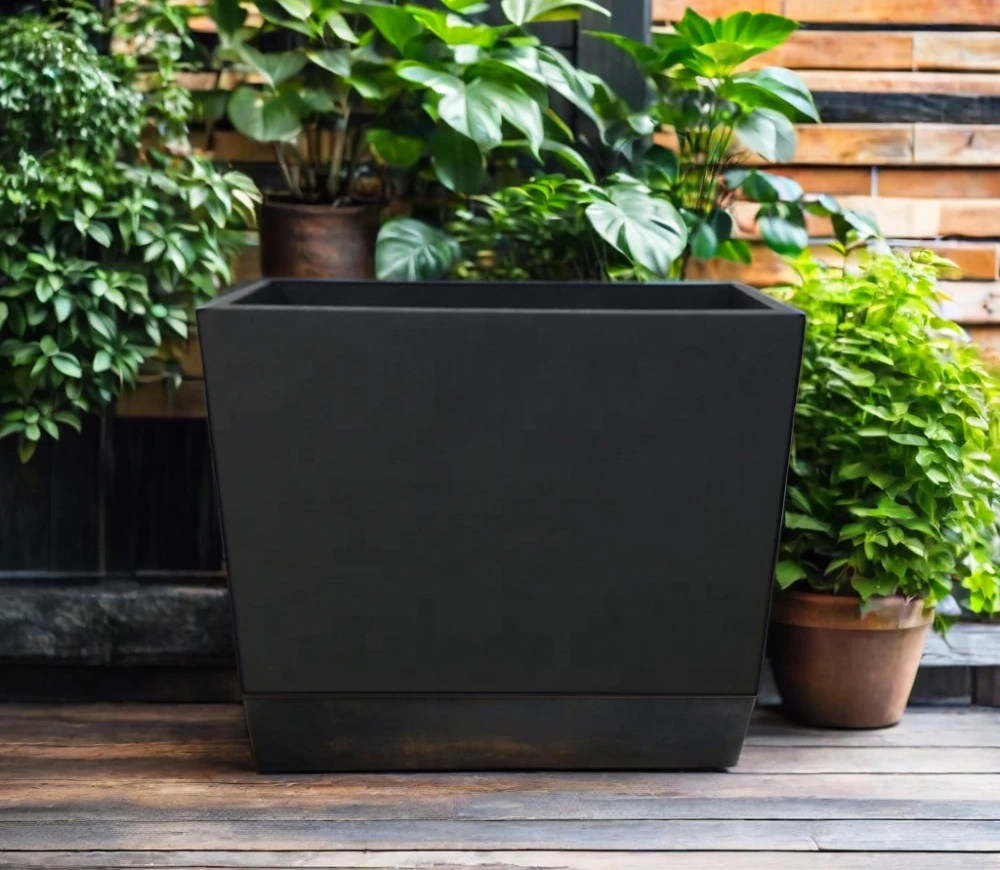
Why Canadian Landscape Architects Are Specifying Corten Steel Planters for Municipal and Commercial Projects
Across Canada’s major urban centres — from Vancouver’s waterfront developments to Toronto’s PATH-adjacent plazas and Montreal’s revitalized public squares — corten steel planters have become a default specification for landscape architects working on projects that demand both visual impact and multi-decade durability. The material’s ability to withstand freeze-thaw cycles numbering 100+ per year in most Canadian provinces makes it uniquely suited to the country’s climate extremes.
This guide examines the technical, procurement, and regulatory considerations that Canadian design professionals need when specifying corten steel planters for commercial and municipal projects. We cover material performance data specific to Canadian climate zones, CSA standards compliance, cost benchmarking in CAD, and real project case studies from coast to coast.
Understanding Corten Steel Performance in Canadian Climate Zones
Freeze-Thaw Resistance: The Critical Factor
Canada’s climate presents one of the most demanding environments for outdoor materials. Environment Canada data shows that most populated regions experience between 80 and 150 freeze-thaw cycles annually. Toronto averages 110 cycles, Calgary sees approximately 130, and Vancouver’s milder coastal climate still produces 40-60 cycles per year.
Corten steel (ASTM A588 / CSA G40.21 350AT) handles these cycles without the cracking, spalling, or delamination that affects concrete, natural stone, and even some composite materials. The protective patina layer — typically 50-150 micrometres thick at full maturity — expands and contracts with temperature changes without losing adhesion to the base metal.
Testing conducted under CSA S16-19 parameters shows that corten steel maintains its structural properties at temperatures down to -40°C, which covers even the most extreme conditions in inhabited Canadian regions. The material’s Charpy V-notch impact resistance at -45°C exceeds 27 joules, confirming ductile behaviour even in deep winter conditions.
Patina Development Timeline in Canadian Conditions
The wet-dry cycling that drives patina formation behaves differently across Canadian climate zones:
Pacific Coast (Vancouver, Victoria): High rainfall and moderate temperatures produce rapid initial oxidation. Expect visible orange patina within 2-4 weeks of installation. Full stabilization takes 12-18 months due to extended wet periods that slow the drying phase.
Prairie Provinces (Calgary, Edmonton, Winnipeg): Low humidity and extreme temperature swings create ideal wet-dry cycling conditions during spring and fall. Patina develops quickly during shoulder seasons but slows during winter when surfaces remain frozen. Full maturation: 18-24 months.
Central Canada (Toronto, Ottawa, Montreal): Four distinct seasons provide excellent cycling conditions. Summer humidity followed by dry autumn periods accelerates patina formation. Expect stable patina within 12-18 months.
Atlantic Provinces (Halifax, St. John’s): Salt air within 2-3 km of the coast requires careful consideration. Projects in direct coastal exposure should specify minimum 3mm wall thickness and ensure adequate drainage to prevent salt accumulation. Patina formation: 18-24 months with potentially less uniform colouration.
De-Icing Salt Exposure Considerations
Canadian municipalities apply between 5 and 9 million tonnes of road salt annually. Planters positioned along roadways, in parking areas, or adjacent to sidewalks treated with calcium chloride or sodium chloride face accelerated corrosion if salt accumulates on surfaces without regular washing.
Mitigation strategies for salt-exposed installations:
- Specify 3mm minimum wall thickness (versus 2mm for protected locations)
- Include a 50mm gravel splash zone at the planter base
- Position planters at minimum 600mm from curb edges where salt spray is heaviest
- Specify sealed interior surfaces to prevent salt migration through drainage holes
- Include spring maintenance protocol: rinse exterior surfaces with fresh water after final salt application of the season
CSA Standards and Canadian Building Code Compliance
Applicable Standards for Structural Planters
When corten steel planters serve as structural elements — retaining walls, barrier planters, or improved planting systems — they fall under several Canadian standards:
CSA G40.21-13 (R2023): This standard covers structural quality steel, including 350AT (atmospheric corrosion resistant) grade. Specifiers should reference this standard when writing procurement documents for Canadian projects to ensure material traceability.
CSA S16-19: Design of Steel Structures applies when planters function as barriers or retaining elements. Load calculations for barrier planters in public spaces must account for crowd loading (minimum 1.5 kN/m horizontal load at top edge per NBC 2020).
National Building Code of Canada 2020: Section 4.1.5 addresses guard requirements. Planters used as guards at grade changes exceeding 600mm must meet the NBC’s guard height and load requirements. A planter functioning as a guard must be minimum 1070mm high (1500mm at locations where children may climb).
Municipal Procurement Requirements
Canadian municipal procurement for planters typically requires:
- Mill test certificates (MTR/MTC) confirming ASTM A588 or CSA G40.21 350AT compliance
- Weld procedure specifications (WPS) per CSA W59
- Shop drawings stamped by a P.Eng. licensed in the province of installation (for structural applications)
- 10-year minimum structural warranty
- Canadian content declarations (for projects receiving federal infrastructure funding)
Projects funded through the Investing in Canada Infrastructure Program (ICIP) or the Canada Community-Building Fund may require minimum Canadian content percentages. While raw corten steel is typically imported (major mills include POSCO, Nippon Steel, and SSAB), fabrication performed in Canada qualifies as Canadian content for most procurement frameworks.
Accessibility Requirements Under CSA B651
Planters in public spaces must comply with CSA B651-18 (Accessible Design for the Built Environment) and provincial accessibility legislation (AODA in Ontario, AMA in Manitoba, etc.):
- Planters must not reduce accessible path width below 1500mm (1800mm preferred)
- Planter edges must be detectable by white cane — minimum 75mm vertical face at ground level
- Raised planters used as seating must include sections at 430-530mm height
- Colour contrast between planter and surrounding paving must meet minimum 30-point LRV difference
Corten steel’s distinctive rust-brown colour typically provides excellent contrast against grey concrete or asphalt paving, naturally meeting the LRV contrast requirement without additional treatment.
Cost Analysis: Corten Steel vs. Alternatives in the Canadian Market (2026 CAD Pricing)
Material Cost Comparison per Linear Metre of Planter
The following cost comparison assumes a standard rectangular planter: 1000mm L × 500mm W × 600mm H, 3mm wall thickness equivalent:
| Material | Unit Cost (CAD/linear metre) | Installation Cost | 10-Year Maintenance | Total 10-Year Cost |
|---|---|---|---|---|
| Corten Steel (3mm) | $850-$1,200 | $150-$250 | $0-$50 | $1,000-$1,500 |
| Powder-Coated Mild Steel | $650-$900 | $150-$250 | $400-$800 | $1,200-$1,950 |
| Stainless Steel (304) | $1,400-$2,100 | $200-$300 | $50-$100 | $1,650-$2,500 |
| Cast Concrete | $500-$800 | $300-$500 | $200-$600 | $1,000-$1,900 |
| FRP/GRC | $700-$1,100 | $100-$200 | $300-$700 | $1,100-$2,000 |
Key cost observations for the Canadian market:
- Corten’s zero-maintenance characteristic eliminates the $400-$800 per linear metre repainting cost that powder-coated steel requires every 5-7 years in Canadian conditions
- Concrete planters face freeze-thaw damage requiring patching or replacement — a hidden cost that often exceeds initial savings
- Import duties on finished steel products from non-CUSMA countries add 0-25% depending on origin. Chinese-manufactured planters currently face anti-dumping duties that vary by product classification
- Shipping costs from Asian manufacturers to Canadian ports (Vancouver or Montreal) typically add $80-$150 per planter for standard container loads
Budget Planning for Canadian Municipal Projects
Municipal landscape budgets in Canada typically allocate 8-15% of total hard landscape costs to planters and street furniture. For a typical urban streetscape project in a mid-sized Canadian city:
- Small project (10-20 planters): $15,000-$25,000 CAD total for corten planters
- Medium project (50-100 planters): $50,000-$100,000 CAD — bulk pricing reduces per-unit cost by 15-25%
- Large municipal project (200+ planters): $150,000-$350,000 CAD — direct factory sourcing becomes cost-effective at this scale
For projects exceeding 50 units, direct procurement from a corten steel manufacturer rather than through a domestic distributor typically saves 30-45% on material costs. The trade-off is longer lead times (12-16 weeks vs. 4-6 weeks from domestic stock) and the need to manage international logistics.
Project Case Studies: Corten Planters Across Canada
Case Study 1: Toronto Waterfront Revitalization — Queens Quay Boulevard
The Queens Quay redesign incorporated over 200 corten steel planters along a 3.5 km stretch of Toronto’s central waterfront. The project specification required:
- Custom L-shaped planters integrating with granite seating walls
- 3mm corten steel with internal waterproofing membrane
- Integrated drainage connected to the stormwater management system
- Root barrier compatibility for large tree planters
- Snow load rating: 2.4 kPa minimum on planter rims used as informal seating
Performance data after 8+ years of service shows zero structural failures, no wall thickness reduction exceeding design corrosion allowance, and maintenance limited to annual spring cleaning of salt residue. The planters have survived multiple ice storms, summer heat waves exceeding 40°C, and sustained winter temperatures below -25°C without visible distress.
Case Study 2: Vancouver Olympic Village — Southeast False Creek
The Olympic Village neighbourhood specified corten steel planters as part of its sustainability-focused public realm design. Key specifications:
- Modular planter system allowing reconfiguration for seasonal programming
- Rain garden integration — planters double as bioretention cells capturing first 25mm of rainfall
- Minimum 450mm soil depth for large shrub planting
- Overflow connections to municipal storm system
- LEED credits claimed for regional material sourcing and reduced maintenance requirements
The Pacific coast climate accelerated patina development, with full stabilization observed within 14 months. The rain garden function has performed as designed, with the City of Vancouver reporting a 35% reduction in stormwater runoff from the treated catchment area compared to conventionally drained adjacent blocks.
Case Study 3: Calgary’s East Village Redevelopment
Calgary’s East Village represents one of Canada’s largest urban redevelopment projects, with corten steel specified throughout the public realm as a unifying material element. The planter program included:
- 120 custom planters ranging from 600mm to 2400mm in length
- Prairie-adapted planting designs featuring native grasses and drought-tolerant perennials
- Integrated LED lighting in planter bases for pedestrian wayfinding
- Anti-skateboard detailing on planter rims (stainless steel clips at 500mm centres)
- Heavy-duty anchoring to resist chinook wind uplift forces
The chinook wind factor is unique to Calgary and southern Alberta — sudden temperature increases of 20-30°C within hours create rapid thermal expansion that less ductile materials struggle to accommodate. Corten’s inherent ductility and continuous patina regeneration handle these thermal shocks without issue.
Specification Writing Guide for Canadian Projects
CSC MasterFormat Section 32 31 19 — Metal Planters
When writing specifications for Canadian projects using the CSC (Construction Specifications Canada) format, corten planters typically fall under:
- Division 32 — Exterior Improvements
- Section 32 31 19 — Metal Site Planters
- Alternative: Section 32 94 00 — Planting Accessories (for simpler installations)
Key specification clauses to include:
Part 1 — General:
- Reference Standards: CSA G40.21-13, ASTM A588/A588M, CSA W59, CSA S16-19 (if structural)
- Quality Assurance: Manufacturer to provide minimum 5 project references in similar Canadian climate zone
- Warranty: 10-year structural warranty against perforation; 25-year warranty against structural failure
- Submittals: Shop drawings, material test certificates, weld procedure specifications, finish samples
Part 2 — Products:
- Material: ASTM A588 Grade A or CSA G40.21 350AT, minimum yield strength 350 MPa
- Thickness: 3mm minimum for planters up to 1000mm height; 5mm for planters exceeding 1000mm or serving as barriers
- Welding: Continuous MIG/MAG welds, ground flush on visible faces; matching A588 filler wire
- Drainage: Minimum 4 × 20mm diameter holes per 0.5 m² of base area, with stainless steel mesh screens
- Interior Treatment: Bituminous paint or EPDM liner to prevent soil contact with interior welds
Part 3 — Execution:
- Setting: Level to within 3mm over any 1000mm run
- Anchoring: Minimum 4 stainless steel anchor bolts per planter for exposed locations; chemical anchors in concrete
- Soil Fill: Coordinate with landscape contractor; ensure drainage layer (minimum 75mm clean gravel) below growing media
- Protection: Cover planters during adjacent concrete pours and masonry work to prevent splatter on weathering surfaces
Drawing Notes and Details
Standard drawing details that Canadian specifications should include:
- Footing detail showing frost protection below planter base (minimum 1200mm depth in Climate Zone 6-7)
- Expansion joint detail for runs exceeding 3000mm (allow 3mm gap per 1000mm length for thermal movement)
- Interface detail between corten and dissimilar metals (neoprene isolation gaskets to prevent galvanic corrosion)
- Snow guard detail if planters are located below roof drainage (prevent concentrated ice impact on rim)
- Root barrier detail for tree planters (copper-impregnated membrane or physical barrier)
Procurement Options for Canadian Buyers
Direct Import from Manufacturer
For projects requiring 20+ units, direct procurement from a specialized corten steel manufacturer offers the best value proposition. Key considerations:
Advantages:
- 30-45% cost savings versus domestic retail pricing
- Full customization capability — any dimension, shape, or feature
- Factory quality control with documented inspection reports
- Container-load shipping economics (20′ container fits approximately 40-60 standard planters)
Logistics considerations for Canadian delivery:
- Port of entry: Vancouver (Pacific route, 18-22 days from Asia) or Montreal/Halifax (Suez route, 28-35 days)
- Customs brokerage: Budget $500-$1,500 per shipment for brokerage fees
- Duty rates: Classified under HS 7326.90 (other articles of iron/steel) — duty rates vary by country of origin
- GST/HST: Payable on CIF value plus duty at time of import
- Last-mile delivery: Arrange flatbed truck from port to site; standard container loads weigh 8,000-15,000 kg
Working with an established corten steel planter manufacturer that has experience shipping to Canada simplifies the process. Look for suppliers who provide DDP (Delivered Duty Paid) pricing to eliminate customs complexity on your end.
Domestic Distributors and Fabricators
Canadian fabricators and distributors serve projects requiring faster turnaround or smaller quantities:
- Lead time: 4-8 weeks versus 12-16 weeks for imports
- Premium: Expect 40-70% higher pricing versus direct import
- Advantage: Easier warranty claims, local site visits for complex installations
- Limitation: Many domestic fabricators work from imported sheet and may not stock all thicknesses
Installation Best Practices for Canadian Conditions
Foundation and Frost Protection
Canadian frost depths range from 600mm (coastal BC) to 2400mm (northern Ontario/Manitoba). Planter foundations must account for frost heave:
- Option 1 — Frost-free footing: Concrete pad or piers extending below frost line. Required for planters functioning as barriers or retaining elements.
- Option 2 — Floating slab: 100mm reinforced concrete slab on 150mm compacted granular base. Acceptable for decorative planters that can tolerate minor seasonal movement (up to 10mm).
- Option 3 — Grade-beam system: For long runs of connected planters, a grade beam below frost line provides uniform support and prevents differential settlement.
Critical detail: Include 25mm rigid foam insulation beneath planter bases in Zones 6-7A to reduce frost penetration into the growing medium. This protects root systems of perennial plantings and prevents ice lens formation that can crack interior liners.
Winter Protection for Plantings
The planter itself requires no winter protection — corten steel is impervious to freeze-thaw damage. However, the soil and plants within require consideration:
- Above-ground planters expose root zones to temperatures 10-15°C colder than in-ground conditions
- Specify plants rated minimum 2 hardiness zones colder than site conditions (e.g., Zone 3 plants for Zone 5 locations)
- Include root insulation layer: 50mm rigid XPS foam inside planter walls, below soil level
- Design drainage to prevent water pooling and ice formation at planter bases
Handling and Storage on Canadian Job Sites
Construction schedules in Canada are heavily influenced by weather. Planters often arrive on site before installation is possible. Storage best practices:
- Store on timber dunnage (minimum 100mm off ground) to prevent ground moisture contact
- Do not stack more than 3 planters high — nested planters can freeze together in winter
- Cover with breathable tarpaulin — non-breathable covers trap condensation and cause uneven patina
- Position away from salt storage areas and de-icing material stockpiles
- Allow minimum 2 weeks after final salt application before installing planters adjacent to roadways
Sustainability and LEED Considerations
LEED v4.1 Credits for Corten Steel Planters
Corten steel planters can contribute to several LEED v4.1 credits relevant to Canadian projects:
- MR Credit: Building Product Disclosure — EPD (1 point): Major steel producers provide Environmental Product Declarations for weathering steel products
- MR Credit: Sourcing of Raw Materials (1-2 points): Steel with recycled content (typically 25-95% depending on production method) contributes to this credit
- SS Credit: Rainwater Management (1-3 points): Planters designed as bioretention cells contribute to on-site stormwater management
- SS Credit: Heat Island Reduction (1-2 points): Planters with mature vegetation reduce hardscape surface temperatures
The zero-maintenance aspect of corten also aligns with the CaGBC’s (Canada Green Building Council) Zero Carbon Building Standard, which considers operational maintenance impacts in lifecycle assessments.
Embodied Carbon Comparison
Lifecycle carbon analysis for planters (per unit, 1000mm × 500mm × 600mm):
| Material | Embodied Carbon (kg CO₂e) | 50-Year Maintenance Carbon | End-of-Life | Total Lifecycle |
|---|---|---|---|---|
| Corten Steel (3mm) | 85-120 | 0-5 | -40 (recycling credit) | 45-85 |
| Concrete (precast) | 60-90 | 30-50 | +10 (landfill) | 100-150 |
| Powder-Coated Steel | 90-130 | 40-80 | -35 (recycling credit) | 95-175 |
| FRP Composite | 110-160 | 20-40 | +25 (landfill/incineration) | 155-225 |
Corten steel’s combination of high recycled content, zero maintenance emissions, and full recyclability at end of life gives it the lowest lifecycle carbon footprint among common planter materials — a factor increasingly important for Canadian projects pursuing green building certification.
Common Design Configurations for Canadian Commercial Projects
Linear Boulevard Planters
Standard configuration for Canadian streetscapes and commercial frontages:
- Dimensions: 1500-3000mm L × 600-800mm W × 700-900mm H
- Wall thickness: 3mm (standard) or 5mm (heavy traffic areas)
- Features: Integrated bench caps (hardwood or composite), overflow drainage, forklift pockets for relocation
- Planting: Ornamental grasses (Calamagrostis, Panicum) for year-round structure plus seasonal colour
- Spacing: 3000-5000mm centres along pedestrian routes, per municipal streetscape standards
Security/Anti-Ram Planters
Post-2018 security requirements for Canadian public spaces have increased demand for barrier-rated planters:
- Wall thickness: 5-8mm with internal concrete ballast
- Foundation: Reinforced concrete footing with shear key connection
- Rating: Tested to PAS 68 or ASTM F2656 standards (consult security engineer)
- Weight: 2,000-5,000 kg when filled — sufficient mass to stop a 7,500 kg vehicle at 50 km/h
- Appearance: Identical to standard planters — security function is concealed
Major Canadian cities including Toronto, Ottawa, Montreal, and Vancouver now require hostile vehicle mitigation (HVM) measures for public gathering spaces. Corten steel planters provide an aesthetically acceptable solution that avoids the fortress-like appearance of concrete bollards. For custom security-rated corten planters, specifications must be developed in conjunction with a qualified security consultant.
Tree Planters and Root Management
Large tree planters for Canadian urban environments require specific design considerations:
- Minimum soil volume: 15-20 m³ per tree for species reaching 10m+ canopy (per Toronto Green Standard)
- Connected soil systems: Silva cells or structural soil beneath adjacent paving to supplement planter volume
- Root barrier: Copper-impregnated fabric or physical root deflector at planter walls
- Irrigation: Sub-surface drip system with winterization valves for Canadian freeze conditions
- Species selection: Acer rubrum, Gleditsia triacanthos, Quercus rubra — salt-tolerant varieties for roadside locations
Maintenance and Lifecycle Management
Annual Maintenance Schedule for Canadian Installations
Unlike painted or coated planters, corten steel requires minimal maintenance. Recommended annual protocol:
Spring (April-May):
- Rinse exterior surfaces with fresh water to remove winter salt accumulation
- Inspect drainage holes — clear any debris or ice damage
- Check anchor bolts for frost-heave movement
- Photograph patina condition for maintenance records
Fall (October-November):
- Clear leaf debris from planter interiors to prevent moisture retention against walls
- Verify drainage function before freeze — water must exit freely
- Apply protective mulch layer (75-100mm) to insulate root zones for winter
Total annual maintenance time: approximately 15-20 minutes per planter. Compare this to powder-coated steel planters requiring inspection for coating damage, touch-up painting, and eventual full recoating — typically 2-4 hours per unit every 5-7 years.
Expected Service Life
Corten steel planters with proper specification and installation deliver service life exceeding 50 years in Canadian conditions. The critical factor is original wall thickness:
- Corrosion rate in Canadian urban environments: 0.01-0.03 mm/year (after patina stabilization)
- 3mm wall starting thickness: 50+ year service life with 1.5mm+ residual thickness
- 5mm wall starting thickness: 80+ year service life
- End-of-life indicator: visible thinning, pin-hole perforations, or loss of structural rigidity
At end of life, corten steel is 100% recyclable as scrap steel — current Canadian scrap prices range from $280-$350 CAD per tonne, providing a small but meaningful residual value offset.
Working with Corten Factory for Canadian Projects
As a specialist corten steel manufacturer, Corten Factory supplies planters to Canadian landscape architects, contractors, and municipal procurement departments across all provinces. Our capabilities include:
- Custom sizing to any dimension — no minimum/maximum size restrictions
- CSA-compliant material with full mill test certification
- Pre-weathered finish option — planters arrive with established patina, eliminating initial rust runoff period
- DDP shipping to any Canadian port or inland destination
- Technical support for specification writing and shop drawing review
- Sample program — order a single unit for client approval before committing to full production
For Canadian projects requiring commercial-grade corten steel planters, contact our project team with your specifications, quantities, and delivery timeline. We provide detailed quotations within 48 hours and can accommodate project timelines from 4 weeks (stock items) to 12-16 weeks (fully custom designs).
Conclusion: Why Corten Steel Planters Are the Rational Choice for Canadian Commercial Projects
The combination of zero maintenance requirements, proven freeze-thaw durability, lifecycle cost advantages, and aesthetic compatibility with contemporary Canadian urban design makes corten steel the default planter material for informed specifiers. Projects from Vancouver to Halifax demonstrate multi-decade performance without the coating failures, concrete spalling, or material degradation that plague less suitable alternatives.
For Canadian landscape architects and procurement professionals evaluating planter materials for their next project, the data supports a clear conclusion: corten steel’s higher initial cost is recovered within 5-7 years through eliminated maintenance, and the material continues to perform and improve in appearance for decades beyond that point. In a country where outdoor materials face some of the world’s most demanding climate conditions, that kind of proven resilience matters.
Regional Considerations by Province
British Columbia: Coastal and Mountain Environments
British Columbia presents two distinct environments for corten steel planters. The Lower Mainland and Vancouver Island experience mild, wet winters with minimal freeze-thaw cycling but extended moisture exposure. Interior BC (Kelowna, Kamloops) sees continental climate patterns with hot, dry summers and cold winters.
For coastal BC projects, the primary consideration is extended wet periods. Vancouver receives approximately 1189mm of annual rainfall, with November through March seeing 150+ mm per month. Planters in covered or semi-covered locations (building overhangs, covered walkways) may not receive sufficient wetting to develop uniform patina. Specify pre-weathered finish for these locations.
Salt air exposure in BC is generally less aggressive than Atlantic Canada due to the Pacific’s lower salinity and prevailing offshore winds. Projects within 500m of the waterfront should still specify 3mm minimum thickness as a precaution.
Notable BC projects using corten planters include the Granville Island Public Market renovation, the University of British Columbia campus landscape program, and multiple City of Vancouver greenway projects along the Arbutus Corridor.
Alberta: Chinook Winds and Extreme Temperature Swings
Alberta’s unique chinook wind phenomenon creates temperature swings of 20-30°C within hours — from -20°C to +10°C in a single afternoon. This rapid thermal cycling accelerates patina development but also tests material ductility. Corten steel’s coefficient of thermal expansion (12 × 10⁻⁶/°C) means a 3000mm planter experiences approximately 1.8mm of length change during a 50°C temperature swing.
Design implications for Alberta:
- Include expansion gaps in continuous planter runs (3mm per 1000mm of length)
- Use slotted anchor bolt holes to allow thermal movement without stress concentration
- Avoid rigid connections between planters and building structures
- Specify flexible sealant (polyurethane, not silicone) at planter-to-paving interfaces
Calgary’s +15 system (improved pedestrian walkways) has incorporated corten planters at ground-level entrances, creating a visual connection between the weathered steel and the city’s sandstone heritage buildings. The warm rust tones complement Calgary’s architectural palette effectively.
Ontario: Urban Heat Island and Stormwater Management
Ontario’s major urban centres — Toronto, Ottawa, Hamilton, Mississauga — face increasing pressure to manage stormwater on-site and reduce urban heat island effects. Corten steel planters serve both functions when properly designed:
Stormwater integration: The City of Toronto’s Green Standard v4 requires on-site retention of the first 5mm of rainfall for Tier 1 compliance. Planters designed as bioretention cells — with engineered growing media, underdrain systems, and overflow connections — contribute directly to this requirement. A single 2000mm × 800mm planter can manage runoff from approximately 15 m² of impervious surface.
Heat island mitigation: Toronto’s Official Plan identifies urban heat as a priority concern. Vegetated planters reduce surface temperatures by 15-25°C compared to bare hardscape. The corten steel itself, while absorbing solar radiation, re-radiates heat more effectively than dark-coloured concrete or asphalt, resulting in lower nighttime heat retention.
Ontario Building Code considerations: OBC 2024 Section 3.3.1 addresses guards and barriers. Planters used as guards at elevation changes must meet the same structural requirements as purpose-built guards — 1.5 kN/m horizontal load at the top, 1.0 kN concentrated load at any point. Specify 5mm wall thickness minimum for planters serving this dual function.
Quebec: Bilingual Signage and Distinct Procurement Practices
Quebec projects require attention to provincial procurement regulations and language requirements:
- All product documentation, shop drawings, and maintenance manuals must be provided in French
- Quebec’s Construction Act (Loi sur le bâtiment) requires RBQ licensing for installation contractors
- Public projects follow Quebec’s procurement framework (LCOP) with specific tendering requirements
- Material specifications should reference NQ (Normes du Québec) standards where applicable
Montreal’s harsh winters (average January temperature -10°C, 200+ cm annual snowfall) combined with aggressive de-icing practices make the 3mm minimum wall thickness essential. The city’s snow removal operations — which involve mechanical loaders clearing sidewalks — require planters to be positioned with adequate setback (minimum 300mm from snow clearing path) or protected with bollards.
Architecturally, corten steel aligns well with Montreal’s industrial heritage aesthetic, particularly in converted warehouse districts like Griffintown and the Cité du Multimédia. The material’s raw, honest appearance resonates with Quebec’s architectural tradition of expressing materials truthfully.
Atlantic Canada: Maritime Climate Challenges
The Atlantic provinces (Nova Scotia, New Brunswick, PEI, Newfoundland) present the most challenging Canadian environment for corten steel due to salt air exposure and extended fog periods that prevent proper drying cycles.
Recommendations for Atlantic Canadian projects:
- Minimum 3mm wall thickness for all applications (5mm preferred for coastal locations)
- Pre-weathered finish strongly recommended — factory-applied patina is more uniform and stable than field-developed patina in high-salt environments
- Avoid locations where planters are directly exposed to salt spray without rain washing
- Annual maintenance should include two fresh-water rinses (spring and fall) rather than one
- Consider clear sealant application for projects within 500m of tidal water
Despite these considerations, corten steel remains superior to alternatives in Atlantic Canada. Powder-coated steel fails within 3-5 years in maritime environments (versus 7-10 years inland). Concrete suffers severe freeze-thaw damage with salt saturation. Stainless steel works but at 2-3× the cost. Corten, properly specified, delivers 40+ year service life even in these demanding conditions.
Frequently Asked Questions: Corten Planters for Canadian Projects
Do I need a structural engineer for planter specifications?
For decorative planters that do not serve as barriers, guards, or retaining elements, engineering review is not typically required. However, if planters function as vehicle barriers, pedestrian guards at grade changes, or retain soil exceeding 600mm in height, a P.Eng. licensed in the province of installation should review the design. Most municipalities require stamped drawings for any element in the public right-of-way regardless of structural function.
Can corten planters be relocated seasonally?
Yes, with proper design. Specify forklift pockets (100mm × 50mm rectangular tube welded to base) for planters up to 1500mm length. Larger planters require crane lifting eyes (minimum 2 tonnes SWL each, 4 points for planters exceeding 2000mm). Empty planters before relocation — a 1500mm × 600mm × 700mm planter filled with growing media weighs approximately 800-1000 kg.
What about rust staining on adjacent surfaces?
During the first 6-18 months of patina development, rust-coloured water will run off the planter surface during rain events. This stains light-coloured concrete, limestone, and light granite. Mitigation options:
- Specify pre-weathered finish (eliminates 90%+ of runoff staining)
- Install planters on dark-coloured paving (charcoal concrete, dark granite, asphalt)
- Include a 300mm gravel apron around planter base to absorb initial runoff
- Apply penetrating concrete sealer to adjacent paving before planter installation
How do corten planters perform with road salt exposure?
Corten steel tolerates occasional salt exposure without significant performance degradation. The concern arises with sustained salt accumulation — salt deposits that remain on the surface for weeks without rain washing. For planters in heavy salt zones (within 1m of salted roadways), specify 3mm minimum wall thickness and include spring rinse in the maintenance protocol. The additional corrosion from salt exposure is typically 0.01-0.02 mm/year above baseline — manageable with appropriate initial thickness specification.
What is the lead time for custom corten planters delivered to Canada?
Typical timeline from order confirmation to site delivery:
- Drawing approval: 5-7 business days
- Production: 3-5 weeks (standard sizes) or 5-7 weeks (complex custom designs)
- Sea freight to Vancouver: 18-22 days; to Montreal/Halifax: 28-35 days
- Customs clearance: 3-5 business days
- Inland delivery: 2-5 business days depending on destination
- Total: 10-14 weeks for West Coast delivery; 12-16 weeks for East Coast
For time-critical projects, air freight is available for small quantities (typically under 500 kg) with 7-10 day delivery from factory to Canadian site. Cost premium: approximately 5-8× sea freight rates.
Planning ahead is essential for Canadian projects with fixed installation windows. Most landscape construction in Canada occurs between May and October, so orders placed in January-February ensure delivery for spring installation. Late orders risk missing the construction season entirely, pushing installation to the following year.
Canadian Industry Resources and Further Reading
Relevant Canadian Standards and Guidelines
Professionals specifying corten steel planters for Canadian projects should be familiar with these key documents:
- CSA G40.21-13 (R2023): Structural Quality Steel — defines 350AT grade requirements for atmospheric corrosion resistant steel
- CSA S16-19: Design of Steel Structures — applicable when planters serve structural functions
- CSA W59-18: Welded Steel Construction — governs welding procedures for structural steel assemblies
- NBC 2020: National Building Code of Canada — guard requirements, load specifications
- CSA B651-18: Accessible Design for the Built Environment — accessibility requirements for public installations
- CAN/CSA-ISO 14040: Environmental Management — Life Cycle Assessment — framework for comparing material sustainability
Professional Organizations
Canadian landscape architects and specifiers working with corten steel can access technical resources through:
- Canadian Society of Landscape Architects (CSLA) — national professional body with provincial affiliates
- Landscape Ontario — industry association providing technical bulletins on material specifications
- Construction Specifications Canada (CSC) — MasterFormat guidance for specification writing
- Canadian Institute of Steel Construction (CISC) — technical resources for steel design and detailing
These organizations periodically publish technical bulletins and continuing education content relevant to weathering steel applications in Canadian conditions. Membership provides access to peer networks of professionals who have specified corten steel on Canadian projects and can share practical experience.
Getting Started with Your Canadian Corten Planter Project
For a landscape architect developing a concept design, a contractor pricing a tender, or a municipal procurement officer evaluating material options, the path to successful corten steel planter specification follows a clear sequence:
- Define functional requirements (decorative, barrier, stormwater, or combination)
- Determine climate zone and exposure conditions (salt, wind, shade patterns)
- Establish dimensions and quantities based on site design
- Select wall thickness appropriate to function and exposure (2mm, 3mm, or 5mm)
- Specify finish (raw, pre-weathered, or sealed) based on adjacent materials and staining tolerance
- Develop procurement strategy (direct import for 20+ units, domestic for smaller quantities or urgent timelines)
- Allow adequate lead time in project schedule (minimum 12 weeks for custom import orders)
With proper specification and procurement planning, corten steel planters deliver unmatched performance in Canadian conditions — proven by thousands of successful installations from coast to coast over the past two decades. The material has earned its place as the professional’s choice for commercial and municipal planting infrastructure that must perform reliably for generations.
Need a factory quote for Corten Steel Planters for Canadian Commercial and Municipal Projects: Complete Specification Guide?
Send your drawings, size list, quantity and destination country. Corten Factory can support custom weathering steel fabrication, export packing and project quotation.