
Corten Steel Water Features for New Zealand Public Landscapes: Specification, Drainage, and Procurement Guide

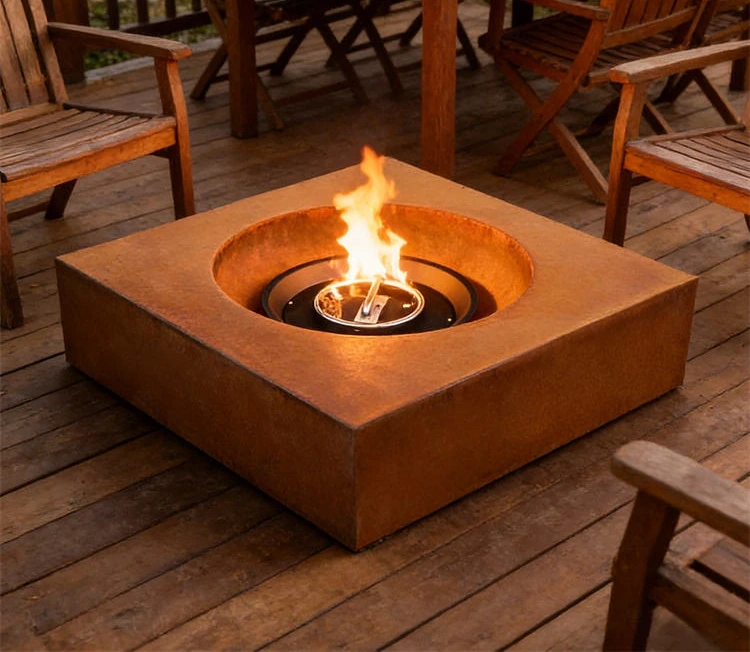
New Zealand projects ask more from weathering steel than a catalogue photo can answer. corten steel water features and sculptural water walls must suit local rainfall, salt exposure, planting soil, wind, pedestrian traffic, maintenance crews, and the way contractors stage work on site. This guide is written for landscape architects, architects, civil contractors, hospitality owners, and procurement managers who need Corten steel products with clear drawings, practical tolerances, and a finish that looks intentional after the first wet season.
Corten steel is not ordinary rusty mild steel. The common export grades for architectural and landscape products include ASTM A588, ASTM A242, S355J2W, and SPA-H. The steel needs oxygen plus repeated wet and dry cycles to form a dense patina. When the product is detailed well, that patina reduces repainting, hides small handling marks, and gives a strong architectural colour beside concrete, stone, planting, timber, and night lighting. When the detail is poor, trapped water, wet soil, chloride deposits, or incompatible fasteners can shorten service life. For that reason, a serious B2B specification should cover steel grade, nominal thickness, forming method, weld plan, drainage, fixing, packing, and inspection before the purchase order is released.
For related product ranges, review corten steel planter boxes, laser cut corten screens, corten steel fire pits, and custom fabrication options.
Why This Specification Matters in New Zealand
New Zealand councils, resort owners, and landscape studios use water as a focal point in arrival plazas, civic courtyards, botanical gardens, and waterfront promenades. Weathering steel gives the water line an architectural edge without the painted look that can chip under public use. The material pairs well with native planting, basalt, concrete, timber boardwalks, and low-glare lighting.
The buyer challenge is not the visual concept. It is the engineering of splash zones, overflow, pump access, staining control, and safe edges. A water feature that looks simple in a render may need removable panels, hidden tank access, anti-climb geometry, and transport modules that fit local cranes or small urban sites.
For hotels and public spaces, the finish is part of the user experience. A raw panel may weather unevenly for several months, which is acceptable on many naturalistic projects but less welcome in a premium lobby courtyard. Light pre-weathering can shorten the visual transition, while final colour still depends on rain, oxygen, and cleaning cycles.
Many imported landscape packages fail at the interface between design intent and site practice. A drawing may call for a clean corten line, but the installer receives unnumbered panels, unclear stakes, no drainage note, or modules that are too long for the service lift. Factory planning should remove those risks before shipping. The procurement manager should ask how the product will be packed, how each crate is labelled, where the finish may be touched by slings, and which surfaces need protection during unloading.
New Zealand Climate, Site Exposure, and Patina Behaviour
New Zealand has high rainfall on the West Coast, strong UV in many regions, marine air around Auckland and Wellington, frosts in inland South Island locations, and wind-driven rain on exposed coastal sites. Water features add another wetting source, so the design should separate decorative flowing water from structural cavities and hidden fixing zones. Constant immersion is not the right duty for bare weathering steel; use liners, stainless elements, or coated internal tanks where steel remains wet full time.
The patina usually begins as orange-brown oxidation and darkens toward a tighter brown after repeated wet-dry cycles. Sheltered surfaces can weather more slowly because rain does not wash them. Coastal, poolside, or irrigated zones may remain active for longer because chlorides and moisture disturb the oxide layer. The safest details create air gaps, drain water away from closed cavities, and keep early run-off away from pale paving.
| Site condition | Risk for weathering steel | Specification response |
|---|---|---|
| Coastal plaza or harbour edge | Chlorides can keep rust layers active | Increase thickness, avoid crevices, rinse maintenance plan, consider internal liners |
| Public courtyard with pale paving | Early run-off can stain stone or concrete | Use gravel margins, drainage channels, pre-weathering, temporary protection |
| Cold inland site | Freeze-thaw can stress trapped water | Slope shelves, drain pipework, allow winter shut-down access |
| Sheltered atrium | Uneven patina due to limited rain washing | Specify pre-weathering or planned hand wetting during commissioning |
Recommended Grades, Thickness, and Fabrication Tolerances
Most B2B buyers should specify performance and fabrication detail, not only a trade name. Ask for grade confirmation, nominal thickness before weathering, weld plan, edge treatment, and packing method. State whether panels are supplied raw, pre-weathered, sealed, or with temporary protective film. Raw or lightly pre-weathered panels are often preferred because final colour can equalize on site.
| Item | Typical specification | Notes for buyers |
|---|---|---|
| Water wall face panel | 3–6 mm ASTM A588 / S355J2W | Use returns or rear frame to control flatness |
| Trough or basin shell | 4–8 mm external corten with liner | Bare corten should not be in permanent immersion |
| Spill blade | Stainless insert or machined lip with corten cover | Gives even sheet flow and easier cleaning |
| Access panel | Bolted corten or stainless fasteners | Plan pump and filter access before fabrication |
| Drainage openings | Slots or drilled holes, deburred | Keep water away from closed cavities |
Laser cutting should allow minimum bridge widths around patterns, especially when screens or panels carry dense designs. Folded corners give cleaner edges than welded corner strips on many visible products, while full welds are still needed where water tightness or structural stiffness is required. Large modules need hidden stiffeners or returns to reduce oil-canning after transport and installation.
Material Comparison for Project Specification
Weathering steel is often compared with powder coated mild steel, stainless steel, aluminium, galvanized steel, plastic edging, concrete, and corten-look paint. The right answer depends on exposure, budget, vandal resistance, design life, and maintenance access. Buyers should compare life-cycle maintenance, not only first unit price.
| Material | Strengths | Limits | Best use |
|---|---|---|---|
| Corten steel | Warm natural patina, strong, low repainting | Needs wet-dry cycle and staining control | Visible walls, trough cladding, sculptural surrounds |
| Stainless steel | High corrosion resistance, clean water edge | Higher cost, different appearance | Spill lips, submerged components, fasteners |
| Powder coated steel | Wide colours and predictable finish | Scratches need repair; coating ages near water | Brand-colour projects away from hard public wear |
| Stone / concrete | Heavy, local texture, strong mass | Longer site works and harder changes | Large permanent civic basins |
Local Codes, Standards, and Procurement Checks
New Zealand public work commonly requires attention to slip resistance, accessibility, edge heights, public safety, and seismic restraint for heavy elements. Project teams should check local council requirements, building consent triggers, and water recirculation safety for public interaction. For export supply, request material certificates and fabrication drawings that can be reviewed by the local engineer before shipment.
Useful reference sources include MBIE Building Performance New Zealand; Standards New Zealand; WorkSafe New Zealand. These references do not replace project-specific engineering, but they help teams frame fire safety, access, drainage, public-space durability, and material documentation requirements before the purchase order is issued.
Cost and Specification Planning Table
Prices vary with steel grade, thickness, nesting efficiency, weld length, packing volume, patina treatment, inspection, and freight route. The ranges below are planning figures for early budgeting; a final quotation should be based on drawings, finish notes, quantity, delivery terms, and any third-party inspection requirement.
| Package / specification | Typical thickness | Budget drivers | Buyer note |
|---|---|---|---|
| Small courtyard water blade | 3–4 mm face, lined tank | Pump spec, spill lip, packing volume | Best quoted from elevation drawing |
| Public plaza trough | 4–6 mm shell, internal stiffeners | Length, weld length, removable access | Ship in modules if over container limits |
| Sculptural water wall | 5–8 mm plate with rear frame | Laser cutting, frame, lifting points | Needs shop drawing approval |
| Pre-weathered finish | Same base thickness | Labour, wetting cycles, drying space | Reduces early bright-orange stage |
Installation Details That Prevent Premature Corrosion
Most failures blamed on Corten steel are detail failures: no drainage, constant contact with wet soil on both sides, salt accumulation, incompatible fasteners, or panels placed against pale stone without a run-off plan. A good installation drawing should show air gaps, fixing slots, drainage holes, protection of adjacent finishes, and access for cleaning.
- Keep bare weathering steel out of permanent standing water by using liners or separate tanks.
- Set a sacrificial gravel strip or drain channel below run-off edges during the first weathering months.
- Use stainless or compatible fasteners in splash zones and isolate dissimilar metals where galvanic risk exists.
- Provide removable access panels for pumps, filters, lights, and winter servicing.
- Confirm lifting points and module weights before shipping to sites with narrow access.
- Protect pale paving until patina run-off has stabilised.
Maintenance Plan for Owners and Contractors
Owners should treat the first rainy season as a commissioning period. Staff should watch run-off paths, clear leaves from drains, and rinse salt deposits on coastal sites. The aim is not to polish the patina; it is to keep the surface cycling through clean wet and dry periods.
Water chemistry also matters. Chlorinated or mineral-heavy water should be kept inside the liner or stainless spill system rather than across hidden corten cavities. Pump rooms need access panels that can be opened without cutting sealant or removing finished paving.
Project Application Scenarios
Resort arrival court
A low corten water trough can guide guests from driveway to lobby while screening plant rooms or service doors. The trough should be lined internally, with a weathering steel outer shell and hidden overflow path.
Council plaza upgrade
A corten water wall can give a town square a strong vertical anchor. The design should include anti-climb detailing, safe edge radii, slip-resistant paving, and access for cleaning leaf litter.
Botanical garden interpretive feature
Weathering steel suits native planting and stone. Laser cut text, simple water flow, and low-voltage lighting can be combined if drainage and cable paths are drawn before fabrication.
Factory Procurement Checklist
A factory quotation should not be based on a single reference photo. The buyer should send plan dimensions, elevations, exposure notes, target finish, site access limits, quantity, delivery address, and required delivery date. For custom corten products, approved drawings matter more than verbal descriptions. The drawing set should show bends, welds, visible faces, drainage openings, fixing points, lifting points, and any removable access panels. If the project includes several product types, matching modules from one factory can reduce colour variation and simplify container packing.
- Issue elevation drawings with water level, overflow height, and pump access zones.
- State whether panels should ship raw, pre-weathered, or sealed.
- Ask for material grade, thickness, weld method, and packing photos before dispatch.
- Confirm container loading limits for long trough modules.
- Request spare fasteners and touch-up guidance for site scratches.
- Agree responsibility for pumps, plumbing, and electrical components if these are sourced locally.
For matched supply across product types, buyers can combine corten lawn edging, outdoor raised garden beds, custom facade and landscape fabrication, and project quotation support in one shipment. Consolidated packing reduces per-unit freight cost and helps the site team receive one consistent finish batch.
Common Buyer Questions
Can Corten steel be used inside a water basin?
Bare weathering steel is not ideal for constant immersion. A better detail is a corten outer shell with a stainless, coated, or polymer liner where water remains full time.
Will the water stain paving in the first months?
Some run-off is normal while patina forms. Specify drainage channels, gravel margins, temporary protection, or pre-weathering when the paving is pale or recently installed.
What thickness should be used for a public water feature?
Visible cladding often starts at 3–4 mm, while structural shells and large troughs often need 5–8 mm plus stiffeners. Final thickness depends on span, module size, and engineering review.
Should New Zealand projects order pre-weathered panels?
Pre-weathering is helpful for high-visibility hospitality and civic work. Raw panels are acceptable when the client expects a natural colour transition on site.
Practical Buying Advice
Choose Corten steel for the visible architectural shell, not as a substitute for good water engineering. The best New Zealand specifications separate the wet system from the weathering steel body, protect adjacent paving, and give maintenance staff easy access. Ask for drawings that show overflow, drainage, lifting, and fixing details; if these are missing, the quotation is not complete.
If your New Zealand project needs samples, shop drawings, packing photos, or a freight-ready quotation, send plan dimensions, target quantities, finish preference, and site exposure notes through the Corten Factory contact page. The most reliable orders lock material grade, thickness, fixing detail, drainage detail, and inspection steps before production starts.
Additional Tender Notes for New Zealand
For tender review, require the supplier to separate material cost, forming cost, welding cost, surface preparation, packing, and freight assumptions. This makes value comparison easier when another bidder offers a lower price with thinner steel, fewer stiffeners, or unclear packing. The lowest line item may become expensive if panels arrive distorted, drains are missing, or the site team must drill and repaint holes by hand. A clear technical quotation protects the architect, contractor, and owner because every party can see what is included before production starts.
Mock-ups are useful when a project has visible front-of-house areas. A sample should show real plate thickness, edge fold, weld quality, pre-weathering level, and fastening method. Do not approve a colour from a heavily edited photo alone. Weathering steel changes with climate and time, so acceptance should focus on material grade, workmanship, and controlled weathering rather than a single fixed shade. For phased projects, order replacement modules from the same specification and record the original finish notes.
Additional Tender Notes for New Zealand
For tender review, require the supplier to separate material cost, forming cost, welding cost, surface preparation, packing, and freight assumptions. This makes value comparison easier when another bidder offers a lower price with thinner steel, fewer stiffeners, or unclear packing. The lowest line item may become expensive if panels arrive distorted, drains are missing, or the site team must drill and repaint holes by hand. A clear technical quotation protects the architect, contractor, and owner because every party can see what is included before production starts.
Mock-ups are useful when a project has visible front-of-house areas. A sample should show real plate thickness, edge fold, weld quality, pre-weathering level, and fastening method. Do not approve a colour from a heavily edited photo alone. Weathering steel changes with climate and time, so acceptance should focus on material grade, workmanship, and controlled weathering rather than a single fixed shade. For phased projects, order replacement modules from the same specification and record the original finish notes.
Additional Tender Notes for New Zealand
For tender review, require the supplier to separate material cost, forming cost, welding cost, surface preparation, packing, and freight assumptions. This makes value comparison easier when another bidder offers a lower price with thinner steel, fewer stiffeners, or unclear packing. The lowest line item may become expensive if panels arrive distorted, drains are missing, or the site team must drill and repaint holes by hand. A clear technical quotation protects the architect, contractor, and owner because every party can see what is included before production starts.
Mock-ups are useful when a project has visible front-of-house areas. A sample should show real plate thickness, edge fold, weld quality, pre-weathering level, and fastening method. Do not approve a colour from a heavily edited photo alone. Weathering steel changes with climate and time, so acceptance should focus on material grade, workmanship, and controlled weathering rather than a single fixed shade. For phased projects, order replacement modules from the same specification and record the original finish notes.
Additional Tender Notes for New Zealand
For tender review, require the supplier to separate material cost, forming cost, welding cost, surface preparation, packing, and freight assumptions. This makes value comparison easier when another bidder offers a lower price with thinner steel, fewer stiffeners, or unclear packing. The lowest line item may become expensive if panels arrive distorted, drains are missing, or the site team must drill and repaint holes by hand. A clear technical quotation protects the architect, contractor, and owner because every party can see what is included before production starts.
Mock-ups are useful when a project has visible front-of-house areas. A sample should show real plate thickness, edge fold, weld quality, pre-weathering level, and fastening method. Do not approve a colour from a heavily edited photo alone. Weathering steel changes with climate and time, so acceptance should focus on material grade, workmanship, and controlled weathering rather than a single fixed shade. For phased projects, order replacement modules from the same specification and record the original finish notes.
Additional Tender Notes for New Zealand
For tender review, require the supplier to separate material cost, forming cost, welding cost, surface preparation, packing, and freight assumptions. This makes value comparison easier when another bidder offers a lower price with thinner steel, fewer stiffeners, or unclear packing. The lowest line item may become expensive if panels arrive distorted, drains are missing, or the site team must drill and repaint holes by hand. A clear technical quotation protects the architect, contractor, and owner because every party can see what is included before production starts.
Mock-ups are useful when a project has visible front-of-house areas. A sample should show real plate thickness, edge fold, weld quality, pre-weathering level, and fastening method. Do not approve a colour from a heavily edited photo alone. Weathering steel changes with climate and time, so acceptance should focus on material grade, workmanship, and controlled weathering rather than a single fixed shade. For phased projects, order replacement modules from the same specification and record the original finish notes.
Additional Tender Notes for New Zealand
For tender review, require the supplier to separate material cost, forming cost, welding cost, surface preparation, packing, and freight assumptions. This makes value comparison easier when another bidder offers a lower price with thinner steel, fewer stiffeners, or unclear packing. The lowest line item may become expensive if panels arrive distorted, drains are missing, or the site team must drill and repaint holes by hand. A clear technical quotation protects the architect, contractor, and owner because every party can see what is included before production starts.
Mock-ups are useful when a project has visible front-of-house areas. A sample should show real plate thickness, edge fold, weld quality, pre-weathering level, and fastening method. Do not approve a colour from a heavily edited photo alone. Weathering steel changes with climate and time, so acceptance should focus on material grade, workmanship, and controlled weathering rather than a single fixed shade. For phased projects, order replacement modules from the same specification and record the original finish notes.
Additional Tender Notes for New Zealand
For tender review, require the supplier to separate material cost, forming cost, welding cost, surface preparation, packing, and freight assumptions. This makes value comparison easier when another bidder offers a lower price with thinner steel, fewer stiffeners, or unclear packing. The lowest line item may become expensive if panels arrive distorted, drains are missing, or the site team must drill and repaint holes by hand. A clear technical quotation protects the architect, contractor, and owner because every party can see what is included before production starts.
Mock-ups are useful when a project has visible front-of-house areas. A sample should show real plate thickness, edge fold, weld quality, pre-weathering level, and fastening method. Do not approve a colour from a heavily edited photo alone. Weathering steel changes with climate and time, so acceptance should focus on material grade, workmanship, and controlled weathering rather than a single fixed shade. For phased projects, order replacement modules from the same specification and record the original finish notes.
Additional Tender Notes for New Zealand
For tender review, require the supplier to separate material cost, forming cost, welding cost, surface preparation, packing, and freight assumptions. This makes value comparison easier when another bidder offers a lower price with thinner steel, fewer stiffeners, or unclear packing. The lowest line item may become expensive if panels arrive distorted, drains are missing, or the site team must drill and repaint holes by hand. A clear technical quotation protects the architect, contractor, and owner because every party can see what is included before production starts.
Mock-ups are useful when a project has visible front-of-house areas. A sample should show real plate thickness, edge fold, weld quality, pre-weathering level, and fastening method. Do not approve a colour from a heavily edited photo alone. Weathering steel changes with climate and time, so acceptance should focus on material grade, workmanship, and controlled weathering rather than a single fixed shade. For phased projects, order replacement modules from the same specification and record the original finish notes.
Additional Tender Notes for New Zealand
For tender review, require the supplier to separate material cost, forming cost, welding cost, surface preparation, packing, and freight assumptions. This makes value comparison easier when another bidder offers a lower price with thinner steel, fewer stiffeners, or unclear packing. The lowest line item may become expensive if panels arrive distorted, drains are missing, or the site team must drill and repaint holes by hand. A clear technical quotation protects the architect, contractor, and owner because every party can see what is included before production starts.
Mock-ups are useful when a project has visible front-of-house areas. A sample should show real plate thickness, edge fold, weld quality, pre-weathering level, and fastening method. Do not approve a colour from a heavily edited photo alone. Weathering steel changes with climate and time, so acceptance should focus on material grade, workmanship, and controlled weathering rather than a single fixed shade. For phased projects, order replacement modules from the same specification and record the original finish notes.
Need a factory quote for Corten Steel Water Features for New Zealand Public Landscapes: Specification, Drainage, and Procurement Guide?
Send your drawings, size list, quantity and destination country. Corten Factory can support custom weathering steel fabrication, export packing and project quotation.