
Outdoor Corten Privacy Screen: Supplier Guide for Landscape Projects

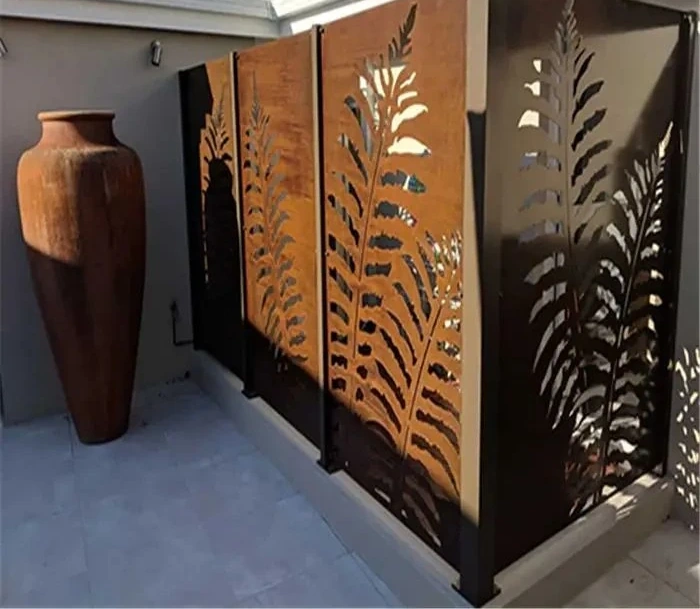
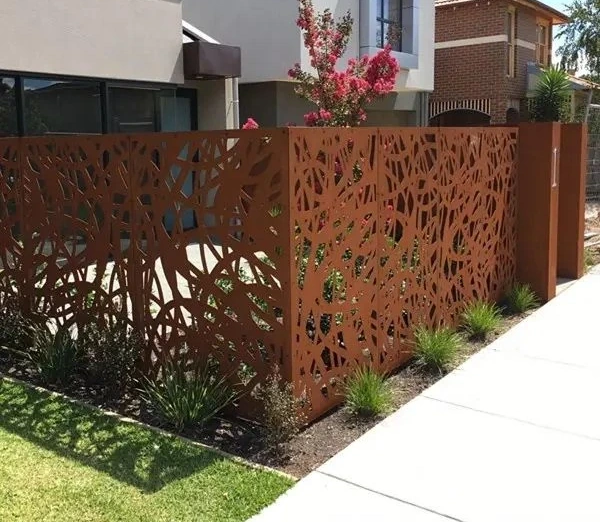
An outdoor corten privacy screen is a practical way to divide space, add visual warmth and create a stronger landscape identity without using a painted finish. For hotels, resorts, garden centers, landscape contractors and architectural buyers, the key is to source screen panels that look consistent, fit the installation method and arrive protected enough for site handling.
This supplier guide explains how to specify corten privacy screens for outdoor projects. It covers pattern selection, privacy level, panel thickness, frames, posts, fixing details, patina planning, quality control, packing and RFQ information. Site engineering, wind-load checks, foundations, permits and safety requirements should always be confirmed by qualified local professionals.
Where outdoor corten privacy screens are used
Corten screen panels are commonly used where a project needs privacy and design value at the same time. The natural weathered finish works with planting, stone, timber, concrete and modern outdoor furniture, which makes it useful across both residential and commercial landscapes.
- Hotel and resort terraces that need guest privacy without a closed wall.
- Restaurant outdoor dining zones, rooftop gardens and hospitality courtyards.
- Villa gardens, residential developments and pool-area screening.
- Commercial entrances, office courtyards and mixed-use landscape projects.
- Distributor ranges for modular garden screens, fence panels and decorative partitions.
Related product categories include corten steel laser cut screens, corten screens and fencing, trellis and gates. You can also compare broader project use in the corten steel screen pattern guide.
Choose privacy level before choosing the pattern
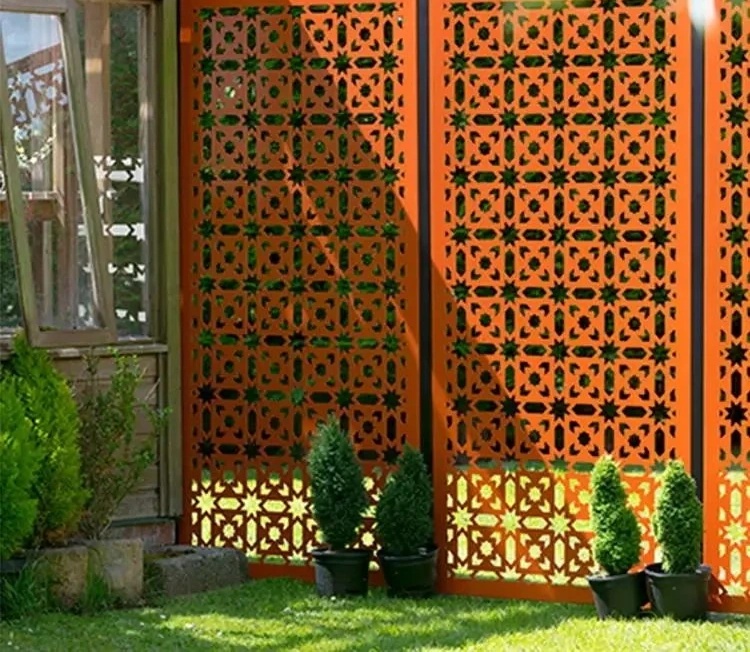
A common mistake is selecting a pattern only because it looks attractive in a photo. For real projects, the supplier should first understand how much visibility, airflow and light transmission the site needs. A dense pattern can feel private but may increase wind load. A more open pattern can feel lighter, but it may not hide service areas or neighboring views.
- High privacy: smaller openings, denser cut patterns or solid lower sections.
- Balanced privacy: medium-scale leaf, branch, geometric or abstract patterns.
- Decorative screening: open patterns for visual texture around planting or walls.
- Directional privacy: vertical slats or repeated narrow openings for controlled sight lines.
- Mixed systems: combine solid panels, laser-cut panels and planting for a softer boundary.
Panel thickness, frames and flatness
Outdoor corten privacy screens need enough stiffness for the panel size, cut ratio and mounting method. Thickness is important, but folded edges, welded frames, rear stiffeners and post spacing can matter just as much. For large screens, ask the supplier how it controls distortion from laser cutting, bending and welding.
- Confirm panel height, width, thickness, frame depth and edge-return details.
- Ask whether the panel is supplied flat, framed, folded or with welded mounting tabs.
- Avoid overly thin bridges between cutouts, especially in tall or exposed screens.
- For repeat projects, define standard module sizes to simplify replacement and reordering.
- Clarify visible-side expectations, weld grinding and acceptable surface variation.
Posts, feet and fixing details
The screen panel itself is only part of the system. A corten privacy screen supplier should help clarify whether the order includes panels only, panels plus posts, base plates, brackets, bolts, spacers or installation drawings. Clear scope avoids delays between factory production and local site installation.
- Freestanding screens: posts, base plates, feet or planter-mounted solutions may be required.
- Fence-line screens: channel posts, rear brackets or bolted tabs can be used depending on the design.
- Wall-mounted panels: stand-off brackets and drainage gaps should be planned.
- Modular retail screens: consistent feet, packaging and assembly instructions are important.
- Large exposed screens: wind load, anchors and foundation design must be checked locally.
If the screen will connect with gates or boundary panels, the corten steel driveway gate guide and corten steel fence panels manufacturer guide are useful companion references.
Patina expectations and runoff planning
Corten steel develops a protective rust-colored patina through outdoor wet-dry cycles. Early weathering can produce rust-colored runoff, especially before the surface stabilizes. This should be planned before installation, not treated as an afterthought after pale paving or finished walls are stained.
For material background, see What Is Corten Steel? and the corten steel patina timeline guide. Buyers should confirm whether the screens ship raw, lightly weathered, cleaned, oiled or prepared according to a project-specific appearance target.
Supplier capability checklist
For B2B buyers, a reliable corten privacy screen supplier should support more than image-based quotation. The supplier needs to review drawings, control material and cutting quality, coordinate frames and fixings, and pack the panels for international transport without edge damage.
- Can the supplier work from CAD, DXF, PDF drawings, sketches or reference patterns?
- Can it adjust pattern scale to suit different panel sizes while keeping a consistent look?
- Can it supply matching planters, edging, fence panels, gates or facade panels for the same project?
- Can it provide pre-shipment photos, measurement checks and packing photos?
- Can it support OEM/ODM sizes, private-label packaging or distributor repeat orders?
For wider custom requirements, review Corten Factory customization, the custom corten steel fabrication checklist and the OEM/ODM corten steel products guide.
Quality control before shipment
Screen panels are highly visible, so small issues in cutting, framing or packing can become expensive on site. Ask for QC records before shipment, especially when panels are numbered by location or must align across a long fence line.
- Overall height, width, diagonals, hole positions and frame dimensions checked against drawings.
- Pattern direction, panel sequence, logo orientation and left/right positions confirmed.
- Visible surfaces reviewed for handling marks, weld quality and excessive distortion.
- Post, bracket and hardware compatibility checked where the supplier provides a system.
- Panel separation and crate support checked before loading.
Export packing for corten privacy screens
Laser-cut screens can be vulnerable to rubbing, bent corners and abrasion if packed like ordinary sheet metal. Export packing should protect edges, keep panels separated and prevent concentrated pressure on delicate cut areas. Large panels may need timber crates, foam or cardboard separation, corner protection and clear labels by sequence.
Corten Factory’s export packing guide for large corten steel products explains packing points for screens shipped with corten steel planter boxes, landscape edging or fire features in one container.
RFQ checklist for outdoor corten privacy screens
- Project type: hotel, resort, restaurant, villa, public space, contractor package, distributor range or OEM order.
- Screen style: solid, slotted, laser-cut, modular, framed, freestanding or wall-mounted.
- Panel dimensions, thickness, frame depth, edge returns and required quantity.
- Pattern reference, privacy level, opening ratio preference and visible-side requirements.
- Post, bracket, base plate, bolt and hardware scope.
- Surface expectation: raw corten, pre-weathered look, cleaned surface or project-specific finish note.
- Destination country, delivery schedule, packing requirements and unloading restrictions.
- Drawings, site photos, layout plan and any local engineering requirements.
FAQ
Can Corten Factory supply custom outdoor corten privacy screens?
Yes. Send drawings, target dimensions, pattern references, fixing requirements, quantity and destination details. The team can review panel feasibility, fabrication method, QC and export packing for custom screen orders.
What pattern is best for a corten privacy screen?
The best pattern depends on the required privacy level, wind exposure, panel size and design style. Dense patterns give more privacy, while open patterns improve light and airflow. For large exposed screens, local structural checks are important.
Can corten privacy screens be supplied with posts and brackets?
Yes, depending on project scope. Panels can be supplied alone or with posts, brackets, base plates and related hardware. Confirm the installation method early so fixing holes and frame details are produced correctly.
Will outdoor corten screens stain nearby paving?
Early-stage weathering can create rust-colored runoff. Plan drainage gaps, spacing, drip paths and temporary protection near pale stone, concrete, render, pool surrounds or finished paving.
Are corten privacy screens suitable for hotels and commercial landscapes?
Yes. They are often used in hospitality terraces, courtyards, restaurant areas and commercial landscapes, but the specification should include wind exposure, fixing method, surface expectations, packing and local installation requirements.
Send your privacy screen project requirements
If you need an outdoor corten privacy screen supplier for a garden, hotel, public-space, contractor or distributor project, send your drawings, pattern ideas, dimensions, quantity and destination details. Corten Factory can review custom fabrication, matching panels, posts, QC and export packing. Contact us for a corten privacy screen quote.
Need a factory quote for Outdoor Corten Privacy Screen: Supplier Guide for Landscape Projects?
Send your drawings, size list, quantity and destination country. Corten Factory can support custom weathering steel fabrication, export packing and project quotation.