
Saudi Arabia Corten Steel Screens and Facade Panels: Desert Climate Specification for Hotels and Public Realm

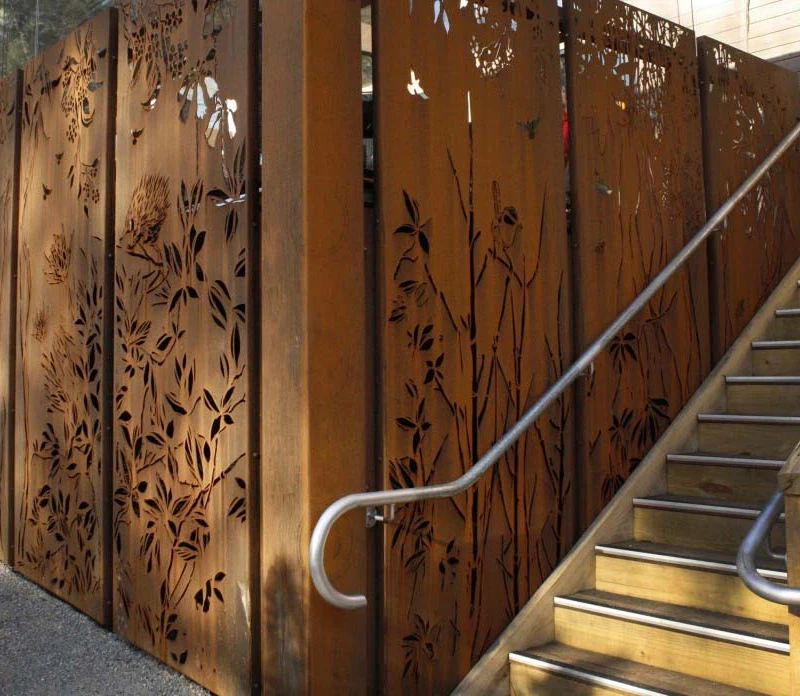
Saudi Arabia hotel courtyards, villa compounds, retail streets, and new public realm projects often need one material to do several jobs at once: shade the visitor, screen service areas, resist sand abrasion, age well in strong sun, and carry a clear architectural identity. Corten steel screens and facade panels can meet that brief when the specification is written for Gulf heat rather than copied from a mild European project. This guide is written for architects, landscape designers, contractors, and procurement managers sourcing weathering steel panels for Riyadh, Jeddah, Dammam, AlUla, Red Sea, and NEOM-related developments.
CortenFactory supplies custom weathering steel screens, facade cladding, planter surrounds, and architectural metalwork from drawing to packed shipment. For related product options, review our custom corten steel fabrication, corten steel facade panels, and laser cut privacy screen pages before setting a tender package.
Why weathering steel is specified in Saudi Arabia outdoor architecture
Weathering steel forms a dense oxide layer when it cycles between wet and dry conditions. In many Saudi Arabia projects the dry period is long, which helps limit ongoing corrosion after the first patina forms. The material also gives high visual contrast against limestone, concrete, light render, and pale desert planting. For hotels and mixed-use developments, the warm rust tone reads as natural rather than painted, so minor scratches or abrasion from sand are less visible than on powder coated dark metal.
The key is not to assume that every corten panel will behave the same. Coastal Jeddah has salt-laden air; Riyadh has high heat, dust, and large day-night temperature swings; Red Sea resort sites may combine marine exposure with strict appearance control. Specification should identify the microclimate, distance from salt water, wash-down method, runoff path, and the level of orange staining that is acceptable during the first months of patina growth.
Saudi climate risks that should change the panel detail
- High surface temperature: dark corten panels can become hot under direct sun, so pedestrian contact zones may need set-back, perforation, or shade geometry.
- Dust and sand abrasion: horizontal ledges trap dust and create uneven wetting; use sloped caps and avoid unnecessary shelves.
- Coastal chloride exposure: near the Red Sea or Arabian Gulf, allow larger inspection intervals and consider stainless subframes or isolated fixings.
- Condensation and irrigation overspray: planted courtyards can wet the panel base every day, which is different from natural rain exposure.
- Rust runoff: early patina can stain limestone, light concrete, or porcelain pavers unless drainage breaks are planned.
Recommended technical parameters for Saudi screens and facades
| Component | Typical specification | Notes for Saudi Arabia |
|---|---|---|
| Screen panel thickness | 2.0-3.0 mm for decorative screens; 4.0-6.0 mm for large free-standing panels | Increase thickness for tall panels exposed to wind or public impact. |
| Facade cassette thickness | 2.0-3.0 mm panel skin with folded returns | Use engineered rails and allow thermal movement. |
| Free-standing posts | 80x80x4 mm, 100x100x5 mm, or project engineered RHS/SHS | Hot-dip galvanized or weathering steel posts depending on exposure and detail. |
| Perforation open area | 25-45 percent for privacy and shade; 45-60 percent for airflow | Lower open area increases wind load and heat build-up. |
| Finish at delivery | Raw mill finish, pre-weathered, or stabilized patina by agreement | Pre-weathering reduces first-month runoff risk but does not remove all staining. |
| Fixings | A4 stainless in coastal zones; galvanized or stainless with isolation washers inland | Avoid direct contact with copper runoff or incompatible metals. |
| Drainage gap | Minimum 20-40 mm above paving or planter soil | Do not bury corten edges in irrigated soil. |
| Panel size control | Common shipping-friendly modules 900-1500 mm wide by 1800-3000 mm high | Check container packing, site lifting, and wind design. |
Corten steel vs aluminum vs painted mild steel in Gulf projects
| Material | Strengths | Risks | Best use |
|---|---|---|---|
| Corten weathering steel | Natural patina, strong impact resistance, good for screens and feature facades | Early runoff, higher mass, not ideal for permanently wet bases | Hotel courtyards, villa screens, shaded walkways, art panels |
| Powder coated aluminum | Lightweight, many colors, low rust staining | Coating chalking or scratches under sand abrasion; lower stiffness | High-rise facade fins, lightweight cladding where rust tone is not wanted |
| Painted mild steel | Low initial cost and easy fabrication | Paint damage leads to visible corrosion; repainting cycles | Budget back-of-house screens with planned maintenance |
| Stainless steel | Excellent corrosion resistance, clean appearance | Higher cost, glare, not the same warm tone | Marine fixings, exposed brackets, high-touch details |
Designing screens for shade, privacy, wind, and maintenance
Saudi Arabia privacy screens often need to block direct sight lines while keeping air movement across outdoor dining and lobby arrival zones. A panel with 30 to 40 percent open area usually gives a useful balance. For majlis courtyards and resort villas, denser patterns can be used at eye level, with more open perforations higher up to reduce wind pressure. When the panel is part of a building facade, the architect should define whether it is a rain screen, solar screen, decorative veil, or security barrier. Each role needs a different rail, bracket, and tolerance plan.
Wind load must be calculated by the local engineer. Perforated corten is not automatically low load; pattern shape, edge distance, panel size, and frame stiffness matter. Large free-standing screens need base plates, chemical anchors or cast-in embeds, and allowance for thermal movement. Long runs should be broken into modules with expansion joints rather than site-welded into a rigid fence.
Procurement checklist for Saudi Arabia contractors
- Provide DWG or DXF files for laser cut patterns, including minimum bridge width and corner radius.
- State project city, coastal distance, irrigation exposure, and whether panels will touch soil or paving.
- Ask for material grade, thickness, tolerances, welding method, and packing drawings before mass production.
- Approve a patina sample or mock-up panel under local light; corten appears different at noon in Riyadh than under showroom lighting.
- Confirm Incoterms, crate dimensions, lifting points, HS code, and spare panel percentage for large resort projects.
- Require photos of each production stage: raw sheets, cutting, bending, welding, trial assembly, pre-weathering, and packing.
Installation details that prevent claims
Most problems with corten steel screens in the Gulf are not sheet failures; they are detailing failures. The panel base is placed on wet soil, irrigation sprays the back of the screen every night, or rust runoff flows across pale stone. Raise the lower edge above finished floor level, use gravel strips at the base, and direct runoff toward dark aggregate or concealed drains. On facades, avoid water traps behind folded returns. Provide inspection access to brackets and keep dissimilar metals separated with EPDM or nylon washers.
For high-end hotels, specify a cleaning plan before handover. During early patina formation, panels can shed loose oxide. A soft brush and low-pressure rinse are usually enough. Avoid acid cleaning on nearby stone after the panels are installed unless the cleaning contractor protects the metal and checks compatibility.
Cost and lead time planning
| Scope | Budget driver | Typical B2B planning range |
|---|---|---|
| Flat laser cut screen panels | Thickness, pattern density, nesting yield | Lower cost per m2 when patterns repeat and sheet use is efficient |
| Folded facade cassettes | Bending, returns, rails, shop drawings | Higher than flat panels because tolerances and packaging matter |
| Free-standing framed screens | Posts, base plates, welding, trial assembly | Freight volume and installation hardware add cost |
| Pre-weathered finish | Labor, yard space, time, runoff control | Adds schedule time but helps client acceptance |
| Custom pattern development | Artwork cleanup, test cutting, engineering review | Best handled before tender issue to avoid late redesign |
Project applications in Riyadh, Jeddah, Dammam, AlUla, and Red Sea resorts
In Riyadh, corten screens are often used around hotel arrival courts, rooftop restaurants, and villa boundary walls where privacy and shade are both required. In Jeddah and Dammam, facade panels should be reviewed for chloride exposure and wash-down routine. In AlUla and desert resort projects, weathering steel can match stone, gravel, and rammed earth palettes, but the specification should include glare control, public touch points, and careful runoff detailing near light paving.
Where the project also needs planters, edging, or fire features, keep the steel language consistent. Our corten garden edging and corten fire pit product references can help contractors build a single weathering steel package instead of buying each item from a different source.
Common buyer questions
Can corten steel be used near the Red Sea?
Yes, but marine exposure needs more care. Use conservative detailing, stainless fixings, drainage gaps, and inspection access. If a panel is directly exposed to salt spray and stays wet, discuss alternatives or protective strategies before procurement.
Will corten stain limestone paving?
It can during early weathering. Use gravel strips, drip edges, dark plinths, or concealed drains. Do not let first-month runoff travel over pale stone without protection.
What file format is best for laser cut mashrabiya patterns?
DWG, DXF, or AI files are preferred. The pattern needs minimum bridge widths, corner radii, panel margins, and fixing hole positions. A sample cut is recommended for intricate geometry.
Should panels be supplied pre-weathered?
For luxury hospitality, pre-weathering can reduce visual uncertainty and early runoff. It adds time and cost, but it is useful when the site has pale paving or a strict opening date.
Specification advice before placing an order
For Saudi Arabia corten steel screens and facade panels, the best tender documents include drawings, exposure notes, target patina, fixing strategy, and packing needs. Send drawings and site conditions through the CortenFactory contact page so the factory can price by thickness, module size, pattern complexity, finish, and shipment route.
Riyadh specification note
For Riyadh, dry heat and dust dominate; shade geometry and thermal expansion joints are more important than rain performance. Contractors should mark these conditions on shop drawings, not leave them as verbal site knowledge. The factory can then adjust thickness, return depth, bracket spacing, and pre-weathering method before production starts.
Jeddah specification note
For Jeddah, marine air and humidity require stainless fixings, wider inspection access, and a conservative view of long-term staining. Contractors should mark these conditions on shop drawings, not leave them as verbal site knowledge. The factory can then adjust thickness, return depth, bracket spacing, and pre-weathering method before production starts.
Dammam specification note
For Dammam, Gulf humidity and industrial air can vary by district, so the specification should record exposure category and cleaning access. Contractors should mark these conditions on shop drawings, not leave them as verbal site knowledge. The factory can then adjust thickness, return depth, bracket spacing, and pre-weathering method before production starts.
Red Sea resorts specification note
For Red Sea resorts, appearance control is strict, and mock-up approval under real site light should be part of procurement. Contractors should mark these conditions on shop drawings, not leave them as verbal site knowledge. The factory can then adjust thickness, return depth, bracket spacing, and pre-weathering method before production starts.
AlUla specification note
For AlUla, stone and sand palettes suit corten, but direct visitor contact areas may need set-back because panels become hot. Contractors should mark these conditions on shop drawings, not leave them as verbal site knowledge. The factory can then adjust thickness, return depth, bracket spacing, and pre-weathering method before production starts.
Authoritative standards and reference points
Weathering steel procurement should name the material standard rather than using only the trade name corten. Many buyers refer to ASTM A588/A588M weathering steel for high-strength low-alloy plate, while projects using European supply routes may reference EN weathering grades. For a Saudi Arabia building package, coordinate the decorative metalwork with the project engineer and the Saudi Building Code requirements that apply to facade safety, fire, wind, and public access. Corrosion-category thinking from ISO 12944 is also useful when comparing inland Riyadh exposure with coastal Jeddah or Dammam conditions.
Subframe and bracket strategy
A screen panel is only as good as the frame behind it. For hotel courtyards, brackets should be hidden where possible but still reachable for inspection. Slotted holes allow small movements from heat. Oversized rigid weldments can look strong in the workshop yet create stress at anchors after a Saudi summer of thermal cycling. The shop drawing should show bracket depth, fixing diameter, washer material, edge distance, and whether the installer must shim the frame to suit site tolerances.
Facade panels should not be fixed hard against blockwork or concrete. A ventilated cavity helps the back face dry after condensation or wash-down. If a secondary galvanized frame is used, isolate contact points and make sure runoff from one metal does not repeatedly wet another. In coastal cities, stainless hardware is often the safer option for visible or hard-to-replace fixings.
Pattern engineering for Arabic and geometric screens
Mashrabiya-style and geometric patterns look simple on elevation drawings, but laser cutting needs manufacturable bridges. Thin bridges can warp during cutting, distort during pre-weathering, or bend during installation. A practical rule is to review the smallest bridge width, the distance from cut-outs to panel edges, and the number of sharp internal corners. Rounded internal corners often cut cleaner and reduce stress concentration. If the pattern repeats, ask the factory to nest the design across standard sheet sizes so waste is controlled.
For privacy, align dense pattern zones with seated eye level, service doors, or neighboring balconies. Above head height, a more open pattern can reduce wind load and heat gain while keeping the visual identity. Designers should avoid using one uniform pattern on every elevation when the courtyard has different sun and wind directions.
Thermal movement and touch-temperature planning
Corten steel in direct Gulf sun can reach temperatures uncomfortable to touch. Do not place handrails, bench backs, or child-height play elements in raw dark steel without a shade or set-back plan. For long facade runs, expansion gaps and slotted fixings are not optional details. A 12-meter screen run fixed tightly at both ends can push against anchors as it heats and cools. Break the run into modules, leave clean shadow gaps, and hide movement joints in the pattern rhythm.
Mock-up testing before mass production
A one-panel mock-up is cheap compared with reworking a hotel courtyard after opening. The mock-up should include the actual plate thickness, edge finish, cut pattern, bracket method, and chosen patina state. Place it outdoors, wet it, let it dry, and check runoff against nearby paving. The client, architect, contractor, and maintenance team should sign off on color variation, acceptable streaking, and cleaning method before the factory cuts the full order.
Packing, shipping, and site handling
Saudi projects often combine several steel items in one shipment: screens, facade panels, planter fronts, edging, and signage. Crates should be numbered by elevation or courtyard zone. Tall screens need timber or steel frames that prevent bending during container loading. Pre-weathered panels should be separated with breathable protection rather than sealed in wet plastic. The packing list should show gross weight, crate dimensions, panel count, and the sequence in which the installer should open crates.
Maintenance schedule for facilities teams
After handover, inspect the first rainy or wash-down season closely. Check that drains are clear, irrigation heads do not spray panel bases, and no cleaning chemical is attacking the patina. Remove trapped leaves and sand from lower folds. If the project has food service areas, include oil and grease cleaning rules because kitchen residue on corten can create patchy staining. A short quarterly inspection note is usually enough once the patina has settled.
Tender wording buyers can copy
A strong RFQ line would read: supply weathering steel laser cut screen panels in confirmed thickness and grade, with shop drawings, edge deburring, fixing holes, pre-weathering sample, numbered packing, material certificates, and installation notes for ventilated stand-off and runoff control. The line should also state that the contractor is responsible for structural verification, anchors, local code approval, and final site drainage. This wording keeps the factory scope clear while protecting the buyer from vague quotations.
Detailed project scenarios and specification decisions
Riyadh hotel courtyard
In a Riyadh hotel courtyard package, the first decision is whether the corten element is mainly visual, structural, or operational. A visual screen can often be built from lighter plate with a concealed frame, while an operational windbreak, facade veil, or fire-zone barrier needs engineering input, stronger anchors, and a clearer maintenance plan. The buyer should record the expected visitor distance, cleaning access, drainage path, and replacement method before the drawing is approved. This prevents a common problem: the installed steel looks correct on day one but is difficult for the property team to clean, inspect, or repair after the first season.
For Riyadh hotel courtyard, mock-up review should happen under real outdoor light. Weathering steel can look orange during early patina growth, then shift toward dark brown as rain, drying, dust, and handling marks settle. Decision makers should not approve color from a small indoor coupon alone. A better review includes one full-size corner, one fixing detail, one drainage edge, and one area where the material meets paving or planting. If the project includes repeated modules, the sample should show the exact laser pattern or fold depth because stiffness and shadow lines are affected by those details.
Jeddah coastal resort
In a Jeddah coastal resort package, the first decision is whether the corten element is mainly visual, structural, or operational. A visual screen can often be built from lighter plate with a concealed frame, while an operational windbreak, facade veil, or fire-zone barrier needs engineering input, stronger anchors, and a clearer maintenance plan. The buyer should record the expected visitor distance, cleaning access, drainage path, and replacement method before the drawing is approved. This prevents a common problem: the installed steel looks correct on day one but is difficult for the property team to clean, inspect, or repair after the first season.
For Jeddah coastal resort, mock-up review should happen under real outdoor light. Weathering steel can look orange during early patina growth, then shift toward dark brown as rain, drying, dust, and handling marks settle. Decision makers should not approve color from a small indoor coupon alone. A better review includes one full-size corner, one fixing detail, one drainage edge, and one area where the material meets paving or planting. If the project includes repeated modules, the sample should show the exact laser pattern or fold depth because stiffness and shadow lines are affected by those details.
Dammam mixed-use promenade
In a Dammam mixed-use promenade package, the first decision is whether the corten element is mainly visual, structural, or operational. A visual screen can often be built from lighter plate with a concealed frame, while an operational windbreak, facade veil, or fire-zone barrier needs engineering input, stronger anchors, and a clearer maintenance plan. The buyer should record the expected visitor distance, cleaning access, drainage path, and replacement method before the drawing is approved. This prevents a common problem: the installed steel looks correct on day one but is difficult for the property team to clean, inspect, or repair after the first season.
For Dammam mixed-use promenade, mock-up review should happen under real outdoor light. Weathering steel can look orange during early patina growth, then shift toward dark brown as rain, drying, dust, and handling marks settle. Decision makers should not approve color from a small indoor coupon alone. A better review includes one full-size corner, one fixing detail, one drainage edge, and one area where the material meets paving or planting. If the project includes repeated modules, the sample should show the exact laser pattern or fold depth because stiffness and shadow lines are affected by those details.
Factory QA hold points for B2B orders
For multi-site or hospitality orders, the factory and buyer should agree on hold points. The first hold point is drawing approval: no steel should be cut until module numbers, bend directions, hole positions, and visible faces are signed off. The second is first-article production: one panel, bowl, or edge segment is fabricated and photographed before the full batch starts. The third is trial packing: crates are checked for rubbing risk, moisture traps, lifting points, and site sequence. The final hold point is pre-shipment review, including photos of labels, spare parts, hardware bags, and crate marks.
Quality inspection should include plate thickness checks, deburred edges, weld appearance, drain hole placement, flatness or agreed tolerance, and a count of every accessory. For laser cut panels, inspect small bridges and internal corners for heat distortion. For folded panels, check return depth and diagonal squareness. For bowls and sculptural elements, check stability on a flat surface and make sure water cannot sit in closed pockets. A simple written checklist saves many emails during site installation.
Risk register for owners and contractors
| Risk | Early warning sign | Prevention or response |
|---|---|---|
| Runoff staining | Orange marks on pale paving after rain | Use gravel strips, drip breaks, pre-weathering, and temporary protection. |
| Panel movement | Fixing slots tight or brackets bending | Allow thermal movement and break long runs into modules. |
| Uneven patina | Daily irrigation or trapped dust in one area | Adjust sprinklers, clean loose deposits, improve drainage. |
| Site damage | Scratches from forklifts or unpacking tools | Use numbered crates, padded handling points, and repair instructions. |
| Late code questions | Inspector asks for anchor or fire data after delivery | Define local engineering scope before fabrication starts. |
What procurement teams should compare in quotations
A low quotation can hide missing scope. Compare whether each supplier includes material certificates, shop drawings, sample approval, edge finishing, pre-weathering, hardware, spare panels, packing, and export documents. Also compare whether the price is based on actual drawing quantities or rough square meters. Dense laser patterns, thick folded returns, curved sections, heavy bases, and special crates can change cost more than the headline material price. Buyers should ask suppliers to list exclusions in writing, especially anchors, local engineering, gas parts, foundations, sealants, and site installation.
Lead time should be reviewed in steps: engineering questions, drawing approval, raw material purchase, cutting, bending, welding, surface preparation, pre-weathering if required, packing, ocean freight, customs, and final inland transport. A project with a firm opening date should not wait until all paving is complete before ordering metalwork. The right time to start is when dimensions, exposure, and fixing principles are stable enough for shop drawings, even if minor site dimensions are still being checked.
Recommended drawing package
- Overall plan showing every corten element, finished levels, drainage falls, and adjacent materials.
- Elevations with module numbers, pattern direction, visible face, and joint lines.
- Sections through bases, brackets, cavities, drip edges, and paving interfaces.
- Hardware schedule naming screw grade, washer type, anchor size, and isolation material.
- Finish note defining raw, pre-weathered, sealed, or project-specific patina target.
- Packing and delivery note showing crate sequence, site access limits, and unloading method.
Service life thinking
Weathering steel is chosen because it ages honestly, not because it stops reacting with the environment. A durable installation keeps the steel wet for short periods and dry for longer periods. It avoids buried edges, wet mulch contact, chemical cleaners, blocked drains, and incompatible metals. When the project team thinks in service-life terms, details become obvious: raise the plate, slope the cap, ventilate the cavity, isolate the fixing, protect the paving, and give the maintenance team access. Those decisions cost little at drawing stage and become expensive after handover.
For Saudi Arabia desert screen and facade work, the strongest buying approach is to treat the corten package as an engineered architectural product rather than a decorative commodity. Ask specific questions, approve samples, and insist on clear drawings. The result is a project that looks intentional, weathers in a controlled way, and gives the owner fewer maintenance surprises.
Need a factory quote for Saudi Arabia Corten Steel Screens and Facade Panels: Desert Climate Specification for Hotels and Public Realm?
Send your drawings, size list, quantity and destination country. Corten Factory can support custom weathering steel fabrication, export packing and project quotation.