
Shipping Corten Steel Products Internationally: Container Loading, Protection, and Customs Documentation

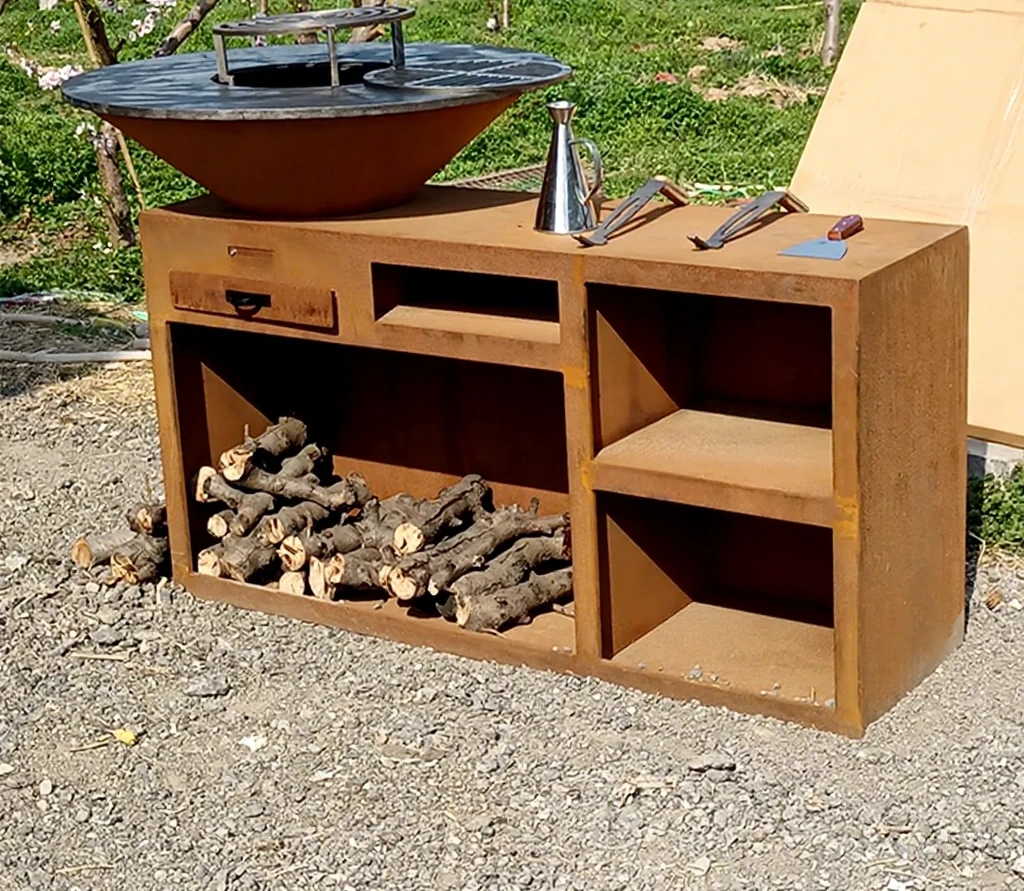
International shipping of Corten steel products requires specific handling knowledge that differs from standard steel logistics. The active patina surface, the weight-to-volume ratio of fabricated products, and varying customs classifications across markets all present challenges that experienced importers navigate routinely but newcomers often underestimate. This guide covers the practical logistics of moving weathering steel products from factory to final destination.
Container Loading and Weight Distribution
Corten steel products are dense. A standard 20-foot container has a maximum payload of approximately 28 metric tons, but you will rarely reach this limit with fabricated products because volume fills the container before weight becomes the constraint. Here are typical loading capacities by product type:
- Flat-pack planters (knocked down): 80-120 units per 20ft container depending on dimensions
- Assembled planters: 30-50 units per 20ft container (significant air space)
- Fire pits: 40-80 units per 20ft container depending on nesting capability
- Screen panels (flat): 200-400 panels per 20ft container stacked on edge
- Garden edging (bundled): 15-20 tons per 20ft container
We always recommend flat-pack shipping where product design permits. Our planter range is engineered for knock-down shipping with bolt-together assembly, reducing freight costs by 40-60% compared to shipping assembled units.
Surface Protection During Transit
This is where Corten steel logistics diverge most from standard steel shipping. The patina surface is the product finish, so it must arrive undamaged. Our standard protection protocol includes:
- Individual wrapping: Each piece wrapped in VCI (Vapor Corrosion Inhibitor) paper or PE foam
- Edge protection: Cardboard or foam corner guards on all exposed edges
- Separation layers: Plywood or cardboard between stacked items to prevent surface-to-surface contact
- Moisture control: Desiccant packets placed throughout the container to manage humidity during ocean transit
- Securing: Steel strapping to container lashing rings, with timber dunnage preventing lateral movement
For pre-rusted (accelerated patina) products, protection is especially critical because the patina surface can transfer color to adjacent materials if moisture is present. We use sealed PE wrapping for all pre-weathered items.
Customs Classification and HS Codes
Correct HS code classification affects duty rates significantly. Corten steel products can fall under several headings depending on their form:
- 7210.49: Flat-rolled products, plated or coated (raw Corten sheet/plate)
- 7308.90: Structures and parts of structures of iron or steel (fabricated architectural elements)
- 7326.90: Other articles of iron or steel (planters, fire pits, decorative items)
- 9403.20: Metal furniture (if classified as furniture rather than garden equipment)
The classification difference between 7326.90 and 9403.20 can mean a duty rate variation of 0-8% depending on the destination country. We provide detailed commercial invoices with suggested HS codes based on our experience shipping to over 40 countries, though final classification authority rests with the destination customs office.
Documentation Requirements
A complete shipping document set for Corten steel products typically includes:
- Commercial Invoice (with unit prices, total value, Incoterms)
- Packing List (with dimensions, weights, and piece count per package)
- Bill of Lading (ocean) or Air Waybill
- Certificate of Origin (for preferential duty rates under trade agreements)
- Mill Test Certificate (chemical composition and mechanical properties)
- Fumigation Certificate (if wooden packaging is used, per ISPM-15)
For EU destinations, a CE marking declaration may be required for structural applications. For Australian imports, a Biosecurity Import Permit is needed if timber dunnage is used. We handle documentation preparation as part of our standard export service.
Incoterms and Risk Transfer
Most of our B2B customers prefer FOB (Free On Board) or CIF (Cost, Insurance, Freight) terms:
- FOB: You arrange ocean freight and insurance from the port of loading. Best when you have established freight forwarder relationships or volume discounts.
- CIF: We arrange freight and insurance to your destination port. Simpler for first-time importers or smaller orders.
- DDP (Delivered Duty Paid): We handle everything including customs clearance at destination. Highest cost but zero logistics burden on your end.
Transit Times and Planning
From our manufacturing base in China, typical ocean freight transit times are:
- Southeast Asia: 7-14 days
- Australia/New Zealand: 14-21 days
- Europe (via Suez): 28-35 days
- US West Coast: 14-18 days
- US East Coast: 30-38 days
- Middle East: 18-25 days
Add 5-7 days for customs clearance and last-mile delivery at destination. For time-critical projects, we can arrange rail freight to Europe (18-22 days) or air freight for small urgent shipments.
Get a Shipping Quote for Your Order
Every order has unique logistics requirements based on product mix, destination, and timeline. Our export team prepares detailed shipping proposals including container optimization, protection specifications, and landed cost estimates. Contact us with your product requirements and delivery address for a comprehensive quotation covering both product and logistics costs. Visit our FAQ page for answers to common shipping and ordering questions.
Need a factory quote for Shipping Corten Steel Products Internationally: Container Loading, Protection, and Customs Documentation?
Send your drawings, size list, quantity and destination country. Corten Factory can support custom weathering steel fabrication, export packing and project quotation.