
Corten Steel Planters in Tropical Climates: Singapore and Malaysia Specification Guide

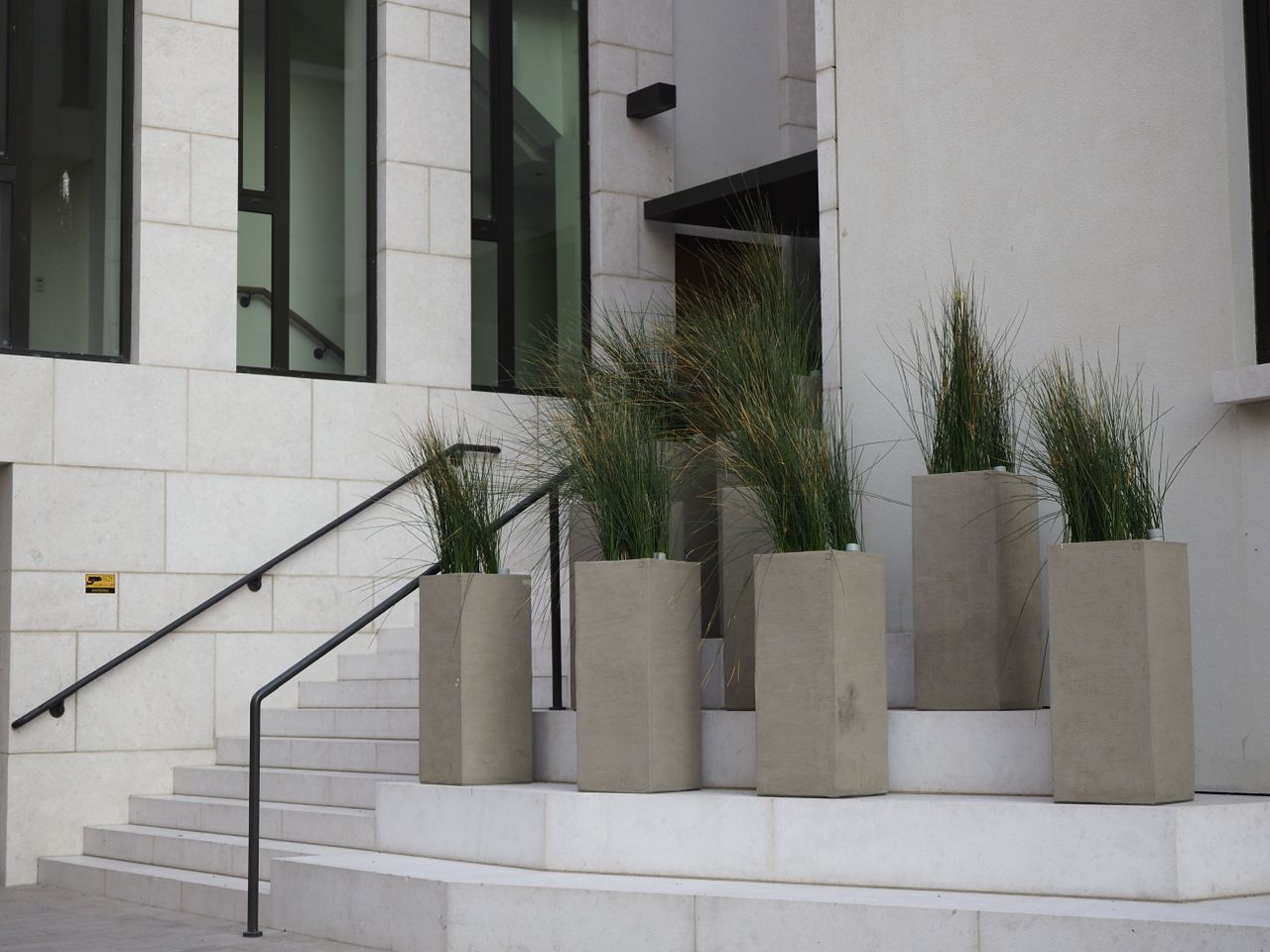
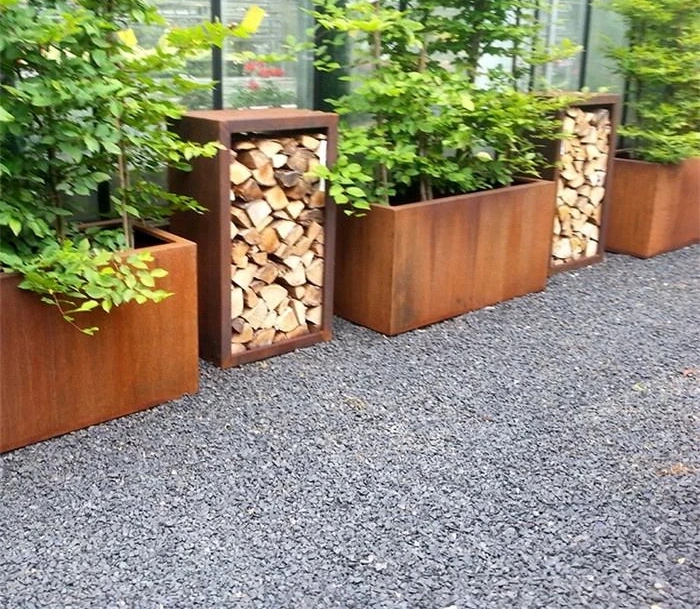
Southeast Asia represents one of the fastest-growing markets for premium landscape materials in commercial and hospitality projects. Singapore and Malaysia, in particular, combine dense urban development with ambitious greening programmes that demand high-quality planter solutions for rooftops, podium gardens, streetscapes, and resort landscapes.
Corten steel planters have gained significant traction in these markets over the past decade, specified by landscape architects who value the material’s visual warmth, structural capability, and design flexibility. However, specifying corten in tropical equatorial climates (average temperature 27-32°C, humidity 75-95%, annual rainfall 2,000-3,000mm) requires understanding how the material behaves differently from temperate applications.
This guide provides landscape architects, interior designers, and procurement managers in Singapore and Malaysia with the technical knowledge to specify, source, and install corten steel planters that perform reliably in tropical conditions.
Corten Steel Performance in Tropical Equatorial Climates
The Patina Formation Challenge
Corten steel’s protective mechanism depends on wet-dry cycling. In temperate climates (UK, Northern Europe, Coastal Australia), daily temperature variation creates natural drying periods that allow the oxide layer to stabilise and compact. In Singapore and Malaysia, conditions are different:
- Relative humidity: 75-95% year-round with limited diurnal variation
- Temperature: 24-33°C with only 5-8°C daily range
- Rainfall: 2,000-3,000mm annually, often as intense afternoon thunderstorms
- Dew formation: Frequent due to overnight cooling and high moisture content
These conditions mean that corten surfaces in Singapore and Malaysia may not fully dry for extended periods, particularly on north-facing surfaces or in sheltered locations. This can result in:
- Extended patina formation time: 24-48 months vs 12-24 months in temperate zones
- Less uniform patina: Areas with different exposure develop different colours and textures
- Higher initial corrosion rate: First-year material loss may be 100-200µm vs 50-80µm in temperate environments
- Potential for non-protective corrosion: In permanently sheltered/wet conditions without air circulation
Published Performance Data for Tropical Environments
Research published by the National University of Singapore (NUS) Department of Civil and Environmental Engineering and the Malaysian Iron and Steel Industry Federation (MISIF) provides corrosion rate data for weathering steel in ASEAN environments:
| Location | Annual Corrosion Rate (µm/year) | Patina Stability Time | Classification (ISO 9223) |
|---|---|---|---|
| Singapore CBD (sheltered) | 80-120 | 30-48 months | C4 |
| Singapore exposed (coastal) | 120-180 | 24-36 months | C4-C5 |
| Kuala Lumpur urban | 60-100 | 24-36 months | C3-C4 |
| Malaysian coastal (Langkawi, Penang) | 100-160 | 18-30 months | C4-C5 |
| Highland (Cameron Highlands, Genting) | 40-70 | 18-24 months | C3 |
The data confirms that corten steel does form protective patina in tropical conditions, but designers must specify increased material thickness to compensate for higher corrosion rates during the extended stabilisation period.
Recommended Minimum Thickness for Singapore/Malaysia
Based on corrosion rate data and target service lives, the following minimum thicknesses are recommended for corten planters in Singapore and Malaysia:
| Application | Target Life | Temperate Spec | Singapore/Malaysia Spec |
|---|---|---|---|
| Residential planter | 20 years | 2-3mm | 3-4mm |
| Commercial planter | 25 years | 3-4mm | 4-5mm |
| Public realm / streetscape | 30 years | 4-5mm | 5-6mm |
| Landmark / high-profile | 40+ years | 5-6mm | 6-8mm |
Design Considerations for Tropical Applications
Drainage Is Critical
In Singapore and Malaysia, planter drainage takes on improved importance. A 1m × 1m × 0.8m planter can receive 30+ litres of rainwater during a single tropical downpour (50-100mm/hour events are common). Without rapid drainage:
- Plant roots drown within hours in waterlogged soil
- Soil weight increases dramatically (saturated soil weighs 30-40% more than moist soil)
- Hydrostatic pressure stresses welded joints and base connections
- Internal water pooling accelerates internal corrosion
Minimum drainage specification for tropical corten planters:
- Drainage holes: minimum 25mm diameter at 200mm centres across the base (more than corners)
- Internal raised base: 50-75mm clear zone beneath growing medium using drainage cells or gravel layer
- Overflow: side-mounted overflow tube set 50mm below rim level to prevent overtopping during intense rain
- Base slope: minimum 1:50 fall to drainage points to prevent ponding
Ventilation and Air Circulation
Preventing permanent moisture on corten surfaces is the primary design challenge in tropical climates. Strategies that promote drying:
- improve planters off ground: Minimum 50mm clearance using stainless steel feet or plinths. This allows air circulation beneath the base — the most vulnerable surface for moisture trapping.
- Avoid recessed installations: Planters set into paving pockets where water can pool around the lower sides will not form stable patina in those zones.
- Open locations preferred: Position planters where prevailing winds can promote drying. Avoid tight courtyards with minimal air movement.
- Spacing from walls: Minimum 100mm clearance between planter sides and adjacent walls to prevent moisture bridge and permit airflow.
Soil and Growing Medium Interaction
The growing medium inside a corten planter creates a permanently moist zone on internal surfaces. In tropical climates, this internal moisture is more aggressive than in temperate environments due to higher temperatures (accelerating electrochemical reactions) and potential acidity from decomposing organic matter.
Protection strategies for internal surfaces:
- Option 1 — Internal coating: Apply two-pack epoxy coating to internal surfaces (SA 2.5 prep, 250µm minimum DFT). This provides 10-15 years of protection before renewal.
- Option 2 — Liner system: Install a separate HDPE or fibreglass liner inside the corten shell, creating an air gap between liner and steel. The steel never contacts soil moisture directly.
- Option 3 — Increased thickness: Specify an additional 2mm thickness to provide sacrificial corrosion allowance on internal surfaces. Suitable for 20-year design life applications.
For high-value projects in Singapore (where replacement access may be restricted — e.g., podium planters over basement car parks), Option 1 or 2 is recommended. Option 3 is suitable for ground-level planters with straightforward replacement access.
Singapore-Specific Requirements
BCA Green Mark and Landscape Requirements
Singapore’s Building and Construction Authority (BCA) Green Mark certification scheme increasingly mandates landscaped areas in new developments. Under the Landscaping for Urban Spaces and High-Rises (LUSH) programme, developers must provide:
- Communal planting areas: Minimum percentage of site area (varies by zone and development type)
- Rooftop/sky gardens: Counted toward landscape replacement area requirements
- Streetscape planting: Along building frontages per NParks guidelines
Corten steel planters support Green Mark compliance by providing durable, low-maintenance containers for the required planting. Their longevity (25-40 years) exceeds plastic or timber alternatives that may require replacement every 5-10 years — a consideration under Green Mark’s life-cycle assessment credits.
NParks Streetscape Guidelines
Singapore’s National Parks Board (NParks) controls streetscape planting design through its Centre for Urban Greenery and Ecology (CUGE). For planters along public streets and in park connector networks, NParks specifies:
- Minimum soil volume per tree: 10m³ (for trees up to 10m mature height)
- Planter structural capacity: must support saturated soil weight plus tree wind load
- Material durability: minimum 20-year design life without structural maintenance
- Safety: no sharp edges accessible to public, stable against accidental impact
Corten planters meeting these requirements typically need 5-6mm wall thickness (for structural stiffness under soil and wind loads) with internal stiffening ribs for planters exceeding 1200mm length.
Fire Safety (SCDF Requirements)
The Singapore Civil Defence Force (SCDF) has specific requirements for combustible materials in certain building zones. Corten steel, being non-combustible, has no restrictions under SCDF fire safety requirements — a significant advantage over timber, GRC, and some composite planter materials that may be restricted on high-rise facades or near means of escape.
Import and Logistics
Singapore’s position as a global trade hub makes procurement of corten planters straightforward:
- Customs: No import duties on steel products entering Singapore (0% MFN tariff rate)
- GST: 9% Goods and Services Tax applies on CIF value (increased from 8% in January 2024)
- Shipping: Direct container shipping from China’s main ports (Shanghai, Ningbo, Shenzhen) takes 5-8 days
- Delivery to site: Standard 20ft or 40ft container delivery; most Singapore sites can accommodate 40ft container access
- Crane requirement: Large planters (over 500kg) require mobile crane for positioning — coordinate with site logistics and road closure permits if needed
Malaysia-Specific Requirements
CIDB and Construction Industry Standards
Malaysia’s Construction Industry Development Board (CIDB) regulates construction materials and practices. For landscape elements including planters:
- Materials must comply with relevant Malaysian Standards (MS) or accepted international equivalents
- Steel products reference MS EN 10025 (equivalent to BS EN 10025) for structural applications
- Imported steel products require SIRIM certification for some applications
- For landscape-only applications (non-structural), certification requirements are less stringent — but specifiers should still reference appropriate material standards in tender documentation
GBI (Green Building Index) Malaysia
Malaysia’s Green Building Index awards credits for landscaping and material durability similar to Singapore’s Green Mark. Corten planters can contribute under:
- SM1 (Sustainable Materials): Durability and recyclability credits
- SM2 (Recycled Content): EAF-produced corten steel typically contains 85-95% recycled content
- EQ7 (External Greenery): Planters supporting the required green buffer zones
Climate Zones Within Malaysia
Malaysia’s climate varies more than often assumed:
| Zone | Characteristics | Corten Performance | Recommended Thickness |
|---|---|---|---|
| West coast (KL, Penang, JB) | Hot humid, 2200-2800mm rain, sheltered from northeast monsoon | Standard tropical — 24-36 month patina | 4-5mm commercial |
| East coast (Terengganu, Kelantan) | Severe monsoon Nov-Feb, 3000mm+ rainfall, salt exposure | Aggressive — higher corrosion during monsoon | 5-6mm minimum |
| Highland (Cameron, Genting) | Cooler (18-25°C), high humidity, frequent mist/fog | Moderate — cooler temps offset by persistent moisture | 4-5mm |
| Sabah/Sarawak (coastal) | Equatorial marine, very high humidity, salt spray | Aggressive — similar to Singapore coastal | 5-6mm minimum |
Import Duties and Procurement
Malaysia applies import duties on steel products that differ from Singapore:
- Import duty: 15-25% on finished steel products (HS code dependent). Fabricated planters typically attract 20% duty on CIF value.
- SST (Sales and Service Tax): 10% Sales Tax on imported goods
- MATRADE requirements: Import permits for steel products may be required through MITI (Ministry of International Trade and Industry)
- Shipping: Port Klang (KL region), Penang Port, and Johor (Tanjung Pelepas) are primary entry points. Transit from China: 4-7 days.
The combined duty+tax burden (approximately 30-35% on CIF value) means Malaysian landed cost is significantly higher than Singapore. For large projects, consider importing raw corten plate and fabricating locally through Malaysian steel fabricators — duty on raw plate (HS 7208) is typically lower (5-10%) than on finished fabricated products.
Project Case Studies
Marina Bay Sands Precinct, Singapore
The landscaped areas surrounding Marina Bay Sands include corten steel planters and landscape walls along the Art Science Museum waterfront and the Events Plaza. These elements are exposed to marine air from Marina Bay, high humidity, and intense solar radiation. Specified at 6mm thickness with internal epoxy coating, the planters have maintained stable performance since installation in 2010 — over 15 years of service in one of the most demanding tropical marine environments in Asia.
Jewel Changi Airport, Singapore
While the iconic indoor Forest Valley uses primarily stone and timber planters, the external arrival forecourt and connector walkways incorporate weathering steel landscape elements. The partially sheltered, naturally ventilated spaces provide near-ideal conditions for corten in Singapore — protection from direct rain saturation while maintaining sufficient air movement for drying cycles.
Gamuda Gardens, Kuala Lumpur
This premium township development in north KL uses corten planters extensively in its central park and commercial streetscape. The landscape architect specified 5mm corten with raised stainless steel feet (75mm clearance) to promote under-base ventilation. After 5 years in service, the planters show stable dark brown patina with no structural issues — a successful demonstration of tropical corten planter performance with appropriate specification.
Desaru Coast Resort, Johor
Located on Malaysia’s southeast coast facing the South China Sea, Desaru Coast presents a C5 marine tropical environment. The resort landscaping uses 6mm corten planters with full internal lining (HDPE welded liner). The specification was driven by dual concerns: the aggressive marine atmosphere on external surfaces, and the need to prevent soil moisture contact on internal surfaces in an environment where internal drying is effectively impossible.
Planter Sizing and Structural Design for Tropical Conditions
Soil Weight Calculations
Tropical growing media for planters is typically a lightweight engineered mix (not native clay soil). Standard weight assumptions for specification:
| Medium Type | Dry Density (kg/m³) | Saturated Density (kg/m³) | Typical Use |
|---|---|---|---|
| Standard potting mix | 400-600 | 800-1,000 | Residential planters |
| Lightweight structural mix | 600-900 | 1,000-1,300 | Commercial rooftop planters |
| Intensive green roof medium | 800-1,200 | 1,200-1,600 | Deep planters with trees |
| Native clay soil (avoid) | 1,400-1,800 | 1,800-2,200 | Not recommended for planters |
In Singapore and Malaysia, design for the saturated condition as the permanent load case — unlike temperate climates where saturation is occasional, tropical planters will be at or near saturation for extended periods during monsoon seasons.
Wind Load on Tall Planters
For planters exceeding 1000mm height, wind overturning must be checked. Singapore’s design wind speed (SS EN 1991-1-4) is relatively modest (basic wind velocity 20 m/s for general terrain), but tall, slender planters with mature planting can present significant sail area.
Rule of thumb for overturning stability: the restoring moment (planter self-weight × 0.5 × base width) must exceed the overturning moment (wind force on planter + plant × height to centroid of area) by a factor of at least 1.5.
For planters on rooftop podiums (where wind speeds are typically 20-40% higher than ground level), ballasting or mechanical fixing to the structure is standard practice.
Thermal Movement
While tropical temperature ranges are narrow (typically 24-38°C surface temperature range), large planters exposed to direct sun can reach significantly higher surface temperatures. Black-body corten steel in direct Singapore afternoon sun can reach 60-70°C on west-facing surfaces.
For planters exceeding 3000mm length, thermal expansion joints or sliding connections should be considered. A 3m corten planter experiencing a 40°C temperature differential (morning shade to afternoon sun) expands by approximately 1.4mm — manageable with appropriate joint details but potentially causing problems if the planter is rigidly fixed at both ends to an immovable structure.
Cost Analysis: Singapore and Malaysia Markets
Singapore Pricing (SGD, ex-GST, 2024/2025)
| Planter Size (L×W×H) | 4mm Thickness | 5mm Thickness | 6mm Thickness |
|---|---|---|---|
| 600 × 600 × 600mm | SGD 380-550 | SGD 450-650 | SGD 520-750 |
| 1000 × 400 × 500mm | SGD 420-600 | SGD 500-720 | SGD 580-840 |
| 1500 × 500 × 700mm | SGD 650-950 | SGD 780-1,120 | SGD 900-1,300 |
| 2000 × 600 × 800mm | SGD 1,100-1,600 | SGD 1,320-1,900 | SGD 1,540-2,200 |
| 3000 × 800 × 1000mm | SGD 2,200-3,200 | SGD 2,640-3,800 | SGD 3,080-4,400 |
Prices include factory fabrication, internal coating, and CIF Singapore delivery. Installation, crane hire, and positioning are additional (typically SGD 150-500 per planter depending on weight and access).
Malaysia Pricing (MYR, ex-SST, 2024/2025)
Due to import duties, Malaysian delivered prices are higher than Singapore on a like-for-like basis. However, the weaker Malaysian Ringgit offsets this somewhat in absolute terms:
| Planter Size (L×W×H) | 4mm Thickness | 5mm Thickness | 6mm Thickness |
|---|---|---|---|
| 600 × 600 × 600mm | MYR 1,400-2,000 | MYR 1,680-2,400 | MYR 1,960-2,800 |
| 1000 × 400 × 500mm | MYR 1,550-2,200 | MYR 1,860-2,640 | MYR 2,170-3,100 |
| 1500 × 500 × 700mm | MYR 2,400-3,500 | MYR 2,880-4,200 | MYR 3,360-4,900 |
| 2000 × 600 × 800mm | MYR 4,100-5,900 | MYR 4,920-7,100 | MYR 5,740-8,200 |
| 3000 × 800 × 1000mm | MYR 8,200-11,800 | MYR 9,840-14,200 | MYR 11,480-16,500 |
Cost Comparison with Alternative Materials
In the Singapore/Malaysia market, corten planters compete with several alternatives:
| Material | Relative Cost (vs corten = 1.0) | Service Life (tropical) | Maintenance |
|---|---|---|---|
| Corten steel (4-6mm) | 1.0 | 25-40 years | None (external), liner/coating replacement at 10-15 years (internal) |
| GRC (glass reinforced concrete) | 0.6-0.8 | 10-15 years | Crack repair, waterproofing renewal every 5-7 years |
| Stainless steel 304 | 1.8-2.5 | 30-50 years | Polish/descale annually in coastal exposure |
| Powder-coated mild steel | 0.7-0.9 | 5-8 years (tropical) | Repaint every 3-5 years or severe rust |
| Fiberglass (FRP) | 0.5-0.7 | 8-12 years | UV degradation, colour fading, cracking |
| Hardwood timber | 0.8-1.2 | 5-10 years (tropical termite risk) | Annual re-oiling, termite treatment, structural checks |
On life-cycle cost, corten outperforms all alternatives except stainless steel (which has higher capital cost but longer absolute service life). For most commercial projects with 25-year design horizons, corten represents the optimal balance of cost, durability, and aesthetics.
Sourcing and Supply Chain
Factory-Direct from China
The majority of corten planters for Singapore and Malaysia are manufactured in China’s steel fabrication clusters (primarily Hebei, Shandong, and Guangdong provinces). Specialist corten planter manufacturers offer:
- Custom sizes and profiles to designer specifications
- Minimum order quantities from 10-20 pieces for standard sizes
- Factory-applied internal coating systems
- Container-optimised packing for efficient shipping
- QC documentation including mill certificates, coating thickness reports, and dimensional checks
Lead times from order to Singapore/KL delivery: typically 6-10 weeks (4-5 weeks production + 1-2 weeks shipping + 1-2 weeks customs and delivery).
Quality Control for Tropical Applications
When sourcing corten planters for Singapore and Malaysia, verify the following quality points:
- Material grade: Request mill test certificates confirming ASTM A588 or equivalent composition. Specifically verify copper content (≥0.25%) and chromium content (≥0.40%) — these elements are critical for tropical patina performance.
- Weld quality: All seams must be continuous seal welds (no skip welding) for water-tightness. Visual inspection to BS EN ISO 5817 Level C minimum.
- Internal coating: Request coating thickness measurement report (dry film thickness readings at multiple points). Minimum 250µm total system DFT for tropical applications.
- Drainage: Verify drainage hole size and distribution meets specification. Confirm holes are drilled after coating application (not before, which creates uncoated edges).
- Dimensional accuracy: ±2mm on overall dimensions, ±1mm on visible height and width. Check squareness on rectangular planters (diagonal difference ≤3mm).
Local Fabrication Options
For bespoke or urgent-delivery requirements:
Singapore: Limited local fabrication capacity for corten specifically (most steel fabricators work in mild steel or stainless). Contact specialist architectural metalwork fabricators in Tuas or Jurong industrial areas. Expect 40-60% cost premium over factory-direct imports.
Malaysia: More fabrication capacity available, particularly in the Klang Valley and Penang industrial areas. Malaysian fabricators can source corten plate from local stockists (typically imported from Japan or Korea) and fabricate to specification. Cost premium over direct import: 20-40%, but with faster delivery and easier quality oversight.
Installation Best Practices for Tropical Conditions
Site Preparation
For ground-level installations on hardscape:
- Ensure paving or concrete substrate is level (±3mm over planter footprint)
- Install stainless steel levelling feet or neoprene pads — never place corten directly on paving (trapped moisture accelerates base corrosion and stains paving permanently)
- Position drainage holes over drain points or permeable zones — pooling of rust-coloured drainage water stains light-coloured paving
- Consider sacrificial drainage trays beneath planters if installed over premium paving
Planting and Growing Medium
Tropical planting in corten planters requires fast-draining growing medium to prevent waterlogging:
- Mix specification: 40% composted bark, 30% perlite or expanded clay, 20% coarse sand, 10% compost
- pH: 5.5-6.5 (slightly acidic to neutral — avoid alkaline mixes above pH 7 which can react with internal coating)
- Drainage layer: minimum 75mm depth of 10-20mm expanded clay aggregate (LECA) below growing medium
- Separation: geotextile fabric between drainage layer and growing medium to prevent particle migration
Stain Management
During the extended tropical patina formation period (24-48 months), corten planters produce iron oxide-rich runoff that stains surrounding surfaces. In Singapore and Malaysia where buildings typically feature light-coloured stone, tiles, or painted surfaces, stain management is critical:
- Apply clear penetrating sealer to paving within 300mm of planter bases (re-apply annually for first 3 years)
- Use dark-coloured paving or gravel immediately adjacent to planters
- Install concealed drip channels at planter bases to capture initial runoff and direct to drains
- Clean stains promptly with oxalic acid solution (5-10% concentration) — established stains on porous stone may be permanent
Integrating Corten Planters with Tropical Landscape Design
The warm brown-orange tones of corten patina complement the rich greens of tropical foliage. Effective plant combinations for corten planters in Singapore and Malaysia:
- Feature palms: Bismarckia nobilis (silver-blue fronds against warm rust), Dypsis lutescens (golden stems complement the orange tones)
- Tropical ornamentals: Heliconia, Bird of Paradise, Plumeria — bold tropical forms that match the strong character of corten
- Ornamental grasses: Pennisetum, Miscanthus — movement and texture contrast against rigid steel geometry
- Green walls/cascading: Philodendron, Pothos, Asparagus fern — cascading over planter edges softens the geometric form
For an integrated project approach, combine corten planters with other weathering steel landscape elements — edging, screens, and seating — to create a unified material palette that reads as considered and intentional rather than a collection of disparate elements.
Maintenance Schedule for Tropical Corten Planters
Monthly (first 2 years):
- Inspect patina development — photograph from consistent position for progress record
- Check drainage function — pour water into planter and verify rapid outflow from drainage holes
- Clean surrounding paving of iron oxide staining using oxalic acid where needed
- Verify planter stability (no settlement or tilting)
Quarterly (ongoing):
- Inspect levelling feet/pads for corrosion or deterioration
- Check for soil compaction blocking drainage holes (probe with wire from outside)
- Inspect internal liner/coating condition if accessible (during replanting)
- Verify no termite activity in timber structural elements (if used as framing within planter assembly)
Annually:
- Full condition assessment of all planters
- Measure steel thickness at representative points using ultrasonic gauge (every 5 years is sufficient for stable patina)
- Top up growing medium (tropical decomposition consumes 20-30mm depth annually)
- Replant or prune root-bound specimens
Summary: Key Specifications for Singapore and Malaysia
Corten steel planters perform well in tropical equatorial climates when specified correctly. The higher humidity and rainfall demand adjustments from temperate-climate specifications, but the material remains the preferred choice for commercial and public realm projects seeking durability, aesthetics, and low life-cycle cost.
Essential specification points for Singapore and Malaysia projects:
- Increase wall thickness by 1-2mm above temperate equivalents (minimum 4mm for any application)
- Protect internal surfaces with epoxy coating (250µm+ DFT) or HDPE liner
- Design aggressive drainage (25mm holes at 200mm centres, internal drainage layer, overflow provision)
- improve planters minimum 50mm above substrate on stainless steel feet
- Allow 24-48 months for patina stabilisation and plan stain management accordingly
- Specify ASTM A588 or equivalent — verify copper and chromium content on mill certificates
- Budget for 25-year minimum service life with one internal coating renewal at 10-15 years
- Source from established corten planter manufacturers with documented tropical project experience
For project-specific advice on corten planter specification for Singapore, Malaysia, or other Southeast Asian locations, technical support is available from experienced manufacturers who understand the specific challenges of tropical corten applications.
For related sourcing details, compare main product overview, corten steel planters, raised garden beds, What is the minimum thickness for corten steel, and Corten Steel Factory: How buyers before finalizing requirements.
Need a factory quote for Corten Steel Planters in Tropical Climates: Singapore and Malaysia Specification Guide?
Send your drawings, size list, quantity and destination country. Corten Factory can support custom weathering steel fabrication, export packing and project quotation.