
UK Corten Steel Facade Panels and Privacy Screens: Specification Guide for Hotels, Offices and Public Realm

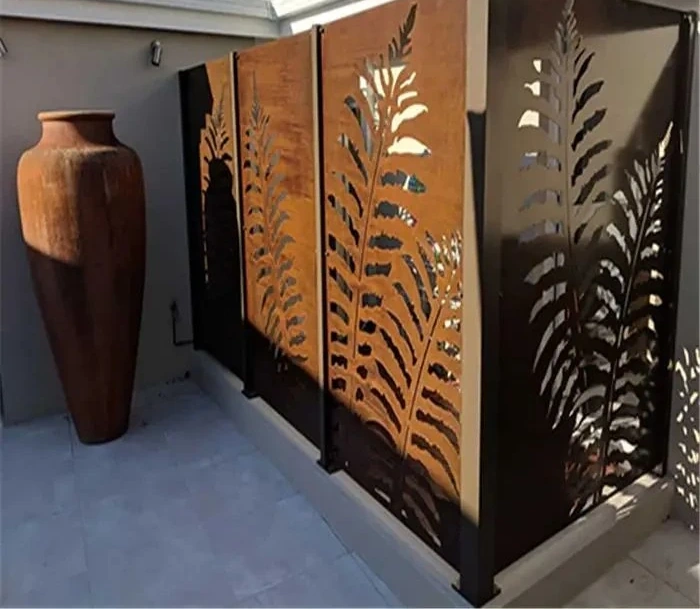
UK architects and landscape contractors often specify Corten steel facade panels and privacy screens when a project needs a warm weathered surface without paint maintenance. The material works well on hotel courtyards in London, office refurbishments in Manchester, restaurant terraces in Birmingham, university landscapes in Bristol, and coastal public realm schemes in Scotland and Wales. The challenge is not the idea of using weathering steel; the challenge is writing a package that covers grade, panel thickness, back-frame design, runoff control, wind loading, fire interfaces, and the way the surface will change in a wet British climate. This guide is written for specifiers, main contractors, facade buyers, and procurement managers who need a practical route from design intent to ordered panels.
A Corten screen or cladding package should be treated as a technical product, not decorative sheet metal. For product families and custom work, see our UK Corten steel facade panels page, laser-cut Corten screen category, custom Corten fabrication service, and Corten product range. UK teams may also refer to British Standards resources, the Planning Portal, and NHBC technical guidance when the panels sit close to occupied buildings or housing schemes.
Why UK projects use weathering steel on walls and screens
The UK design market uses Corten for a specific mix of reasons. It gives a natural oxide finish that sits well beside brick, blackened timber, stone, concrete, zinc, and planting. It can be cut into patterns for privacy or brand identity, folded into cassette panels, or built as freestanding screens for outdoor dining areas. In hotel and office landscapes, the surface brings warmth during grey weather and low winter light. In public realm work, the material can absorb knocks better than painted mild steel because scratches tend to blend into the patina over time.
The surface is not magic. Weathering steel needs air and repeated drying. UK rain, shade, salt spray, and moss growth can slow or disturb patina formation. Panels placed under leaking gutters, against damp soil, or inside narrow unventilated cavities may not form a stable skin. The design should include ventilation, drip edges, removable fixings, and clear separation from pale porous surfaces. Good drawings make the difference between a rich rust-brown facade and a wall with unwanted streaks.
Technical parameters for facade panels and screens
| Use | Typical thickness | Format | Fixing approach | UK specification note |
|---|---|---|---|---|
| Flat rainscreen cassettes | 2.0-3.0 mm | Folded tray with returns | Secret rivets, bolts, or bracket rail | Coordinate cavity, breather membrane, and drip path. |
| Laser-cut privacy screens | 3.0-5.0 mm | Panel modules 900-1500 mm wide | Bolted tabs to posts or frame | Check open-area percentage against wind load. |
| Balustrade infill outside guarding line | 4.0-6.0 mm | Framed panel | Engineered clamps or bolts | Do not treat decorative screen as a certified guard without review. |
| Soffit or canopy feature | 2.0-3.0 mm | Small folded panels | Mechanical fixings with safety retention | Control staining on glass and paving below. |
| Ground-floor impact zones | 4.0 mm plus | Flat or folded sheets | Back-frame with replaceable panels | Allow for trolley, bin, and crowd contact. |
For most UK facade features, 2.0 mm is the lower limit for small folded trays, while 3.0 mm gives better flatness and handling tolerance. Screens often start at 3.0 mm, rising to 4.0 or 5.0 mm where the pattern has large open areas or where panels are exposed to wind. A thin sheet with a fine laser pattern can distort during cutting or weathering, so the drawing should state flatness tolerance, edge deburring, and whether visible welds are allowed.
Designing for British rain, shade, and coastal air
Runoff and staining
Rainwater will carry oxide from new Corten panels. On a facade, the designer should show where that water goes. Use folded returns, hidden gutters, stainless drip trays, dark gravel strips, or sacrificial plinths. Avoid discharging runoff over pale render, Portland stone, light precast concrete, glass balustrades, or white paving. If the design places Corten above a main entrance, the architect should agree a cleaning method before handover.
Ventilation
Weathering steel needs drying. A rainscreen cavity should not be blocked with insulation, debris, or sealant beads. Freestanding screens should have a small stand-off from walls and planting so leaves do not stay wet against the back face. On shaded north-facing courtyards, expect slower color development and specify pre-weathering if the opening date is important.
Coastal locations
Projects near the sea need caution. Chloride exposure can keep the surface active, especially on seafront hotels, piers, and roof terraces. In these areas, use thicker material, larger drainage gaps, accessible fixings, and a maintenance plan. If panels sit in direct salt spray, stainless, coated aluminum, or a protected steel finish may be a safer option for some components.
Procurement table for UK facade and screen packages
| Package item | Buyer should confirm | Why it matters |
|---|---|---|
| Steel grade | Weathering steel grade or equivalent mill certificate | Avoids mild steel substitution. |
| Pattern file | DXF/DWG revision, scale, and bridge widths | Prevents fragile cutouts and wrong orientation. |
| Panel module | Width, height, return depth, holes, slots | Controls fit and expansion. |
| Back frame | Galvanized, stainless, or painted support detail | Controls galvanic contact and hidden corrosion. |
| Finish | Raw, pre-weathered, or sealed sample | Sets realistic color expectations. |
| Packing | Film, foam, edge protection, numbered crates | Reduces site sorting and scratching. |
Installation details contractors should not leave until site
Panel installers should receive a setting-out drawing before delivery. Slots should allow movement, but they should not be so large that washers fail to cover them. Fixings must be reachable for replacement. Where panels meet brick or concrete, use spacers so the back of the steel dries. For screens, post base plates need drainage holes or raised packers; a base plate that traps water below a Corten post will stain heavily and may shorten service life.
- Store crates off the ground under a breathable cover, not under tight plastic in rain.
- Lift panels with clean gloves or soft slings to avoid handprint marks.
- Do not cut or grind panels beside finished glass or stone without masking.
- Rinse accidental cement, mortar, or alkaline cleaner immediately.
- Photograph each completed elevation for the project quality file.
Cost and specification planning
| UK project type | Indicative specification | Cost drivers | Procurement advice |
|---|---|---|---|
| Boutique hotel courtyard | 3 mm laser-cut screens, pre-weathered | Pattern density, posts, powder-coated support frame | Approve one full-size sample bay. |
| Office entrance facade | 2-3 mm folded cassettes | Cassette depth, hidden rails, access panels | Coordinate with facade engineer early. |
| Public realm planter screen | 4 mm panels with anti-climb pattern | Impact risk, foundation plates, graffiti cleaning | Use replaceable panel modules. |
| Restaurant terrace | 3 mm privacy panels and gates | Fire escape clearance, gate hardware, drainage | Check licensing and access routes. |
Material comparison for UK specifiers
| Material | Strength in UK exterior work | Weak point | Best use |
|---|---|---|---|
| Corten weathering steel | Natural patina, strong plate feel, low paint upkeep | Runoff staining and coastal limits | Feature facades, screens, planters, signage. |
| Powder-coated mild steel | Wide color range and predictable finish | Chips need repair; coating life varies | Brand-color rails, furniture, protected frames. |
| Aluminum | Lightweight and good for large panels | Softer surface; less warm appearance | High-level cladding where weight matters. |
| Stainless steel | High corrosion resistance in many locations | Higher cost; glare; different aesthetic | Marine fixings, drip trays, food areas. |
| Timber | Warm and familiar | Movement, rot risk, fire treatment questions | Acoustic screens and soft landscape areas. |
Application scenarios
In a London hotel courtyard, 3 mm laser-cut screens can separate dining booths while hiding plant rooms. The pattern should keep enough solid material around hinges, latches, and base plates. In a Manchester office refurbishment, folded Corten cassettes can refresh a tired brick entrance, but the team should plan runoff onto dark paving rather than light concrete. In a Bristol university landscape, Corten panels can tie signage, planters, and seating edges together, provided maintenance crews know which cleaners are safe. In coastal Scotland or Wales, the buyer should test exposure and consider thicker panels or mixed materials for windward faces.
Factory checklist before shipment
- Confirm all drawings carry the latest revision and site grid references.
- Check a photo set showing front, back, edges, holes, folds, welds, and crate labels.
- Ask for trial assembly images when screens include posts, gates, or multi-panel patterns.
- Confirm spare fixings, touch-up instructions for support frames, and lifting points.
- Match crate numbers to the contractor installation sequence.
Common Buyer Questions
Will Corten facade panels and privacy screens stain paving during early weathering in the UK?
Yes. Iron-rich runoff is most active during the first wet and dry cycles. Place gravel bands, dark stone, stainless drip trays, or sacrificial setting blocks below exposed edges. Avoid pale limestone, porous concrete, and rendered walls directly under new weathering steel unless the design accepts rust marks as part of the finish.
Should the steel arrive pre-weathered or raw?
Pre-weathering gives the project team a closer view of the final tone before site installation and helps reveal handling marks before packing. Raw steel is cheaper and may be preferred when the site program allows natural patina development. For public work, many buyers approve a sample panel showing an acceptable range rather than one fixed color.
What documents should be requested before placing an order?
Ask for grade declaration, plate thickness, shop drawings, weld and fold details, drainage drawings, fixing schedules, finish sample photos, crate list, and inspection images before dispatch. When a job has several landscape zones, request tagged crates that match the plan numbers used by the contractor.
Can Corten sit beside stainless steel, aluminum, concrete, or timber?
Yes, but use separation tapes, EPDM washers, nylon sleeves, or coated brackets where mixed metals touch. Keep timber ventilated and keep concrete upstands detailed with a drip route. The main risk is not contact alone; it is trapped moisture at a joint that never dries.
How early should a B2B buyer start procurement?
Standard planters, simple edging, and repeat screen modules can often be organized in eight to ten weeks. Custom facade panels, large water trays, curved beds, fire features, or projects needing samples and revised drawings should start twelve to eighteen weeks before the required site date.
Practical buying recommendation
For UK commercial work, specify Corten panels as a full assembly: steel grade, thickness, panel geometry, support frame, fixings, runoff route, packing, and maintenance note. Choose 3 mm as a common starting point for visible facade and screen panels, move thicker for impact or wind, and avoid details that keep the back face wet. Buyers should ask the factory for marked-up shop drawings and inspection photos before paying the balance. That discipline protects the architect intent and gives the contractor a package that can be installed without last-minute metalwork changes.
Additional specification notes for tender packages
Tender drawings should state whether dimensions are outside-to-outside, inside planting size, or finished installed size. This avoids disputes when folded returns, brackets, and liners reduce clear space. For repeat projects, a dimension code table is better than long written descriptions because it helps the factory check every module before cutting steel.
Sample approval should be practical. A small coupon can show color and texture, but it cannot show oil-canning, corner welds, pattern strength, or runoff behavior. For high-value work, order a corner sample or one complete module. Photograph it in daylight and shade, then attach the approved images to the purchase file.
Packing is part of quality control. Weathering steel can mark itself if bare panels rub in transit. Ask for separators, corner guards, breathable wrapping, and crate labels on at least two sides. If the site has limited storage, the crate sequence should match the installation sequence, not the factory production sequence.
Tolerance should be written in numbers. Long panels and planters can look wrong even when they are structurally sound. State acceptable bow, twist, hole position, and diagonal difference. If panels connect to existing concrete or steel, the contractor should survey the site before final drawings are released.
Maintenance should be honest and short. Weathering steel is low-paint, not no-care. The owner should know how to remove leaves, trapped soil, cement splashes, and salt deposits. A clear maintenance note also protects the contractor from being blamed for natural color variation during the first year.
Additional specification notes for tender packages
Tender drawings should state whether dimensions are outside-to-outside, inside planting size, or finished installed size. This avoids disputes when folded returns, brackets, and liners reduce clear space. For repeat projects, a dimension code table is better than long written descriptions because it helps the factory check every module before cutting steel.
Sample approval should be practical. A small coupon can show color and texture, but it cannot show oil-canning, corner welds, pattern strength, or runoff behavior. For high-value work, order a corner sample or one complete module. Photograph it in daylight and shade, then attach the approved images to the purchase file.
Packing is part of quality control. Weathering steel can mark itself if bare panels rub in transit. Ask for separators, corner guards, breathable wrapping, and crate labels on at least two sides. If the site has limited storage, the crate sequence should match the installation sequence, not the factory production sequence.
Tolerance should be written in numbers. Long panels and planters can look wrong even when they are structurally sound. State acceptable bow, twist, hole position, and diagonal difference. If panels connect to existing concrete or steel, the contractor should survey the site before final drawings are released.
Maintenance should be honest and short. Weathering steel is low-paint, not no-care. The owner should know how to remove leaves, trapped soil, cement splashes, and salt deposits. A clear maintenance note also protects the contractor from being blamed for natural color variation during the first year.
Additional specification notes for tender packages
Tender drawings should state whether dimensions are outside-to-outside, inside planting size, or finished installed size. This avoids disputes when folded returns, brackets, and liners reduce clear space. For repeat projects, a dimension code table is better than long written descriptions because it helps the factory check every module before cutting steel.
Sample approval should be practical. A small coupon can show color and texture, but it cannot show oil-canning, corner welds, pattern strength, or runoff behavior. For high-value work, order a corner sample or one complete module. Photograph it in daylight and shade, then attach the approved images to the purchase file.
Packing is part of quality control. Weathering steel can mark itself if bare panels rub in transit. Ask for separators, corner guards, breathable wrapping, and crate labels on at least two sides. If the site has limited storage, the crate sequence should match the installation sequence, not the factory production sequence.
Tolerance should be written in numbers. Long panels and planters can look wrong even when they are structurally sound. State acceptable bow, twist, hole position, and diagonal difference. If panels connect to existing concrete or steel, the contractor should survey the site before final drawings are released.
Maintenance should be honest and short. Weathering steel is low-paint, not no-care. The owner should know how to remove leaves, trapped soil, cement splashes, and salt deposits. A clear maintenance note also protects the contractor from being blamed for natural color variation during the first year.
Additional specification notes for tender packages
Tender drawings should state whether dimensions are outside-to-outside, inside planting size, or finished installed size. This avoids disputes when folded returns, brackets, and liners reduce clear space. For repeat projects, a dimension code table is better than long written descriptions because it helps the factory check every module before cutting steel.
Sample approval should be practical. A small coupon can show color and texture, but it cannot show oil-canning, corner welds, pattern strength, or runoff behavior. For high-value work, order a corner sample or one complete module. Photograph it in daylight and shade, then attach the approved images to the purchase file.
Packing is part of quality control. Weathering steel can mark itself if bare panels rub in transit. Ask for separators, corner guards, breathable wrapping, and crate labels on at least two sides. If the site has limited storage, the crate sequence should match the installation sequence, not the factory production sequence.
Tolerance should be written in numbers. Long panels and planters can look wrong even when they are structurally sound. State acceptable bow, twist, hole position, and diagonal difference. If panels connect to existing concrete or steel, the contractor should survey the site before final drawings are released.
Maintenance should be honest and short. Weathering steel is low-paint, not no-care. The owner should know how to remove leaves, trapped soil, cement splashes, and salt deposits. A clear maintenance note also protects the contractor from being blamed for natural color variation during the first year.
Additional specification notes for tender packages
Tender drawings should state whether dimensions are outside-to-outside, inside planting size, or finished installed size. This avoids disputes when folded returns, brackets, and liners reduce clear space. For repeat projects, a dimension code table is better than long written descriptions because it helps the factory check every module before cutting steel.
Sample approval should be practical. A small coupon can show color and texture, but it cannot show oil-canning, corner welds, pattern strength, or runoff behavior. For high-value work, order a corner sample or one complete module. Photograph it in daylight and shade, then attach the approved images to the purchase file.
Packing is part of quality control. Weathering steel can mark itself if bare panels rub in transit. Ask for separators, corner guards, breathable wrapping, and crate labels on at least two sides. If the site has limited storage, the crate sequence should match the installation sequence, not the factory production sequence.
Tolerance should be written in numbers. Long panels and planters can look wrong even when they are structurally sound. State acceptable bow, twist, hole position, and diagonal difference. If panels connect to existing concrete or steel, the contractor should survey the site before final drawings are released.
Maintenance should be honest and short. Weathering steel is low-paint, not no-care. The owner should know how to remove leaves, trapped soil, cement splashes, and salt deposits. A clear maintenance note also protects the contractor from being blamed for natural color variation during the first year.
Additional specification notes for tender packages
Tender drawings should state whether dimensions are outside-to-outside, inside planting size, or finished installed size. This avoids disputes when folded returns, brackets, and liners reduce clear space. For repeat projects, a dimension code table is better than long written descriptions because it helps the factory check every module before cutting steel.
Sample approval should be practical. A small coupon can show color and texture, but it cannot show oil-canning, corner welds, pattern strength, or runoff behavior. For high-value work, order a corner sample or one complete module. Photograph it in daylight and shade, then attach the approved images to the purchase file.
Packing is part of quality control. Weathering steel can mark itself if bare panels rub in transit. Ask for separators, corner guards, breathable wrapping, and crate labels on at least two sides. If the site has limited storage, the crate sequence should match the installation sequence, not the factory production sequence.
Tolerance should be written in numbers. Long panels and planters can look wrong even when they are structurally sound. State acceptable bow, twist, hole position, and diagonal difference. If panels connect to existing concrete or steel, the contractor should survey the site before final drawings are released.
Maintenance should be honest and short. Weathering steel is low-paint, not no-care. The owner should know how to remove leaves, trapped soil, cement splashes, and salt deposits. A clear maintenance note also protects the contractor from being blamed for natural color variation during the first year.
Additional specification notes for tender packages
Tender drawings should state whether dimensions are outside-to-outside, inside planting size, or finished installed size. This avoids disputes when folded returns, brackets, and liners reduce clear space. For repeat projects, a dimension code table is better than long written descriptions because it helps the factory check every module before cutting steel.
Sample approval should be practical. A small coupon can show color and texture, but it cannot show oil-canning, corner welds, pattern strength, or runoff behavior. For high-value work, order a corner sample or one complete module. Photograph it in daylight and shade, then attach the approved images to the purchase file.
Packing is part of quality control. Weathering steel can mark itself if bare panels rub in transit. Ask for separators, corner guards, breathable wrapping, and crate labels on at least two sides. If the site has limited storage, the crate sequence should match the installation sequence, not the factory production sequence.
Tolerance should be written in numbers. Long panels and planters can look wrong even when they are structurally sound. State acceptable bow, twist, hole position, and diagonal difference. If panels connect to existing concrete or steel, the contractor should survey the site before final drawings are released.
Maintenance should be honest and short. Weathering steel is low-paint, not no-care. The owner should know how to remove leaves, trapped soil, cement splashes, and salt deposits. A clear maintenance note also protects the contractor from being blamed for natural color variation during the first year.
Additional specification notes for tender packages
Tender drawings should state whether dimensions are outside-to-outside, inside planting size, or finished installed size. This avoids disputes when folded returns, brackets, and liners reduce clear space. For repeat projects, a dimension code table is better than long written descriptions because it helps the factory check every module before cutting steel.
Sample approval should be practical. A small coupon can show color and texture, but it cannot show oil-canning, corner welds, pattern strength, or runoff behavior. For high-value work, order a corner sample or one complete module. Photograph it in daylight and shade, then attach the approved images to the purchase file.
Packing is part of quality control. Weathering steel can mark itself if bare panels rub in transit. Ask for separators, corner guards, breathable wrapping, and crate labels on at least two sides. If the site has limited storage, the crate sequence should match the installation sequence, not the factory production sequence.
Tolerance should be written in numbers. Long panels and planters can look wrong even when they are structurally sound. State acceptable bow, twist, hole position, and diagonal difference. If panels connect to existing concrete or steel, the contractor should survey the site before final drawings are released.
Maintenance should be honest and short. Weathering steel is low-paint, not no-care. The owner should know how to remove leaves, trapped soil, cement splashes, and salt deposits. A clear maintenance note also protects the contractor from being blamed for natural color variation during the first year.
Need a factory quote for UK Corten Steel Facade Panels and Privacy Screens: Specification Guide for Hotels, Offices and Public Realm?
Send your drawings, size list, quantity and destination country. Corten Factory can support custom weathering steel fabrication, export packing and project quotation.