
New Zealand Corten Steel Landscape Edging and Water Features for Coastal Parks and Public Realm

New Zealand public landscapes often sit between strong coastal weather and careful ecological expectations. Auckland waterfront promenades, Wellington civic spaces, Christchurch regeneration projects, Queenstown resorts, and regional parks need materials that can cope with rain, salt wind, UV, public traffic, and long maintenance intervals. Corten steel landscape edging and water features can be a strong choice when they are designed with drainage, safety, water chemistry, and coastal exposure in mind.
Corten steel is not ordinary rusted mild steel. The alloy contains copper, chromium, nickel, and phosphorus in controlled ranges. When wet and dry cycles are available, the surface forms a dense oxide layer that slows deeper corrosion. This is why the material is used for bridges, rail work, public art, facade cladding, edging, and heavy outdoor planters. For a buyer, the key is not the orange color on day one; it is the correct grade, drainage, detailing, and exposure conditions.
Factory supply should therefore start with the drawing set, not only with a square metre price. A planter that looks simple may need internal ribs, hidden lifting points, drain holes, geotextile separation, adjustable feet, and safe corner radii. A screen may need post calculations, base plates, drainage gaps, and a finish procedure that avoids staining during the first rain cycles. A water feature needs a water chemistry plan and a sacrificial or coated wet zone. These decisions affect freight, site labour, and maintenance long after the purchase order is placed.
Why New Zealand designers use Corten edging and water elements
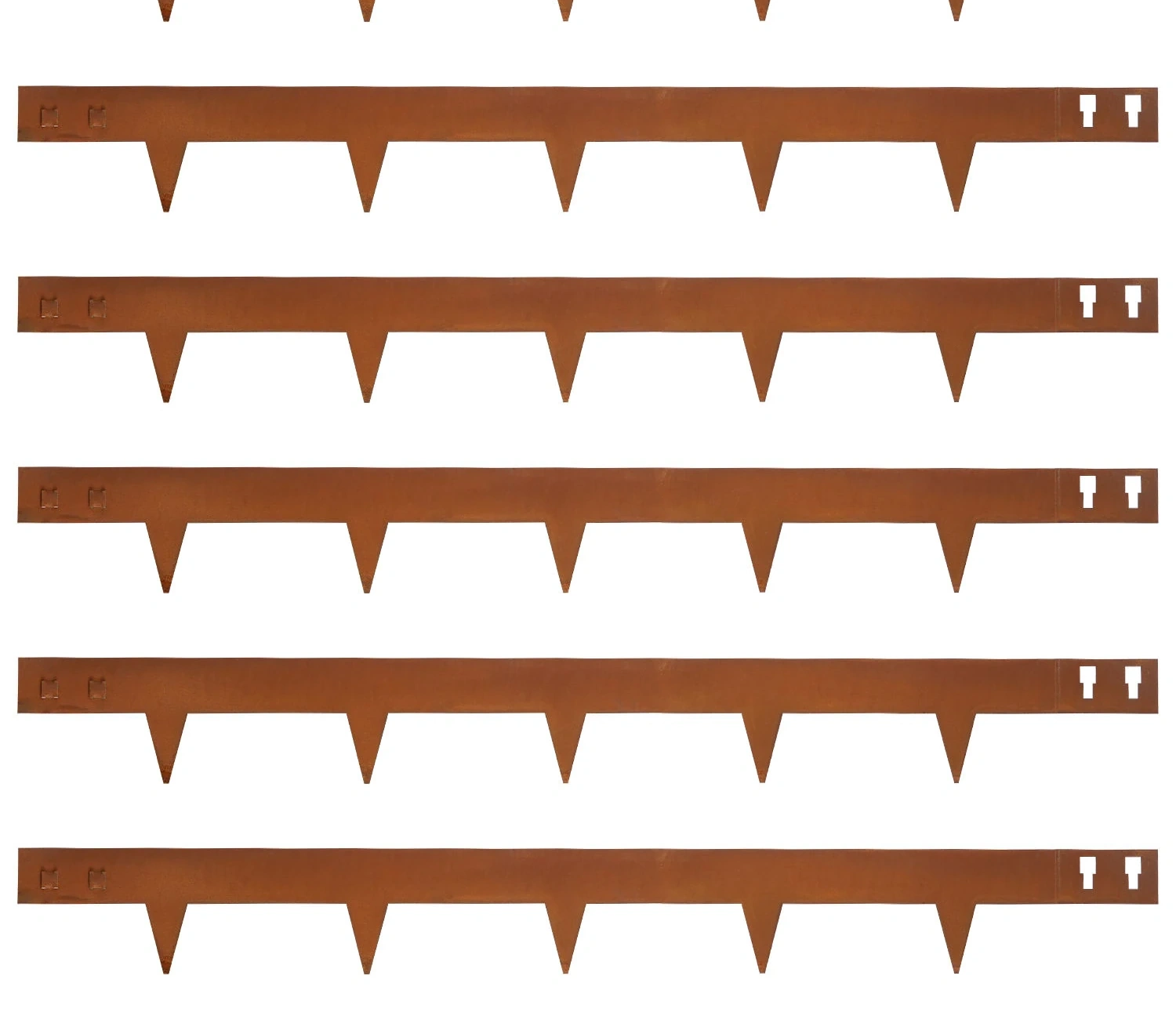
Landscape edging in public realm projects has to do more than separate mulch from paving. It controls curves, holds levels, protects planting beds from maintenance equipment, and gives contractors a clear line to build from. Corten edging adds a warm, natural boundary that sits well with native grasses, basalt, timber boardwalks, exposed aggregate, and dark volcanic stone.
Water features ask for even more care. A corten rim, spill edge, water bowl, or sculptural basin can look grounded and durable, but water chemistry changes the corrosion environment. The designer must separate decorative wet zones from structural steel, choose liners or coatings where needed, and plan access to pumps and filters.
In New Zealand, the best corten details usually feel simple on the surface and carefully engineered underneath: open drainage, safe top edges, hidden fixings, replacement parts, and clear handover notes for council or facilities teams.
- Use edging for coastal parks, civic planting beds, hotel paths, rain gardens, playground boundaries, and resort landscapes.
- Use corten water features for reflective basins, spill bowls, sculptural rills, and entry features when wet zones are lined or managed.
- Check slip risk, trip edges, sharp corners, and public maintenance access before fabrication.
- Coordinate corrosion, runoff, and planting soil with the local landscape architect.
Recommended technical specification for New Zealand projects
The following specification notes are written for landscape architects, architects, contractors, and procurement managers preparing a tender package. They are not a substitute for local engineering, but they give a practical starting point for factory quotations and shop drawing review.
| Item | Recommended specification | Procurement note |
|---|---|---|
| Steel grade | ASTM A588 / A606 Type 4 or EN S355J2W equivalent | Ask for mill certificate and coastal exposure comments |
| Edging thickness | 1.6-3.0 mm for standard edging; 3.0-6.0 mm for retaining edges | Height and soil pressure set the real requirement |
| Edging height | 100-300 mm typical; higher for level changes | Use stakes, returns, or ribs for tall edges |
| Water feature steel | 3.0-6.0 mm visible corten shell; lined wet area recommended | Do not assume raw corten is suitable for constant immersion |
| Top edge | Folded, rolled, or capped edge | Important in parks and playground-adjacent areas |
| Anchoring | Stakes, pins, welded tabs, or concealed brackets | Match soil, concrete, and maintenance load |
| Drainage | Free-draining base, weep gaps, gravel bands | Prevents staining and standing water |
| Maintenance access | Removable grates, pump hatches, clean-out points | Needed for public water features |
Material choices: Corten steel compared with common alternatives
Corten is often selected because it ages into the landscape rather than fighting the climate with a painted finish. Still, it is not the right answer for every detail. The table below helps teams compare realistic options before issuing a bill of quantities.
| Material | Best use | Limitations in New Zealand | Typical buyer decision |
|---|---|---|---|
| Corten steel | Visible edging, sculptural rims, warm public realm lines | Salt spray and constant immersion require detail | Choose for natural look and durable edge definition |
| Galvanized steel | Utility edging and hidden supports | Bright finish can conflict with natural palette | Choose for cost-sensitive hidden work |
| Aluminium edging | Lightweight garden beds and roof landscapes | Less impact resistance; colour depends on coating | Choose where weight and easy bending matter |
| Concrete kerb | Heavy-duty mowing edges and roadsides | Less flexible for organic curves; more wet trade work | Choose for vehicle loads and standard civil details |
| Stainless steel | Marine splash zones and wet feature internals | Higher cost and cooler appearance | Choose for constant wet or chloride exposure |
New Zealand climate notes: coastal salt, heavy rain and public safety
New Zealand coastal wind can carry salt inland farther than overseas suppliers expect. Corten can still perform, but the detail must not hold chloride-rich water. Narrow gaps packed with damp leaves, irrigation overspray, and permanent shade can keep the oxide layer wet and active.
Heavy rain events and sloping parks mean runoff control is part of the design. If corten edging borders pale concrete, early rust wash can mark the surface. This is often manageable with gravel strips, temporary protection, pre-weathering, or acceptance of a natural runoff zone.
Public safety is just as important as corrosion. Edging near paths should be visible, stable, and free of sharp corners. Water features need slip-resistant surrounding surfaces, child-safety review, safe water depth, and easy isolation for maintenance.
Drainage, run-off and staining control
For edging, drainage prevents both soil pressure and staining. For water features, drainage and overflow design protect pumps, paving, and the corten patina. Draw the path of water in normal operation and during overflow before placing the order.
- Set edging into compacted base material rather than loose topsoil alone.
- Use stakes at closer centres on curves, slopes, and maintenance equipment routes.
- Provide gravel or dark stone below corten drip lines.
- Line water basins or specify coated internals where water is constantly present.
- Design overflow away from accessible paths and pale paving.
Sizing, thickness and cost planning
Prices vary with steel grade, sheet thickness, cutting time, welding length, surface treatment, packing density, and ocean freight. For early budgeting, buyers should ask for itemised pricing rather than a single lump sum. The numbers below are planning bands only; the final quotation should be based on drawings, quantities, Incoterms, and destination port.
| Product / scope | Typical thickness | Common size range | Budget driver |
|---|---|---|---|
| Flexible landscape edging | 1.6-2.5 mm | 100-200 mm height; 1-3 m lengths | Thickness, stake spacing, curve radius |
| Retaining edge / planter edge | 3.0-6.0 mm | 200-600 mm height | Soil pressure, ribs, anchoring |
| Corten water bowl | 3.0-6.0 mm shell | 600-2000 mm diameter | Rolling, welding, liner, pump access |
| Linear rill or channel | 3.0-5.0 mm visible edge | Project-specific lengths | Level tolerance, waterproofing, grates |
| Public art water feature | 4.0-10.0 mm | Custom | Engineering, finish samples, installation planning |
Installation details contractors should not leave to site improvisation
Edging installation should begin with set-out. Corten makes crisp lines, so poor curves and uneven heights stand out. Use string lines, digital layout points, or templates for complex organic shapes. Stake spacing should be tightened at curves, slope transitions, and mower edges.
For coastal parks, avoid burying corten so deeply that the lower section stays wet without air. If the design needs a buried structural element, consider a separate galvanized or stainless anchor with the corten visible face isolated above the wet zone.
Water features should be tested before public opening. Fill, run, overflow, drain, and clean the system while the contractor is still on site. Check pump access, splash pattern, staining risk, electrical isolation, and slip zones around the feature.
- Confirm finished surface levels and edging exposure height before fabrication.
- Use gloves; raw edges and early patina can mark hands and paving.
- Do not cut finished corten on pale paving without protection.
- Flush water feature systems before handover to remove fabrication dust.
- Provide the client with seasonal cleaning instructions and replacement part references.
Project applications in New Zealand
Auckland and Wellington waterfront public realm
Corten edging can guide planting and protect pedestrian desire lines. Use salt-aware details, stainless fixings where needed, and runoff paths that do not cross light paving.
Christchurch civic and regeneration landscapes
Corten pairs well with gravel, native grasses, timber, and concrete. Modular edging allows damaged sections to be replaced without rebuilding an entire bed.
Resorts and lodges in Queenstown and coastal regions
Water bowls, fire-water features, and sculptural edging can create strong arrival spaces. Detail the wet areas with liners and keep maintenance access hidden but reachable.
Procurement checklist for B2B buyers
A good corten package is bought once and installed cleanly. A weak package creates expensive site questions: missing anchors, mismatched patina, damaged corners, water trapped behind panels, or stained stone paving. Use this checklist before approving a supplier.
- Exposure category and distance from coast reviewed
- Edging thickness, height, stake spacing, and curve radius specified
- Safe top edge and corner treatment included
- Runoff and staining plan accepted by landscape architect
- Water feature liner, pump access, overflow, and cleaning method shown
- Packing lengths matched to site handling and path access
- Maintenance note for council or facilities handover
Factory fabrication, packing and shipping notes
For custom projects, CortenFactory can fabricate planter boxes, raised beds, landscape edging, privacy screens, facade panels, fire pits, water bowls, and sculptural steel work from shop drawings or design intent sketches. Related pages include Corten steel landscape edging products, Corten steel garden edging and planter liner, Corten steel fire pit water bowl, New Zealand water feature specification guide, custom Corten steel fabrication.
For export orders, request welding photos, dimensional checks, packing photos, and a spare parts list before shipment. Nested parts reduce freight, but they should not create abrasion marks on visible corten faces. For large panels and planters, crates should include fork pockets or lifting guidance so the receiving contractor does not damage finished edges during unloading.
Common Buyer Questions
Can raw Corten steel be used inside a water feature?
Raw corten should not be treated as a normal submerged tank material. Use corten as the visible shell, rim, or dry-wet sculptural surface, and line or coat areas that remain constantly wet.
Will Corten edging stain paths in New Zealand rain?
It can during early weathering. The risk is highest on pale concrete and stone. Use gravel bands, pre-weathered steel, controlled drainage, or a design that accepts natural staining.
What thickness is best for public park edging?
For many park beds, 2.0-3.0 mm works well. Retaining edges, mower routes, and high-traffic areas may need 4.0-6.0 mm with stronger stakes or brackets.
Is Corten suitable near the New Zealand coast?
Yes for many visible landscape elements, but not for poorly drained chloride traps. Increase air gaps, use stainless fixings, avoid constant wet contact, and review very exposed marine sites case by case.
Clear purchasing advice
For New Zealand, order corten edging and water features with the whole landscape system in mind: coastal exposure, stormwater, slip risk, public maintenance, and staining. If water is constantly present, specify a liner or coated wet zone rather than relying on raw weathering steel.
Useful external references for project teams: New Zealand Building Code overview, Auckland Council stormwater guidance, Waka Kotahi public realm and transport guidance.
Edging geometry: straight runs, curves and level changes
New Zealand landscape projects often use organic planting lines rather than only straight kerbs. Corten edging can form these curves cleanly, but the factory needs to know the radius, height, and ground condition. A thin strip can follow a gentle curve on site; a tall retaining edge or tight radius should be rolled or segmented in the factory. If contractors force a tall strip into a tight curve, the top edge can wave and the finish will look poor.
Level changes are the point where edging becomes structural. A 150 mm planting edge may only separate mulch from gravel, while a 500 mm edge may hold soil and resist people stepping on it. For higher edges, specify thicker steel, returns, welded ribs, deadman anchors, or brackets into concrete. Do not ask a thin decorative edge to perform as a retaining wall.
Where edging meets paths, the top should be visible and safe. In low-light parks or near playgrounds, a dark rust line can become a trip hazard if it sits proud of the surface. Designers can use planting offsets, gravel margins, lighting, or flush details to reduce risk.
Water feature detailing: separate the visual shell from the wet system
The most common mistake in corten water features is assuming the same weathering behaviour applies under constant immersion. It does not. Weathering steel needs oxygen and drying to form a stable patina. In a basin, rill, or tank that remains wet, the steel may keep corroding and the water may carry rust particles through pumps and filters. The better detail is to use corten as the visible outer shell or rim, with stainless, fiberglass, EPDM, HDPE, or a suitable coating managing the constant wet zone.
Water chemistry should be discussed early. Chlorine, saltwater systems, acidic runoff from planting beds, and fertiliser contamination can all change corrosion behaviour. If the feature is part of a public park, maintenance teams need a simple cleaning method and access to pumps without lifting heavy corten plates every time a filter blocks.
Overflow design is part of safety. A water bowl that spills onto a path may look attractive in a rendering but can create slip risk in winter or shaded areas. Overflow should move to a drain, gravel bed, or planted zone that can accept water without staining a high-value surface.
Working with councils, contractors and maintenance teams
Public projects in New Zealand often involve council asset managers who will maintain the work long after the design team leaves. They may ask how a damaged edge is replaced, how a pump is reached, whether the finish will stain adjacent concrete, and how often the feature must be cleaned. Answering those questions in the specification makes approval easier.
Contractors need practical packing lengths. A three metre edging length may be efficient in a container, but it may not pass through a narrow park access gate or around existing trees. Before production, check access routes, crane or forklift availability, and whether the site needs shorter labelled modules.
Environmental and planting considerations
Corten is often selected for naturalistic planting because the colour sits well with grasses, shrubs, boulders, and timber. The planting design should still avoid constant wet contact where possible. Dense groundcovers pressed against the steel can keep it damp. A small gravel margin or set-back planting line can improve drying and make maintenance easier.
- Use native planting palettes that allow air movement around edging.
- Avoid fertiliser storage or chemical dosing near raw corten surfaces.
- Plan for leaf litter removal at the base of screens, edges, and water bowls.
- Specify replaceable modules where public mower damage is likely.
- Coordinate stormwater overflow so rusty runoff does not enter sensitive finishes or paths.
Coastal exposure categories in practical buying terms
A supplier may not know the exact exposure of a New Zealand project from the city name alone. A site one block from exposed surf is different from an inland park in the same region. Buyers should describe distance from the sea, prevailing wind, splash exposure, irrigation method, shade, and whether de-icing chemicals or pool chemicals are nearby. This information helps the factory recommend thickness, fixings, and whether liners or stainless components are needed.
For very exposed coastal edges, consider using corten where it can dry and stainless or coated steel where water and salt are trapped. Mixed-material detailing is not a failure of design; it is often the best way to keep the corten appearance while protecting the highest-risk parts of the assembly.
Set-out and tolerances for public realm contractors
Corten edging makes layout errors visible because it creates a strong line through the landscape. Before the material arrives, the contractor should confirm control points, finished levels, drainage falls, and transitions to steps, kerbs, boardwalks, and lawn. For long curves, supply shop drawings with segment lengths and joint locations. Joints should be placed where they look intentional, not randomly beside a path entry.
Tolerances should be realistic. A perfectly flat steel top edge beside uneven natural stone may look wrong even if it is accurate. In naturalistic parks, the goal may be smooth visual flow rather than survey-grade straightness. The design team should state which edges are critical datum lines and which can follow the landform.
Water feature handover and asset management
A public water feature is a mechanical asset, not only a landscape ornament. The handover pack should include pump model, filter access, valve locations, electrical isolation, cleaning procedure, coating or liner data, winter or shutdown procedure, and contact details for replacement parts. If the corten shell is removable, the pack should state lifting weight and lifting points.
Commissioning should include a staining observation period if the feature is close to pale paving. Run the system, check splash under wind, test overflow, and inspect where the water dries. Small adjustments to flow rate or nozzle direction can prevent years of complaints. These checks should happen before final planting blocks access.
Repair and replacement strategy
Public landscapes are hit by mowers, scooters, maintenance vehicles, and occasional vandalism. A good corten edging package allows damaged sections to be removed without cutting the whole run. Use bolted joints or concealed splice plates where replacement is likely. Keep a record of steel thickness and finish state so future orders match as closely as weathered steel can match.
For water features, keep spare access screws, gaskets, and small trim pieces. If a visible corten panel must be replaced years later, it will start brighter than the existing patina. That difference is normal and will reduce with weathering, but the client should be told before replacement.
Budgeting for whole-life value rather than first cost
Corten edging and water features are rarely the cheapest line item at purchase, but they can offer good whole-life value when they reduce repainting, keep planting edges stable, and age in a way the client accepts. The correct comparison is not only steel price per metre. It is installed cost, maintenance access, replacement strategy, staining control, and the risk of public complaints.
For council or resort work, a slightly thicker edge with replaceable modules may cost more at order stage but save money after mower damage or settlement. For water features, a proper liner and pump access hatch may look like extras, yet they reduce maintenance callouts. The buyer should ask suppliers to price these protective details separately rather than deleting them during value engineering without understanding the consequence.
If the budget is tight, keep corten in the most visible zones and use simpler hidden materials where appearance matters less. This protects design intent without asking weathering steel to solve every technical condition on the site.
Questions to resolve before issuing shop drawings
For edging, confirm whether the steel is only a visible separator or whether it retains soil. The difference changes thickness, stake spacing, and joint design. A retaining edge may need engineering input, especially on slopes, near paths, or beside maintenance vehicle routes.
For water features, confirm the wet zone material, overflow route, pump access, and water treatment method. A corten shell with a proper liner can be a durable visual feature. A raw corten tank holding treated water without a liner can create maintenance problems and rust-coloured water.
For coastal sites, describe the actual exposure rather than only naming the city. Wind direction, sea spray, shade, irrigation, and surrounding paving all affect the detail. The factory can give better advice when the RFQ includes site photos, sections, and notes from the landscape architect.
Red flags in low-quality edging and water feature quotations
- Edging thickness is offered without height, radius, or stake spacing.
- Water features are quoted as raw corten tanks with no liner discussion.
- No overflow or pump access detail is shown.
- Packing lengths ignore site access limits.
- The quotation has no plan for runoff beside pale concrete or stone.
For New Zealand public realm procurement, site access should be checked before long edging sections or large water bowls are approved. Coastal parks, boardwalks, and existing gardens may not allow full-size crates close to the final location. Shorter labelled modules can cost slightly more in fabrication, but they reduce handling damage and make replacement easier after future maintenance incidents.
Asset owners should also decide how much natural colour change is acceptable. Fresh corten, pre-weathered corten, and five-year-old corten will not look the same. This is part of the material character, but it should be explained to stakeholders before opening so normal aging is not mistaken for product failure.
Need a factory quote for New Zealand Corten Steel Landscape Edging and Water Features for Coastal Parks and Public Realm?
Send your drawings, size list, quantity and destination country. Corten Factory can support custom weathering steel fabrication, export packing and project quotation.