
Corten Steel Path Edging: Commercial Landscape Guide

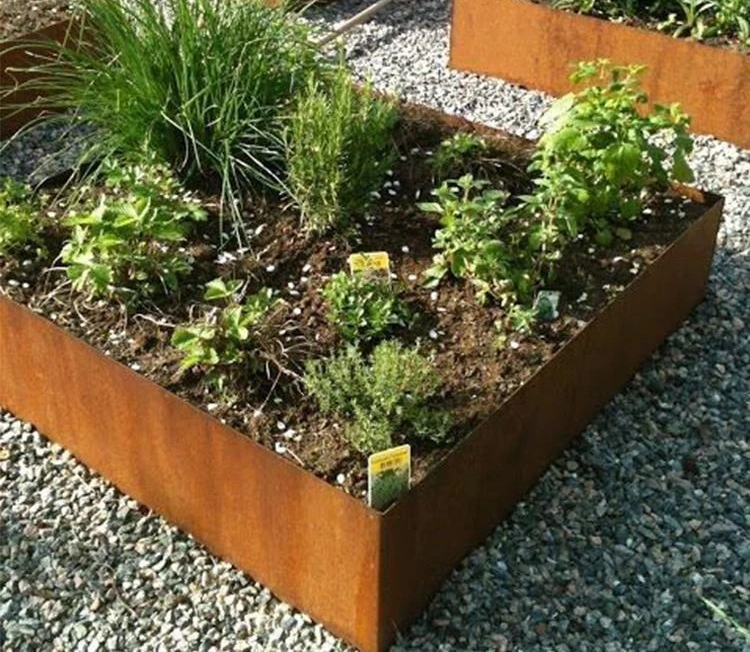
Corten steel path edging is a practical way to create clean transitions between walkways, lawns, planting beds, gravel zones and commercial landscape areas. For contractors and landscape designers, the real sourcing question is not only whether the edging looks rustic. It is whether the profile, height, stakes, curves, packing and installation details match the project drawings.
The notes below cover how to specify and source corten steel path edging for commercial landscape projects, hotels, parks, public gardens, residential developments and outdoor retail spaces.
What is corten steel path edging?
Corten steel path edging is a weathering steel strip, plate or formed profile used to define the edge of a walkway, lawn, gravel path, planter bed or planting zone. The material develops a natural brown-orange patina outdoors, giving the border a warm architectural finish without paint.
It belongs to the wider landscape edging category and is often specified together with corten steel planter boxes, flower pots and planters and laser cut corten screens.
- Use path edging where paving, gravel, grass and planting beds need a crisp separation line.
- Use taller retaining edging where soil level changes or mulch needs stronger containment.
- Use flexible or segmented profiles for curves, radius paths and organic landscape layouts.
- Use custom heights and stake systems when the project has specific installation or maintenance requirements.
Why commercial projects choose weathering steel garden borders
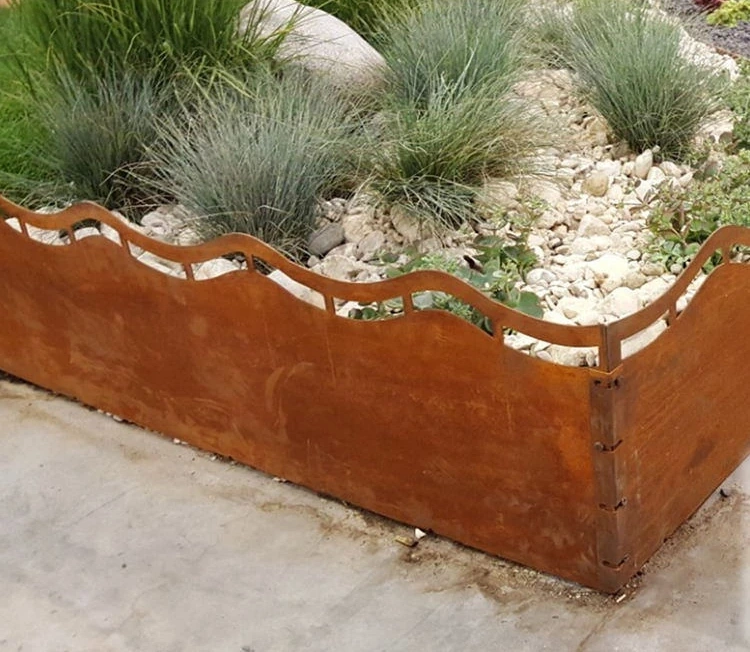
Weathering steel is popular because it works with stone, timber, concrete, gravel and planting palettes. On commercial projects, it also provides a strong visual line that helps organize outdoor circulation and maintenance zones.
- Natural patina appearance that suits modern, rustic and industrial landscape designs.
- Durable metal border that resists typical outdoor knocks better than many lightweight plastic edges.
- Custom fabrication options for height, thickness, length, stakes, bends and corner pieces.
- Easy coordination with planter boxes, screens, fire pits and other weathering steel products.
- No paint color mismatch when used as a natural weathering steel finish.
If the project team is new to the material, review what corten steel is, the patina timeline and the durability guide before finalizing details.
Profile, height and thickness decisions
A good corten steel lawn border starts with the right profile. Thin low strips may work for light-duty garden separation, while commercial paths, raised planting beds and public areas often need thicker material, deeper embedment, stronger stakes or formed edges.
- Low edging: useful for lawn-to-gravel or lawn-to-mulch transitions where soil pressure is limited.
- Medium edging: common for commercial planting beds and path edges that need a stronger visible line.
- Taller retaining edging: better for raised beds, grade changes and areas with heavier soil pressure.
- Folded or rolled top edges: can improve stiffness and create a safer, cleaner exposed top line.
- Stake systems: choose welded, slotted, detachable or separate stakes based on installation method.
Straight runs, curves and corners
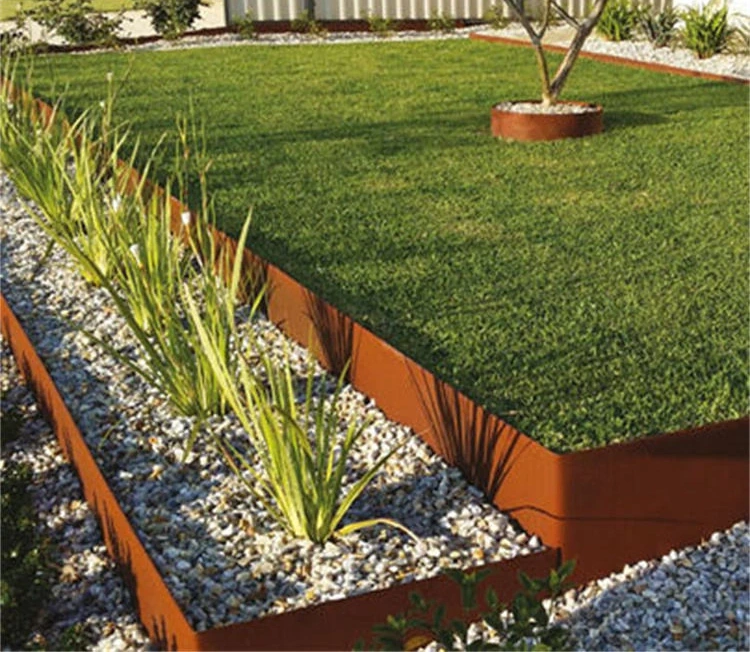
Path edging is rarely only a straight line. Landscape drawings may include long straight runs, tree rings, curves, radius corners, steps, cut-outs and transitions around drainage or lighting. The supplier should understand whether the edging will be fabricated as straight lengths, pre-bent sections or flexible segmented pieces.
- Provide plan drawings with edge lengths, radii and corner angles.
- Mark where site cutting is allowed and where factory-finished ends are required.
- Confirm whether stakes must sit on the inside or outside of the path edge.
- Ask for labeled bundles so installers can follow the landscape sequence.
Patina runoff and drainage planning
Corten steel path edging will release rust-colored runoff during early weathering. In most landscape beds this is manageable, but designers should avoid placing early runoff directly onto pale stone, white concrete, pool coping or sensitive finished paving without a drainage plan.
- Allow wet-dry cycles so the patina can stabilize.
- Separate runoff from pale hardscape where staining would be unacceptable.
- Avoid buried water traps and permanently wet soil contact where possible.
- Use gravel margins, planting beds or drainage details to manage early runoff naturally.
Custom fabrication and QC for project orders
For B2B orders, consistent dimensions matter as much as appearance. Corten Factory can support custom corten border edging from drawings, including different heights, hole positions, stakes, corners and project packaging.
- Confirm material thickness, height, length, top edge and stake design before production.
- Use sample approval or first-piece photos for custom profiles.
- Check hole spacing, stake fit, bend angles and finished quantities during QC.
- Label packages by profile type, length, elevation or landscape zone.
- Request packing photos and product photos before shipment.
For drawing-based work, see the custom fabrication checklist. For export planning, review the export packing guide.

RFQ checklist for corten steel path edging
- Project name, destination, estimated delivery schedule and unloading limitations.
- Edging type: straight strip, folded top, retaining plate, flexible profile or stake-in system.
- Material thickness, visible height, buried depth, length per piece and total quantity.
- Curve radius, corner drawings, special cut-outs and whether pre-bending is required.
- Stake quantity, stake spacing, fixing holes and any hardware requirements.
- Surface expectation, packing method, label sequence and inspection documents needed.
Internal links for landscape edging projects
Useful CortenFactory pages include Landscape Edging, Weathering Steel Lawn Edging Supplier Guide, Corten Steel Garden Retaining Wall Ideas, Corten Steel Planter Boxes, Customization and Contact Us. These help buyers connect edging with wider outdoor product packages.
FAQ
Is corten steel path edging suitable for commercial landscapes?
Yes. Corten steel path edging is suitable for many commercial landscape projects when the profile, height, thickness, stakes and drainage details are specified for the site conditions.
Can path edging be made in custom heights?
Yes. Custom height corten edging can be fabricated from project drawings. Buyers should define visible height, buried depth, thickness, top edge, stake position and whether the profile needs straight or curved sections.
Will corten steel edging stain paving?
Early weathering can create rust-colored runoff. Designers should plan drainage, gravel margins or separation from pale paving and sensitive surfaces during the initial patina period.
What information is needed for an accurate edging quotation?
Send drawings or sketches with lengths, height, thickness, profile type, curve radius, stake details, quantity, destination and packing requirements. Photos or reference images are helpful but should not replace dimensions.
Can Corten Factory supply edging with stakes and labels?
Yes. Corten Factory can fabricate custom corten steel edging with stake systems, holes, bends, labels and export packing based on the approved project requirements.
Need corten path edging for a project?
Send your drawings, profile requirements, quantities and destination. Corten Factory can review custom height, stake design, bending, QC and export packing for commercial landscape edging orders. Contact Corten Factory for a project quotation.
Need a factory quote for Corten Steel Path Edging: Commercial Landscape Guide?
Send your drawings, size list, quantity and destination country. Corten Factory can support custom weathering steel fabrication, export packing and project quotation.